Quick answer
The best greenhouse for your garden balances size against available space, insulation against your climate, and frame material against your budget and maintenance tolerance.
Why size matters more than you think
A greenhouse that is too small limits what you can grow and quickly feels cramped. One that is too large can overwhelm your yard and cost more to heat. Measure the footprint you can dedicate, then subtract at least 2 feet on each side for access and airflow. Remember that internal bench space matters as much as total square footage.
Frame material: wood vs. metal
Wood frames, especially cedar, offer natural insulation and a classic look but require periodic sealing or staining to prevent rot. Metal frames, such as galvanized steel or aluminum, are low-maintenance and very durable but can conduct heat away from the interior. Your choice depends on whether you prefer aesthetics and insulation or longevity and minimal upkeep.
Glazing and insulation trade-offs
Polycarbonate panels are the most common choice for home greenhouses. Twin-wall panels (6mm) are standard, but 4-wall panels (10mm) offer significantly better insulation—about R-2.1—and diffuse light more evenly. Thicker panels cost more upfront but can reduce heating bills in colder climates. Glass looks elegant but loses heat fastest and can break.
How to choose your greenhouse: decision rules
- Match size to your gardening ambition: If you mainly start seedlings and grow a few tomatoes, a 6x8 or 8x10 greenhouse is enough. For year-round vegetables or a serious collection of tropical plants, go 10x12 or larger. Measure your yard and subtract 2 feet on all sides before committing.
- Pick frame material based on your climate and time: Choose cedar if you want natural insulation and a traditional look and are willing to reseal every 2–3 years. Choose galvanized steel or aluminum if you want a structure that needs no painting and can handle snow loads.
- Let your local weather decide glazing thickness: In mild climates (zones 8+), 6mm twin-wall polycarbonate works fine. In colder zones (7 and below), invest in 10mm 4-wall panels for better heat retention and light diffusion. Check your USDA hardiness zone before choosing glazing.
Greenhouse options worth comparing
-
9x6 Bellerose Greenhouse - White: The 9x6 Bellerose Greenhouse - White uses 10mm 4-wall polycarbonate that delivers an R-2.1 insulation value and retains 30% more heat than standard 6mm twin-wall panels. This means you can grow earlier in spring and later into fall without running up heating costs, especially in cooler climates.
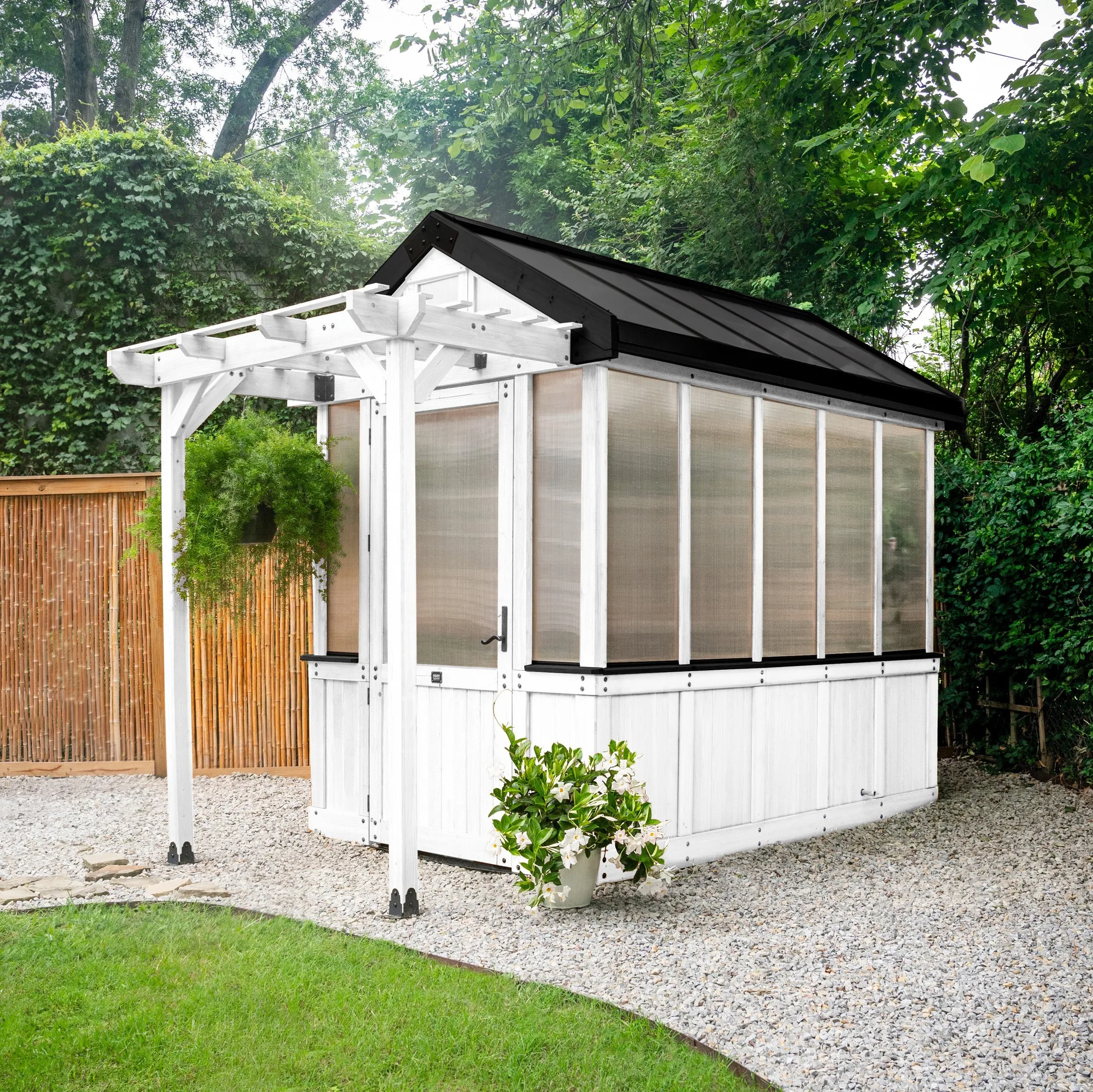
9x6 Bellerose Greenhouse - White
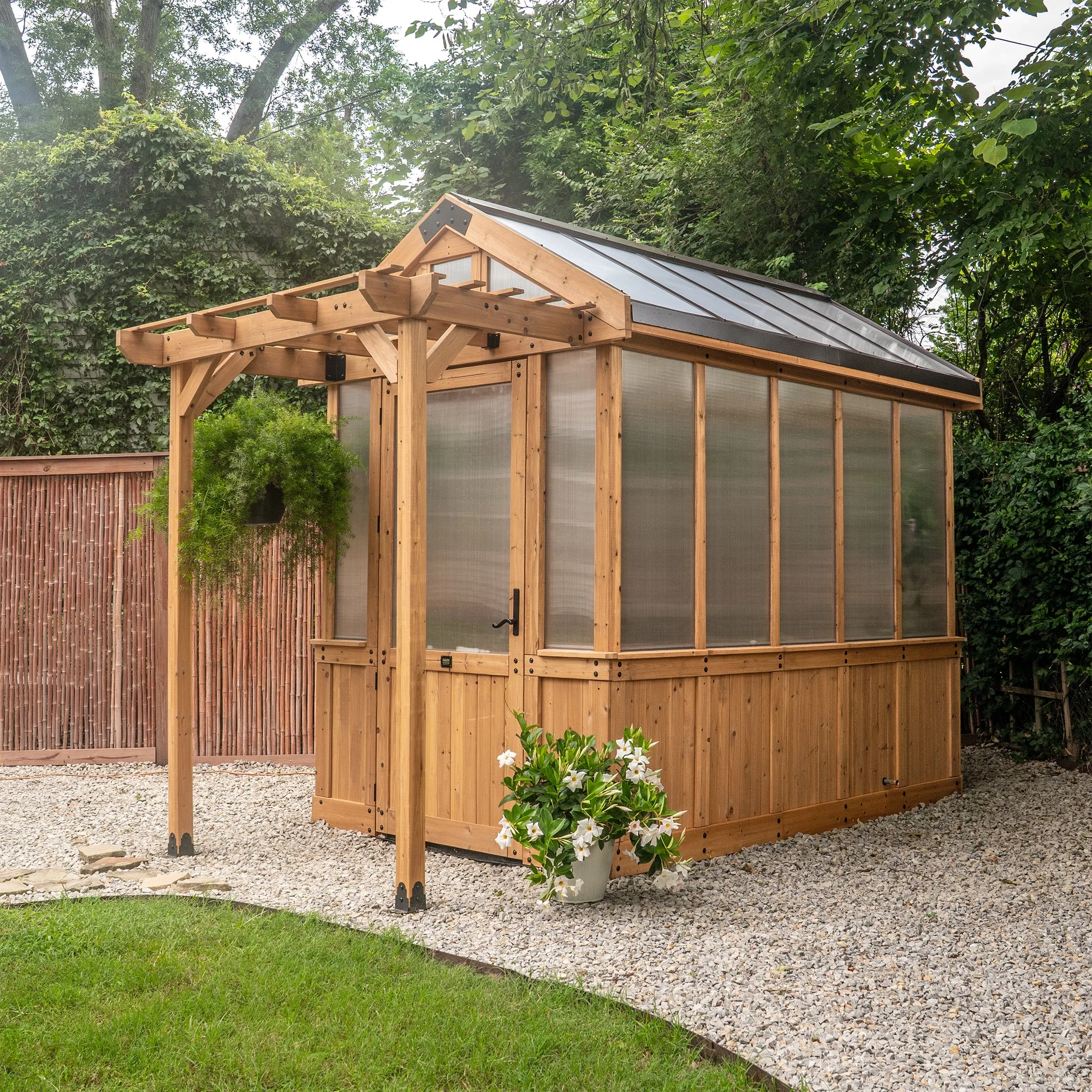
9x6 Bellerose Greenhouse
-
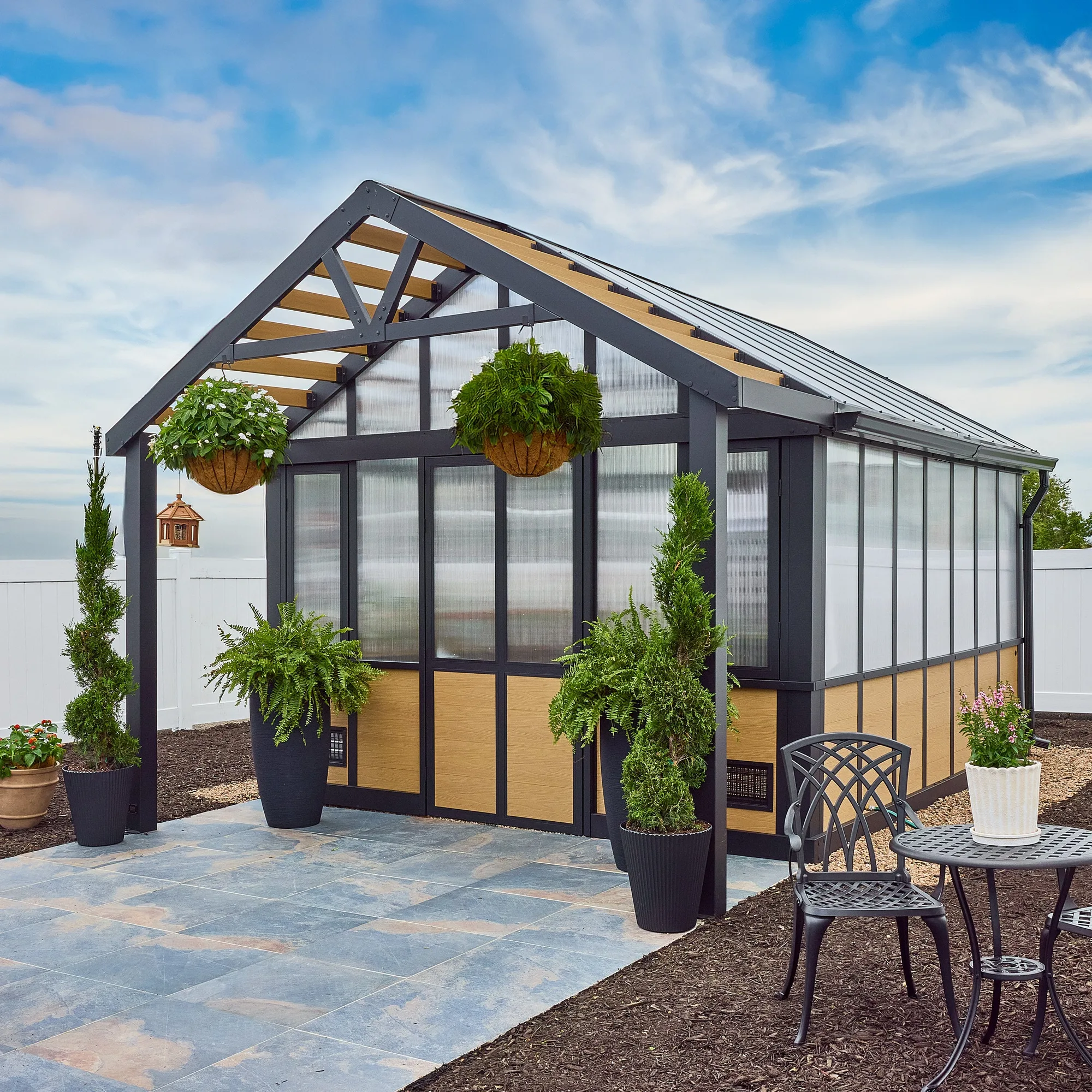
14x12 Larkspur Metal Greenhouse: The 14x12 Larkspur Metal Greenhouse features a galvanized steel and aluminum frame with oversized 4.7-inch corner posts, built to commercial-grade standards. If you want a structure that stands up to heavy snow or strong winds with almost no maintenance, this metal frame gives you that peace of mind.
Which greenhouse fits you?
Best for
- Home gardeners who want a beautiful, naturally insulating structure and don't mind periodic wood maintenance
- Serious growers with cold winters who need maximum heat retention and even light distribution
Not for
- Anyone who wants a set-it-and-forget-it structure with zero wood upkeep (look at metal-frame models instead)
- Gardeners on a very tight budget who need the lowest upfront cost (consider smaller or used options)