Quick answer
Focus on fit, intended terrain, and material durability. For most men, a leather hiking boot with a reliable sole and proper ankle support offers the best balance of comfort and longevity.
Why fit and material matter most
Hiking boots take a beating, so the right fit prevents blisters and fatigue. Leather models, like the Danner Mountain Light, mold to your foot over time and resist abrasion better than synthetic fabrics. A boot that fits snugly at the heel but leaves a thumb's width at the toe gives you room for downhill movement without slipping.
Material also affects breathability and weight. Full-grain leather is heavier but more waterproof and durable, while suede or nubuck offers a lighter feel with decent weather resistance. For multi-day hikes, prioritize leather for its longevity; for day hikes, a lighter build may be fine.
Traction and sole construction
A boot's outsole determines grip on wet rock, mud, or loose gravel. Look for deep, multi-directional lugs made from rubber compounds like Vibram. The midsole—usually EVA or polyurethane—provides cushioning and shock absorption. Stiffer midsoles offer better support on uneven terrain but require a break-in period.
The Danner Mountain Light uses a Vibram outsole and a stitchdown construction, which allows resoling. This extends the boot's life significantly compared to glued soles.
How to choose the right hiking boots in 4 steps
- Check the fit with hiking socks: Wear the socks you plan to hike in. Your heel should not lift, and there should be about a thumb's width between your longest toe and the boot's end. Lace up fully and walk on an incline to test for pressure points. Common mistake: buying boots that feel snug with thin socks, then getting blisters on the trail.
- Match the boot to your terrain: For rocky or uneven trails, choose a mid- or high-cut boot with a stiff sole for ankle support. For well-groomed paths, a low-cut or trail shoe may be enough. Leather boots like the Danner Mountain Light handle mixed terrain well. Common mistake: using lightweight shoes on technical terrain, risking ankle rolls.
- Evaluate the outsole and midsole: Look for a rubber outsole with deep lugs (at least 4-5 mm) for traction. A stiffer midsole supports heavy packs, while a softer one offers more comfort for day hikes. Check if the sole is replaceable—stitchdown construction allows resoling. Common mistake: ignoring lug depth on wet surfaces, leading to slips.
- Consider leather vs. synthetic: Full-grain leather is more durable and water-resistant but heavier and requires break-in. Synthetic boots are lighter and need less break-in but wear out faster. For longevity and resale value, pre-owned leather boots are a smart choice. Common mistake: buying synthetic boots for multi-day hikes and replacing them every season.
Product facts
-
Danner/Boots/US 11/Leather/BRW/MTN LIGHT HIKING/G-TEX: This Danner boot is a used men's US 11 leather hiking boot in very good condition, with a G-TEX lining and Vibram outsole. Pre-owned leather boots like this offer premium durability at a lower price, and the G-TEX lining provides reliable waterproofing without sacrificing breathability.
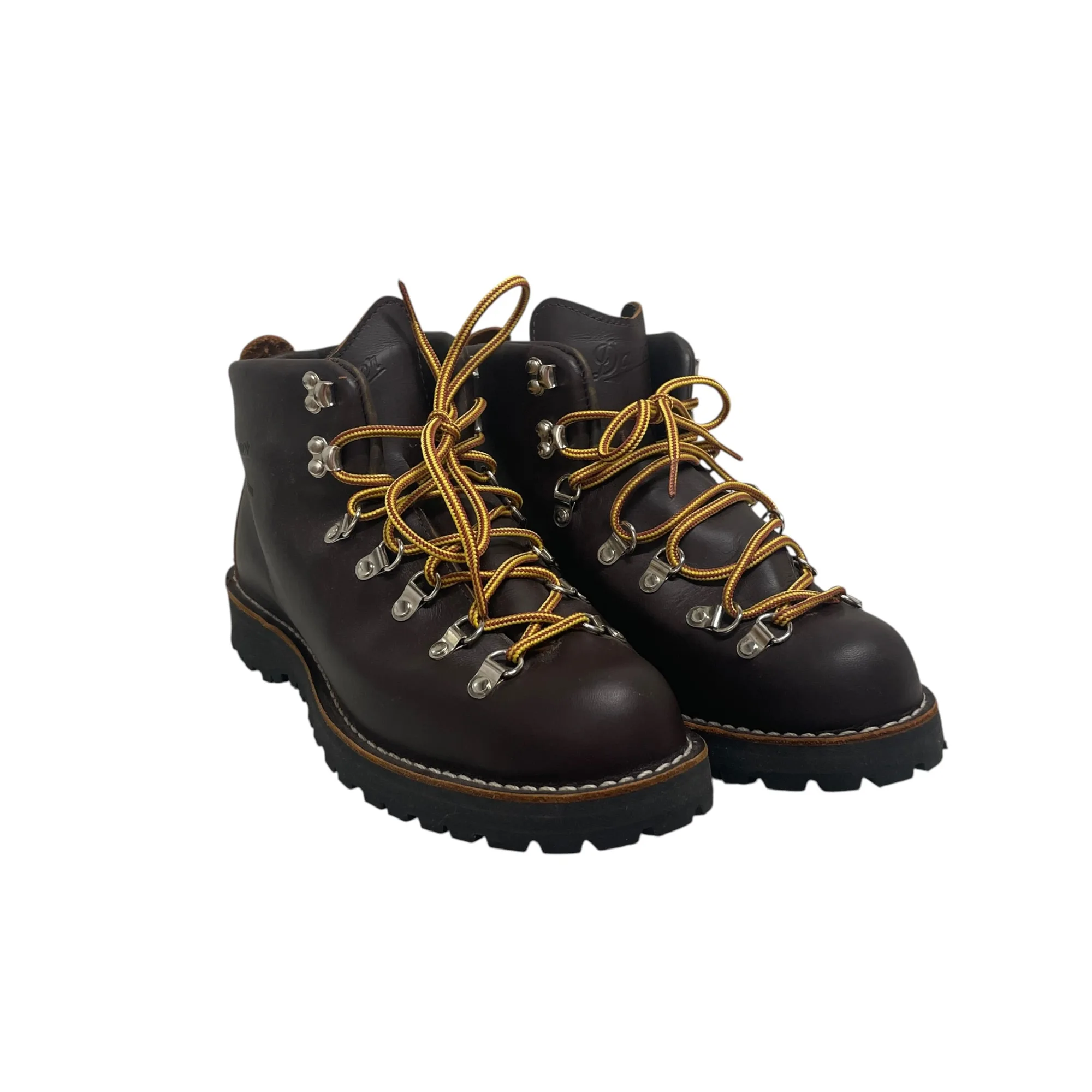
Danner/Boots/US 11/Leather/BRW/MTN LIGHT HIKING/G-TEX