Quick answer
Focus on your dog's coat length, thickness, and how much detangling you do. A wide-tooth comb is your first pass for thick or long fur, while a dual-tooth comb gives you both wide and fine teeth in one tool for everyday grooming.
Why coat type matters more than brand
Your dog's fur decides which comb works. Thick, double, or long coats trap tangles close to the skin, so you need a comb that can reach the roots without pulling. Short, fine, or curly coats need finer teeth to catch loose hair and prevent matting.
A comb that works for a Golden Retriever may be too wide for a Poodle or too fine for a Husky. That's why you should choose based on coat texture and length, not just on the comb's looks.
Wide teeth vs. fine teeth: the trade-off
Wide teeth are spaced farther apart, so they glide through thick or matted fur with less pulling. They are ideal for the first pass on a tangled coat. Fine teeth are closer together, which makes them better at removing loose undercoat and catching small debris, but they can snag on knots if you start with them.
A dual-tooth comb gives you both options in one tool. You can start with the wide side to open up tangles, then switch to the fine side to finish. This saves you from buying two combs, but you need to be comfortable switching sides and cleaning the comb between passes.
Decision rules for picking your comb
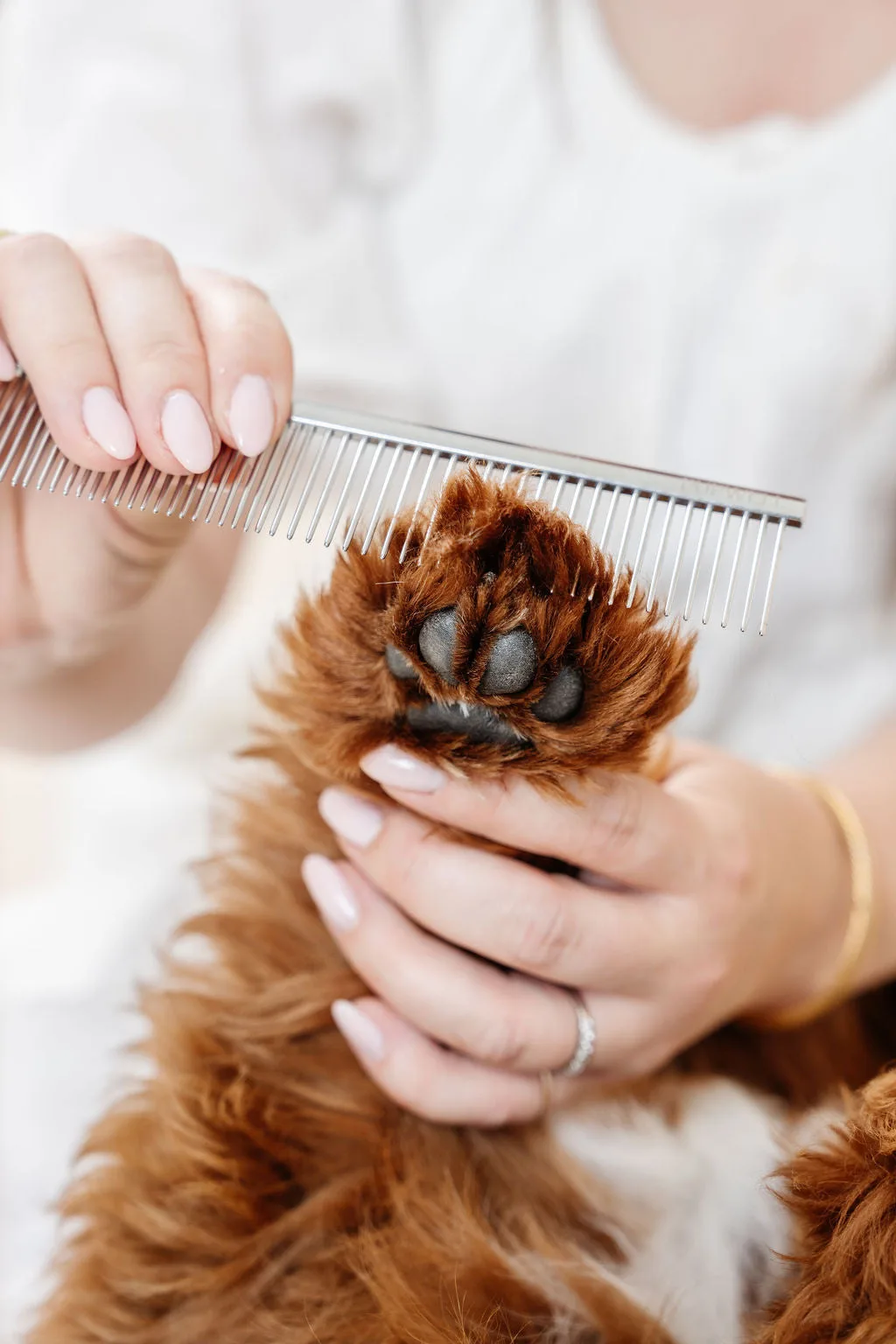
- Start with wide teeth for thick or tangled coats: If your dog has a long, thick, or double coat, use a wide-tooth comb first to open tangles and lift hair from the roots. This reduces pulling and makes the rest of grooming easier. Check for mats near the skin before you start; wide teeth help you work them out gently.
- Use fine teeth for finishing and short coats: After detangling, switch to the fine side to remove loose undercoat and smooth the topcoat. For short or fine coats, you can often go straight to fine teeth. If your dog has a short coat, you might not need a wide-tooth comb at all.
- Choose a dual-tooth comb for versatility: If you want one comb that handles both detangling and finishing, a dual-tooth comb is a practical choice. It works for most coat types and saves space in your grooming kit. When grooming, always brush from the skin outward to avoid pulling.
Combs that fit the job
-
Professional Dual-Tooth Pet Comb, 7.5”: This 7.5-inch comb features both wide and fine teeth, letting you adjust grooming based on coat type and task. One tool covers detangling and finishing, so you can switch from wide to fine without swapping combs.
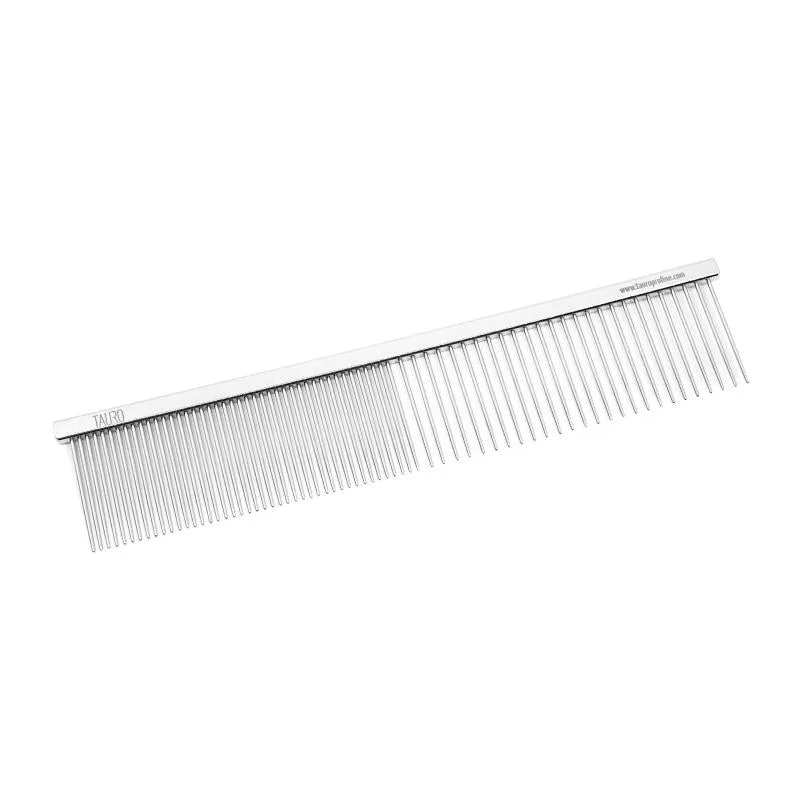
Professional Dual-Tooth Pet Comb, 7.5”
-
Wide-Tooth Metal Grooming Comb, L, 9.6”: This extra-long comb has wide teeth designed to open the coat, gently detangle fur, and lift hair from the roots for easier trimming. The longer length covers more surface per stroke, making it efficient for thick or long coats and helpful before clipping.
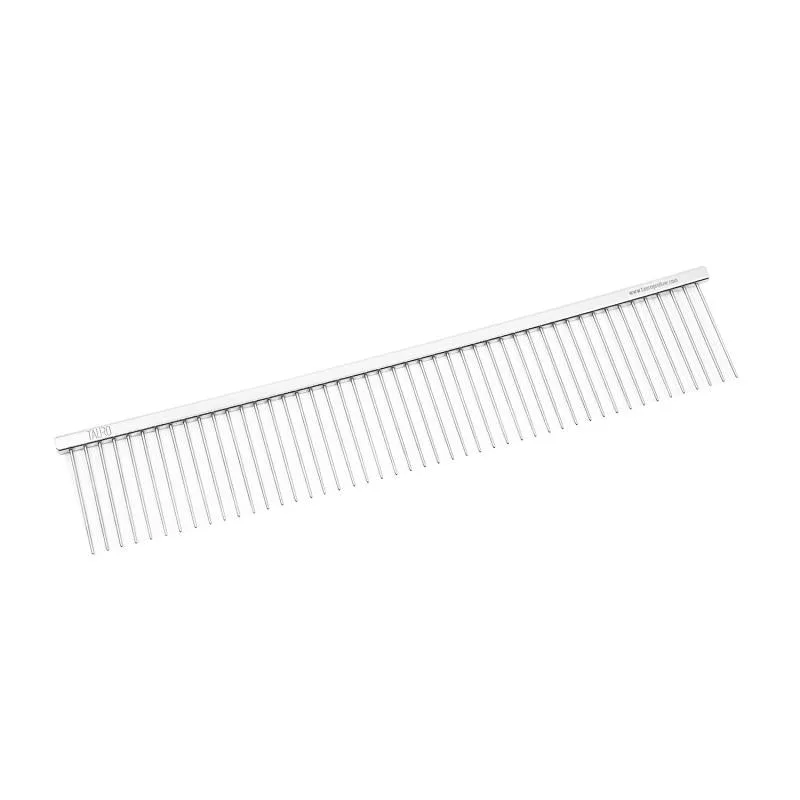
Wide-Tooth Metal Grooming Comb, L, 9.6”
Who should use which comb
Best for
- Owners of long, thick, or double-coated breeds who need first-pass detangling
- Groomers who want one versatile tool for different dogs or coat types
Not for
- Owners of very short, single-coated dogs who only need light finishing – a fine-tooth comb or slicker brush may be enough
- Dogs with severe matting close to the skin – a comb alone may not be safe; consult a professional groomer