Quick answer
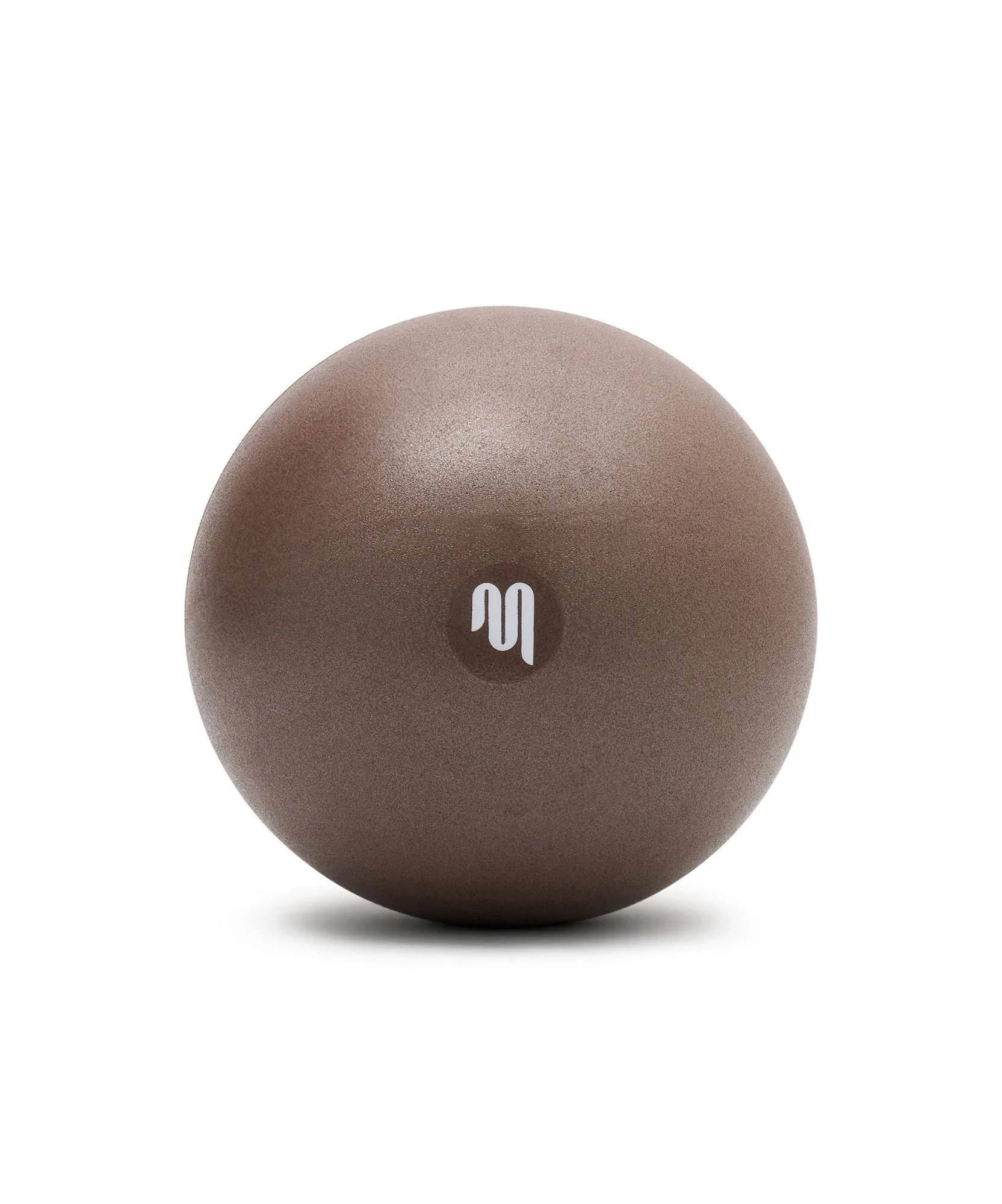
For most full-body exercises, choose a Pilates ball that, when inflated or as is, fits snugly between your knees or under your lower back without forcing a stretch. For a uniform reference, the Pilates Ball from Your Reformer USA works well for average builds (5'4"–5'8") when used as a support prop. Taller or shorter people may need to adjust inflation or consider a different diameter.
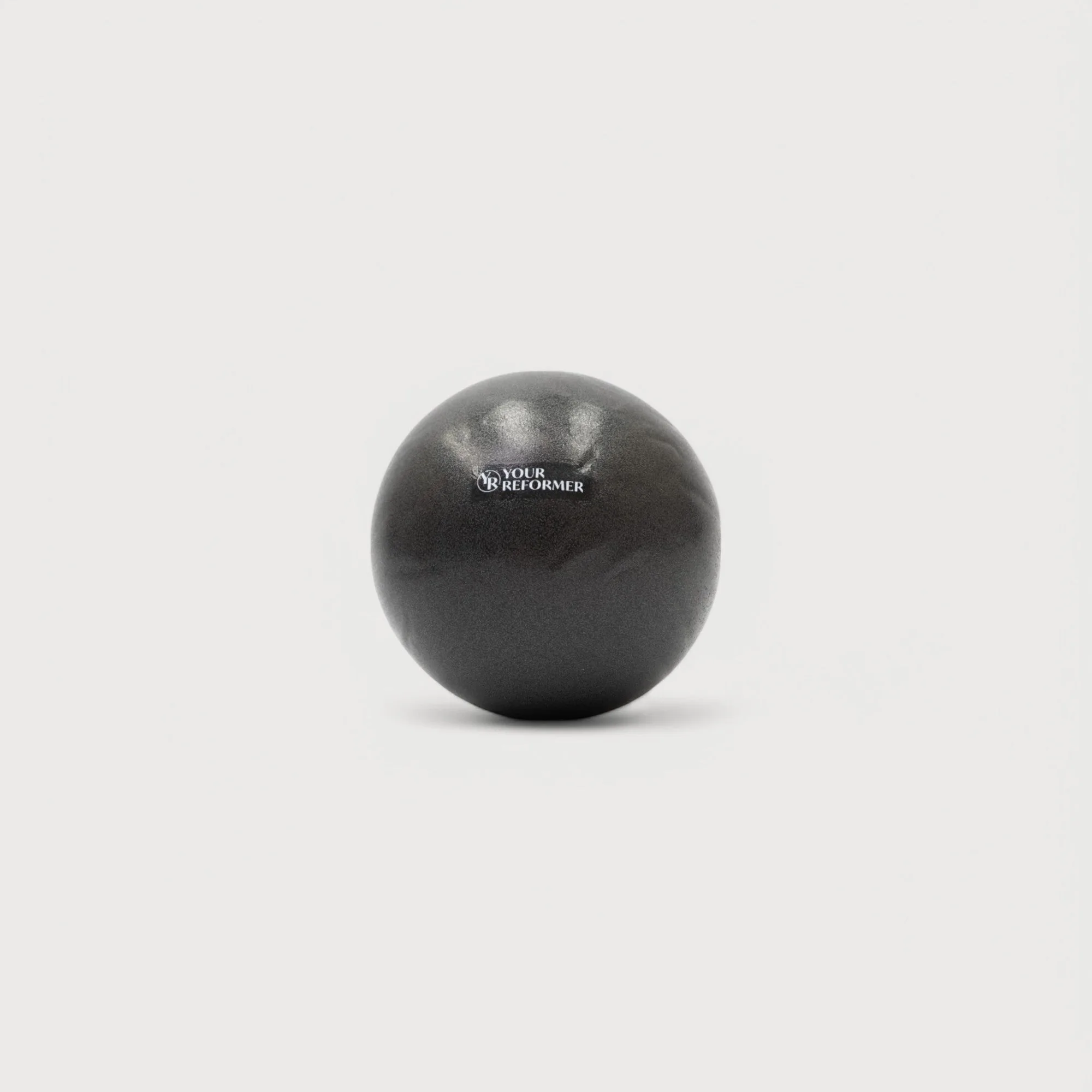
Pilates ball
Choosing a Pilates ball size isn't one-size-fits-all. While many mat and reformer workouts use a standard small ball (around 9 inches in diameter), the right size for your body depends on your height, limb length, and the specific exercise you plan to do. A ball that's too large can overstretch your joints; one that's too small may not provide enough support.
This guide gives you concrete decision rules so you can match a Pilates ball to your body type and practice style. We'll cover the key sizing factors, tradeoffs, and how popular accessories like the Pilates Ball from Your Reformer USA fit into a typical home routine.
Why Pilates Ball Size Matters
Using the wrong Pilates ball size can compromise your form. For example, when placing the ball between your knees for inner-thigh work, an oversized ball forces your hips into external rotation and strains the adductors. An undersized ball won't engage the target muscles because you'll have to squeeze too hard to hold it.
The same applies to ball placement under your sacrum or lower back during bridges: a ball that's too tall hyperextends your lumbar spine, while one that's too flat reduces the leverage you need for core activation. Matching ball size to your unique proportions helps you maintain neutral alignment throughout each exercise.
- If you're between 5'0" and 5'3", a smaller ball (about 6–7" diameter) often works better for knee and hand placements.
- For heights 5'9" and above, look for a ball that can be inflated to 9–10" or choose a model with a slightly larger diameter.
Key Sizing Factors: Height, Reach, and Exercise Type
Your overall height gives a rough starting point, but your limb-to-torso ratio matters more. A person with long thighs and a short torso will need a different ball placement than someone with the opposite proportions. A good rule of thumb: when sitting on the ball for balance work, your hips should be slightly higher than your knees, forming a 90-degree angle at the joint.
Exercise type also dictates size. For supporting your head and neck in placement exercises, a standard soft ball works well. For active squeezing between the ankles or knees, a smaller, firmer ball (like the Toning Balls) offers more resistance without slipping. For stretching and rolling under the spine, a medium-diameter ball provides a safer range of motion.
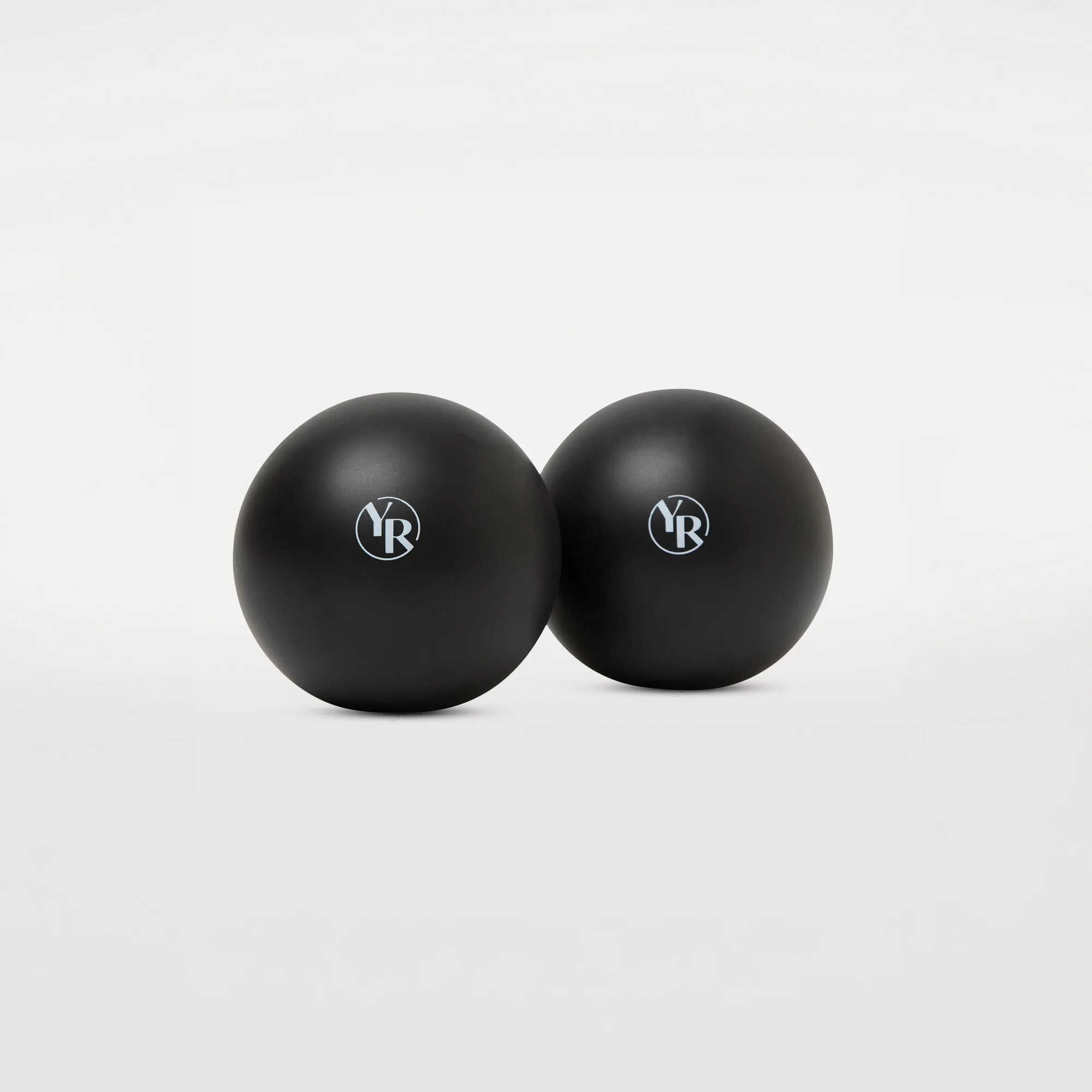
Toning Balls
- Use a ball with some give (not fully inflated) for under the back to allow spinal articulation.
- For active resistance between limbs, a denser ball maintains pressure without deflating mid-movement.
Understanding Your Pilates Ball's Adjustable Range
Most Pilates balls come with adjustable inflation via a small pump or valve. This is the most practical way to fine-tune size for your body. Over-inflating makes the ball firmer and slightly larger; under-inflating gives a smaller, softer support surface. The Pilates Ball from Your Reformer USA, for example, is made from durable material that responds well to small air adjustments.
Begin with a lightly inflated ball and gradually add air as you test the fit in key exercises. Mark the inflation level once you find a comfortable balance. Keep in mind that a ball that's too firm may not provide the grip needed for many floor exercises, while one that's too soft can collapse under load.
- Test the ball in three positions: between knees, under sacrum, and between hands. Adjust until each feels supportive but not strained.
- If the ball consistently feels too large or small even with full adjustment, consider a different model or diameter.
Decision rules for selecting your Pilates ball size
- Height rule: Under 5'4" (163 cm): use a ball with a maximum inflated diameter of about 6–8 inches. At 5'4" to 5'8" (163–173 cm): standard 9-inch ball works well with inflation adjustment. Over 5'8" (173 cm): consider a ball that can be inflated to 9–10 inches or pair with a slightly larger accessory. Your height gives the starting point, but always test the ball in key positions.
- Exercise-specific rule: For support under the spine: choose a medium-diameter, soft ball. For resistance between limbs: choose a denser, smaller ball (like Toning Balls). For balance work: use a standard ball with moderate inflation so hips stay neutral. Match the ball's firmness and diameter to the movement demands of each exercise.
- Inflation adjustment rule: Start with a partially inflated ball and test fit in three common exercises (between knees, under sacrum, between hands). Add air gradually, checking comfort each time. If even full inflation or minimal inflation doesn't create a good fit, the base diameter is wrong for you. Adjustable inflation helps fine-tune size, but it can't overcome a fundamentally mismatched diameter.
Product facts for your ball sizing decision
- Pilates Ball: Add a versatile accent to your Pilates or barre routine with the Pilates Ball from Your Reformer USA. Designed as a simple accessory for supported stretching, core engagement, and gentle resistance work, this ball is available in a range of muted, neutral tones to suit your home studio aesthetic. Lightweight and easy to handle. Since the Pilates Ball is offered in a single standard size, you can rely on its adjustable inflation to fine-tune the fit for your body. Its soft, compressible surface makes it a safe option for supporting your back or between limbs during alignment work.
- Toning Balls: Your Reformer Toning Balls are versatile accessories designed to add resistance and challenge to your workout routine. Available in three subtle shades, they help improve flexibility and muscle tone. Compact and easy to incorporate into Pilates or general fitness sessions. Toning Balls are smaller and denser than the standard Pilates Ball, making them a better choice for active squeezing exercises between the knees, ankles, or hands. Their compact size suits people with shorter limbs or those who want more targeted resistance work.
Who this approach works best for
Best for
- People who want one versatile ball for general mat and reformer work and are willing to adjust inflation based on exercise.
- Practitioners who prioritize gentle support and alignment over high-resistance squeezing or rolling.
Not ideal for
- Users exclusively focused on high-intensity resistance work between limbs (try a pair of Toning Balls instead).
- Those with extreme height differences (very short or very tall) who need a specifically sized ball rather than one adjusted by inflation.
Choosing the right Pilates ball size comes down to your height, exercise goals, and willingness to fine-tune inflation. Start with a standard adjustable ball like the Pilates Ball from Your Reformer USA, test it in your main exercises, and consider a denser pair like the Toning Balls if your routine emphasizes squeezing and resistance. There's no universal size—only the size that supports your body in neutral alignment.