Quick Answer
To choose the right playhouse, match its size to your child's age and available yard space, prioritize safety features like sturdy construction and rounded edges, and pick a style that encourages the type of play your child enjoys.
Size matters: Match the playhouse to your child's age and yard
A playhouse that's too small will quickly feel cramped, while one that's too large can overwhelm a small yard. Measure your available space and consider how many children will play at once. For toddlers, a compact model with low windows works well; older kids may want more room to move and host friends.
Also think about future growth. A slightly larger playhouse can serve your child for several years, making it a better long-term investment. Check the door height and interior space to ensure your child can stand and move comfortably.
Safety first: Look for durable materials and smart design
Safety is non-negotiable. Choose a playhouse made from sturdy, weather-resistant wood like cedar, which resists rot and splintering. Look for rounded edges, smooth surfaces, and secure doors that won't pinch little fingers.
Placement also matters: set the playhouse on level ground away from hard surfaces like concrete, and ensure good visibility from your home so you can supervise playtime.
Style and features: Encourage imaginative play
The best playhouse sparks creativity. Features like working doors, windows, and charming details make the space feel like a real 'home' for your child. Think about what your child loves—whether it's pretending to cook, hosting tea parties, or simply having a cozy hideaway—and choose a design that supports that.
A playhouse with a classic or farmhouse look can also enhance your backyard's aesthetics, blending with your home's style.
Decision Rules for Choosing a Playhouse
- Measure your space first: Clear a flat area in your yard and measure its length and width. Leave at least 2 feet of clearance around the playhouse for safe movement and maintenance access. Use a tape measure and mark the footprint with stakes before purchasing.
- Match size to age: For ages 2-4, choose a compact playhouse with low windows and a small door. For ages 5-8, opt for a larger model with more interior room and taller doors to accommodate growth. Consider your child's height and how many friends will play inside.
- Prioritize safety features: Look for rounded edges, smooth wood, and secure hinges on doors. Avoid models with sharp corners or exposed screws. Set the playhouse on level ground away from hard surfaces. Inspect the playhouse regularly for loose parts or splinters.
- Choose a style that encourages play: Select a design with functional elements like working doors, windows, and interior space that invites imaginative scenarios. Match the aesthetic to your backyard or home for a cohesive look. Ask your child what kind of play they enjoy most—cooking, reading, or hosting—and pick features that support it.
Wooden Playhouse Options from Backyard Discovery
-
Mystic Playhouse: The Mystic Playhouse is made from premium cedar with a light brown stain, slate gray accents, and white trim, featuring a split Dutch door with an oval window. Cedar resists rot and insects, making it a durable choice for outdoor play, while the Dutch door adds a charming, functional touch.
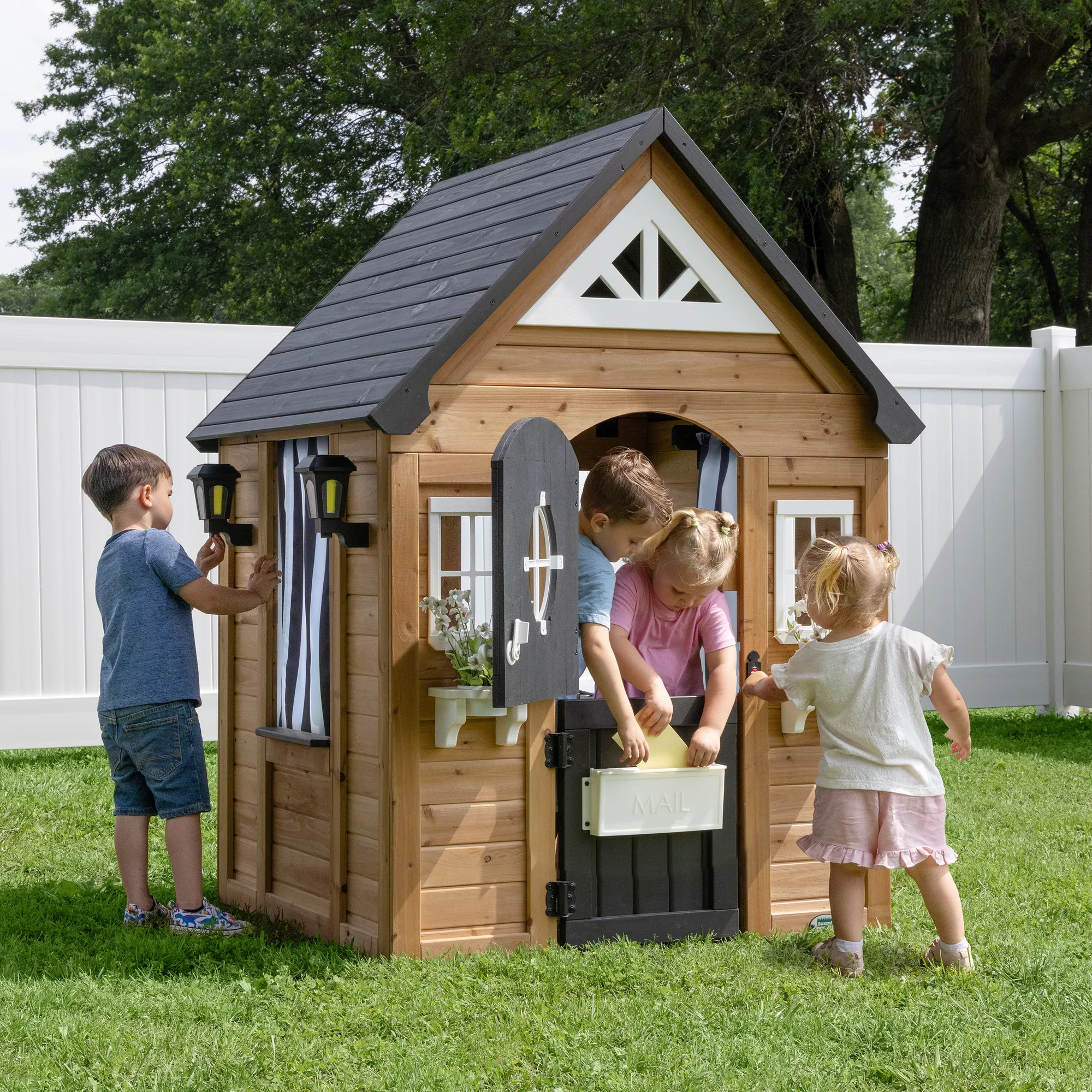
Mystic Playhouse
-
Caraway Cottage - White: The Caraway Cottage features a crisp white finish with wide windows and a working half door, designed for indoor or outdoor use. Its farmhouse style and versatile placement make it a great fit for both backyard and indoor play areas, appealing to kids who love imaginative role-play.
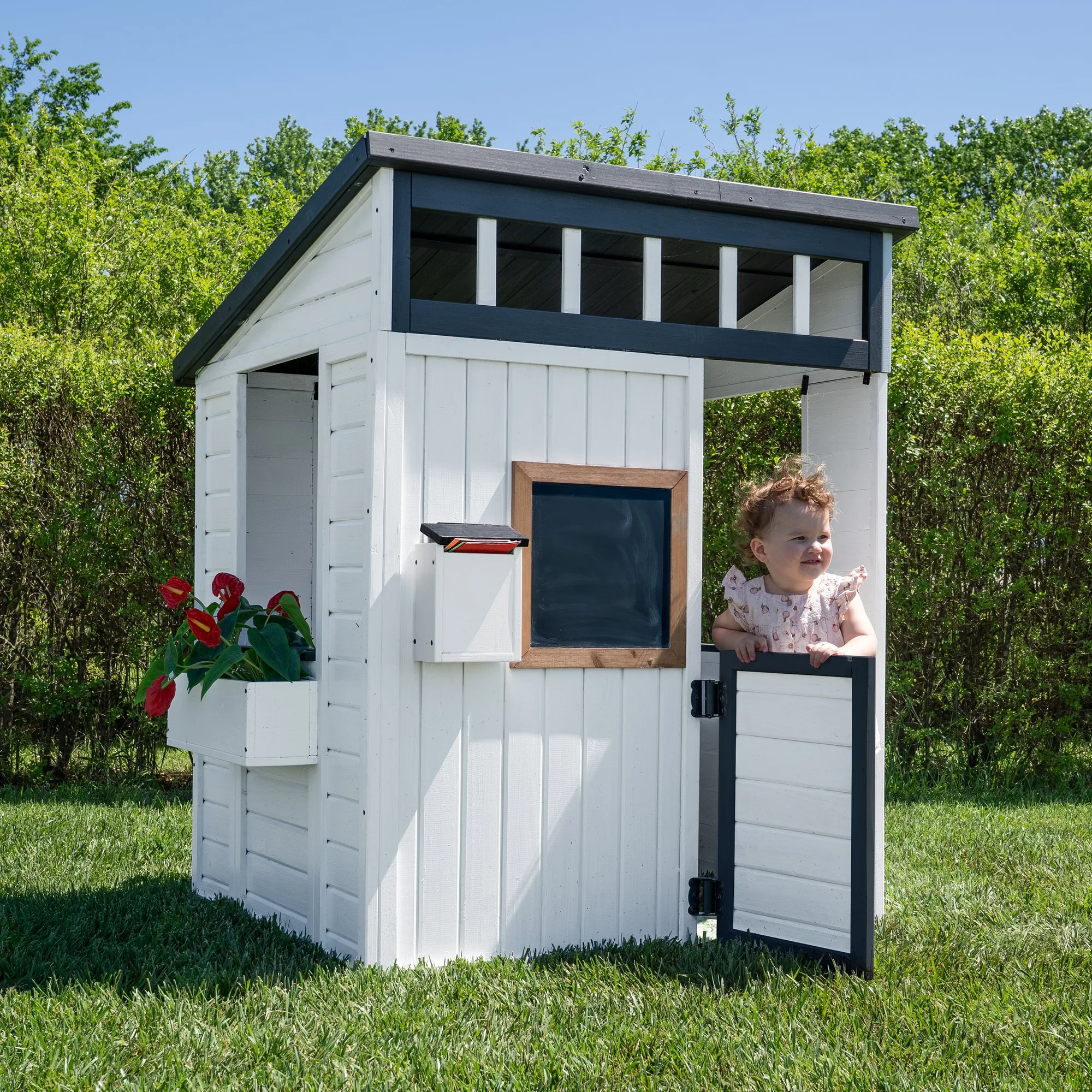
Caraway Cottage - White
Who Should Choose Which Playhouse
Best for
- Families with toddlers and young children who want a durable, weather-resistant outdoor playhouse
- Parents looking for a stylish playhouse that blends with their backyard decor
Not for
- Families with very limited outdoor space who might prefer a smaller indoor playhouse
- Parents seeking a playhouse with advanced features like slides or climbing walls