Quick answer
Choose a playmat by your baby's current stage first, not by pattern or color. For newborns to pre-crawlers, prioritize a soft, easy-to-wipe surface with at least 1 inch of cushioning. For crawlers and early walkers, prioritize grip, a non-slip base, and a size that covers your actual play zone. If you want one mat to last from tummy time through toddlerhood, buy a reversible or two-sided mat and skip the thinnest budget options.
A playmat is one of the few baby purchases that gets used every single day, so the wrong one is expensive in a different way: it slides, it stains, or it gets outgrown in three months. This baby playmat buying guide walks through the decisions that actually change how a mat performs, and the trade-offs behind each one.
You do not need the most expensive mat on the shelf. You need one that matches your floor, your baby's mobility stage, and how much cleaning you are willing to do. Below are the decision rules I would use before adding a baby floor mat to your cart.
Start with your baby's stage, not the pattern
The single biggest mistake is buying for the baby you have today and forgetting the baby you will have in four months. A playmat for infants is mostly about cushioning and a soft surface for tummy time. A mat for a crawler is about grip, edges that do not curl, and enough square footage that your baby does not roll off the side mid-exploration.
If your baby is not yet rolling, a smaller, thicker mat near the couch is fine. Once rolling starts, measure the area where you actually put your baby down. Most parents underestimate this by a foot or more, and a mat that is too small just becomes a landing pad next to the real play area.
- Pre-rolling: prioritize thickness and a washable surface.
- Rolling and sitting: prioritize grip and a non-slip base.
- Crawling and pulling up: prioritize size and edge stability.
Thickness and firmness: the trade-off nobody mentions
Thicker is not automatically better. A very thick, very soft mat feels luxurious but makes it harder for a baby to push up during tummy time, and it can be unstable for early standing. A firm mat with a little give supports pushing, sitting, and eventually standing, and it is easier to clean because it does not absorb spills the same way.
As a rule of thumb, look for at least 1 inch of cushioning for a hard floor, and less if the mat sits on carpet. If you have hardwood or tile, do not go thinner than that just to save space; the mat is doing the job a rug cannot.
- Hard floors: choose more cushioning.
- Carpet: a thinner mat is usually enough and stays flatter.
- If you can press your palm to the floor through the mat, it is too thin for daily tummy time.
Material and cleaning: match it to your tolerance for mess
Playmats fall into roughly three material families: wipe-clean foam or PU, machine-washable fabric, and natural fiber options like organic cotton. Each solves a different problem. Wipe-clean mats win for spit-up, purees, and pets. Fabric mats win for comfort and for babies who nap on the floor. Natural fiber mats win for parents who want to avoid synthetic surfaces and are willing to wash more often.
The honest trade-off: no mat is both fully machine-washable and completely wipe-clean. If you choose fabric, plan on a spare or a rotation so one can be in the wash. If you choose foam, check that the surface does not stay tacky or shed, and air it out before first use.
- Wipe-clean: fastest daily cleanup, less soft to the touch.
- Machine-washable fabric: softer, but needs a backup mat.
- Organic cotton: comfortable and breathable, but stains need prompt attention.
Size, edges, and storage in a small home
Measure twice. A mat that fits wall-to-wall in a nursery often will not fit the living room where you actually spend the day. Also check the edges: curled or sharp-cornered mats trip crawlers and collect crumbs. A mat with bound edges and a non-slip backing stays put and vacuums in one pass.
If space is tight, a foldable mat that stores flat behind a door beats a larger mat that lives permanently in the middle of the room. Reversible mats are a quiet win here too, because one purchase covers two looks and often two textures.
- Measure your real play zone, not the nursery.
- Prefer bound edges and a non-slip base.
- Foldable beats rollable if you store it upright.
What to skip and what to add alongside
Skip mats marketed only for tummy time if you plan to use it past six months, and skip anything with a strong plastic smell that does not fade after airing. You also do not need a mat with built-in toys; separate toys are easier to clean and rotate, and they grow with your baby.
Small, open-ended toys pair well with a mat because they work at every stage. A soft lovey for comfort and a set of small animal figures for older babies give the mat a purpose beyond a safe surface, and both store in a bin next to it.
- Skip: mats sized only for newborns, strong lingering odors, built-in toys that cannot be removed.
- Add: one soft comfort item and one open-ended toy set.
Decision rules for choosing a playmat
- If your baby is not rolling yet: Choose a smaller, thicker mat (at least 1 inch on hard floors) with a wipe-clean surface, and place it where you sit most often. You can size up later; do not buy the largest mat first.
- If your baby is crawling or pulling up: Choose a larger mat with a non-slip base and bound edges, and measure the actual floor space before ordering. Grip and size matter more than thickness at this stage.
- If you have hard floors and pets: Choose a wipe-clean mat with a non-slip backing, and keep a washable fabric mat as a secondary layer for comfort. Two thin mats often beat one thick mat for cleanup.
- If you have carpet or a small apartment: Choose a thinner, foldable mat that stores upright, and skip oversized mats that cannot be put away. Storage decides whether you actually use it daily.
- If you want one purchase to last: Choose a reversible mat with a wipe-clean side and a softer side, and add open-ended toys instead of a mat with built-in toys. Reversible plus separate toys covers the most stages.
Products that work well on a playmat
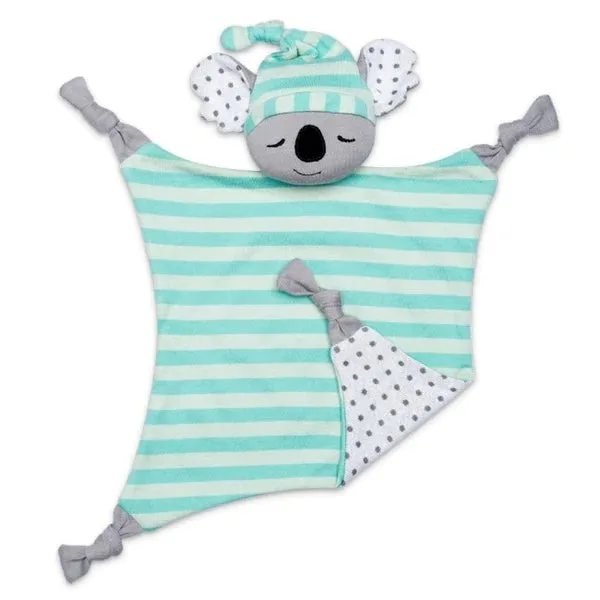
- Kozy Koala Blankie: Made with 100% GOTS certified organic cotton knit, filled with organic cotton and naturally hypoallergenic corn fiber, with a built-in rattle and tactile details like fabric knots and cushy ears. A soft, machine-friendly lovey gives newborns something to hold during tummy time and naps on the mat, and the organic cotton construction suits parents already choosing natural materials.
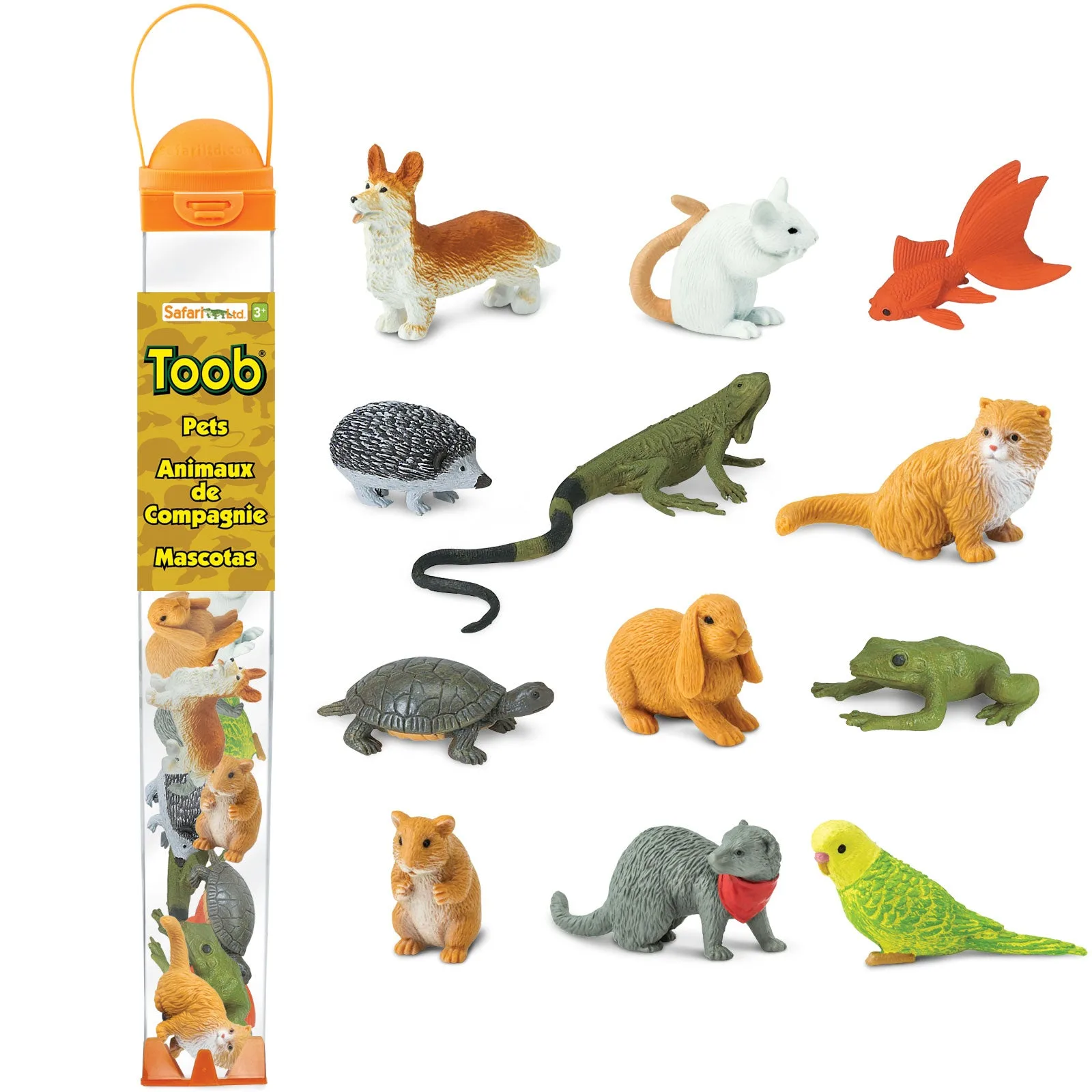
- Pet Animal Toys TOOB®: Includes an iguana, turtle, hedgehog, hamster, goldfish, frog, cat, ferret, corgi, parakeet, mouse, and rabbit, and is described as a way to understand the responsibilities of caring for an animal. Once your baby is sitting and reaching, small figures turn the mat into a naming and matching game, and the pet theme makes it easy to talk about real animals at home.
Who this guidance fits
Best for
- Parents buying their first playmat for a newborn or pre-crawler
- Families with hard floors who need cushioning and easy cleanup
- Small homes that need a mat that folds and stores away
Not for
- Parents looking for a permanent wall-to-wall playroom floor
- Shoppers who want a mat with built-in toys and lights
- Anyone who needs a mat that is both fully machine-washable and fully wipe-clean
Pick the mat that matches your floor, your baby's stage, and your cleaning routine, and you will use it every day instead of replacing it in a season. Start with thickness and grip, then let size and storage decide the rest.