Quick answer
Choose a raised feeder that places the bowl at your dog's lower chest height, uses non-slip feet, and includes a twin-bowl design if you feed both wet and dry food.
Why height matters more than you think
A raised feeder lifts the food and water bowls to a comfortable height, reducing the need for your dog to bend down. This can ease pressure on the neck and joints, especially for breeds prone to bloat or arthritis. The general rule is to match the bowl rim to the bottom of your dog's chest when they stand in a natural stance.
Twin vs single bowl: which is right?
A twin feeder holds two bowls side by side, usually one for food and one for water. This is ideal if you feed wet and dry food separately or want constant access to water. A single bowl works for dry-food-only setups or tight spaces, but you will need a second bowl for water elsewhere.
Your raised feeder decision guide
- Measure your dog's chest height: Stand your dog square on a level floor. Measure from the floor to the bottom of their chest. The bowl rim should sit about 2-5 cm below that point.
- Check the base stability: Look for non-slip rubber feet or a wide base. A wobbly feeder can spill food and startle a nervous eater. If your dog is a fast or messy eater, stability is a must.
- Decide on bowl material: Stainless steel is easiest to clean and resists bacteria. Ceramic is heavier and less likely to tip but can chip. Plastic is light and cheap but may cause chin acne in some dogs. Stainless steel is the safest choice for most dogs.
- Consider the twin feeder advantage: A twin feeder keeps food and water in one spot at the same height. This is especially useful for large breeds that drink a lot after eating. If you have a large or giant breed, a twin feeder simplifies their routine.
Product spotlight
-
Classic Raised Twin Feeder: Non-Slip Rubber Feet Keeps the feeder stable on tile or hardwood floors so your dog does not push it around while eating.
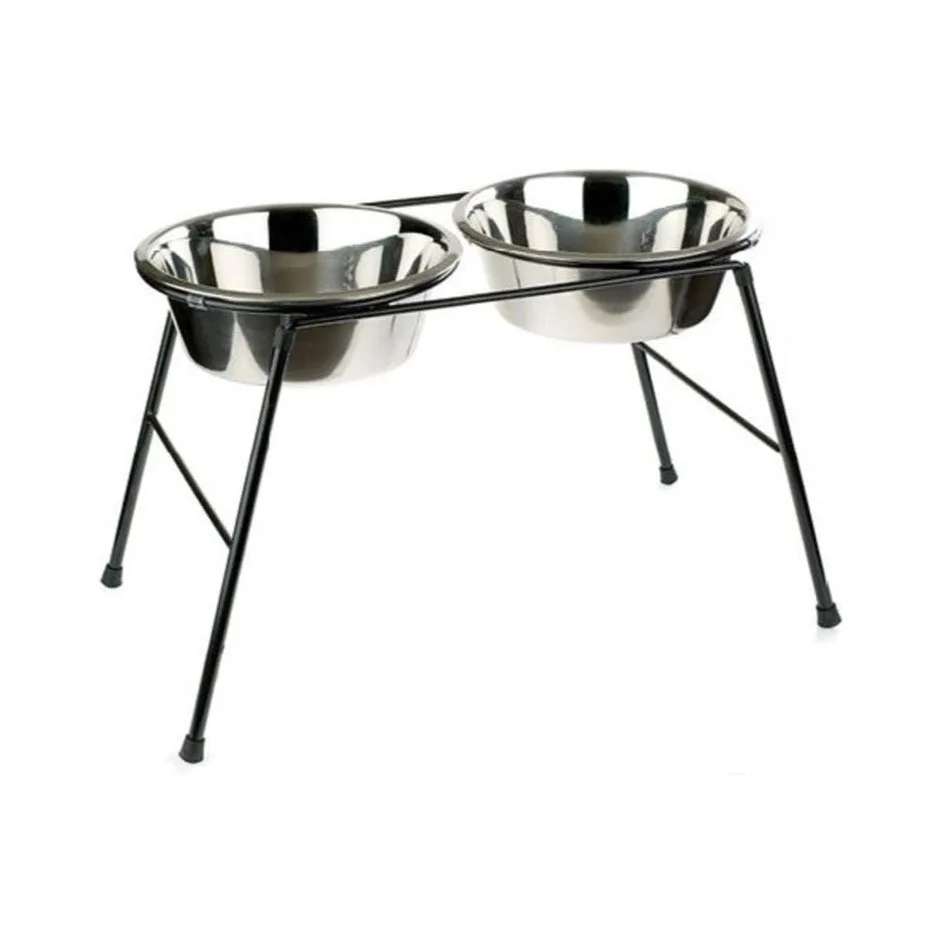
Classic Raised Twin Feeder
-
Classic Raised Twin Feeder: Convenient Height Twin Feeder Lets you serve both food and water at the same elevated level, reducing bending for your dog and making refills easier for you.
Who should buy a raised feeder
Best for
- Large and giant breed dogs that need less neck strain
- Senior dogs with arthritis or mobility issues
- Dogs that eat wet and dry food at the same meal
Not ideal for
- Very small breeds (under 10 lbs) that may struggle to reach an elevated bowl
- Dogs with a history of gulping air (raised feeders may increase bloat risk in some deep-chested breeds)