Quick answer
Match the blade shape to your material and cut style: pointed blades like the #12 excel at curved cuts in thin, flexible materials, while straight-edged blades work better for long, straight cuts in thicker stock.
Blade shape determines cut type
Scalpel blades come in distinct shapes—pointed, crescent, straight, or angled—each designed for a specific cutting motion. A pointed crescent blade, like the #12, lets you pivot around curves and access tight corners, making it ideal for stencil work or trimming film. Straight-edged blades (e.g., #10 or #22) are better for slicing straight lines through leather or cardboard.
If you frequently cut curves or detailed patterns, a pointed blade saves time and reduces tearing. For long, straight cuts, a straight edge gives you more control and cleaner edges.
Material thickness and hardness matter
Thin, flexible materials such as paper, vinyl, tape, and photographs respond well to a light, sharp blade like the #12. Thicker or tougher materials—cardboard, leather, foam board, or wood—require a blade with more rigidity and a slightly thicker spine to prevent flexing during the cut.
The #12 blade is medical-grade stainless steel, which holds a sharp edge for many light-duty cuts but may dull faster on abrasive materials like cork or wood. For heavy-duty cutting, consider a thicker blade profile.
Handle compatibility is often overlooked
Most scalpel blades fit standard handles (e.g., #3 or #4), but not all blades work with all handles. The #12 blade typically fits a #3 handle, which is common in craft kits. Always check handle compatibility before buying a bulk pack of blades.
If you already own a handle, confirm its size (usually stamped on the handle) and match the blade number. A mismatched blade can wobble or fail to lock, which is both frustrating and unsafe.
Decision rules: How to choose the right scalpel blade
- Curved or detailed cuts: Choose a pointed, crescent-shaped blade (like #12). It pivots easily and reaches tight corners without lifting the material.
- Straight, long cuts: Choose a straight-edged blade (like #10 or #22). It provides a steady line and better leverage on thicker materials. If you do both types of cuts, keep one handle fitted with each blade shape.
- Thin, flexible materials: Use a light blade such as the #12. Its sharp edge cuts cleanly through paper, vinyl, film, and tape without tearing.
- Thick or tough materials: Pick a sturdier blade with a thicker spine (like #22 or #25). The #12 may flex or dull quickly on cardboard, leather, or wood. Test a single blade on your material before buying in bulk.
Product facts
-
#12 Scalpel Blade: #12 Surgical Replacement Blade Stainless Steel, Excel Blades – 2 pcs. Pointed crescent shape, medical-grade stainless steel. Used with paper, card-stock, stencils, film, photographs, tape, plastic, cork, wood, vinyl, cloth, leather, cardboard, foam boards, and most other light-weight crafting. This blade is a versatile choice for detailed curved cuts in thin materials, but its light-duty design means it is not ideal for cutting thick or abrasive materials repeatedly.
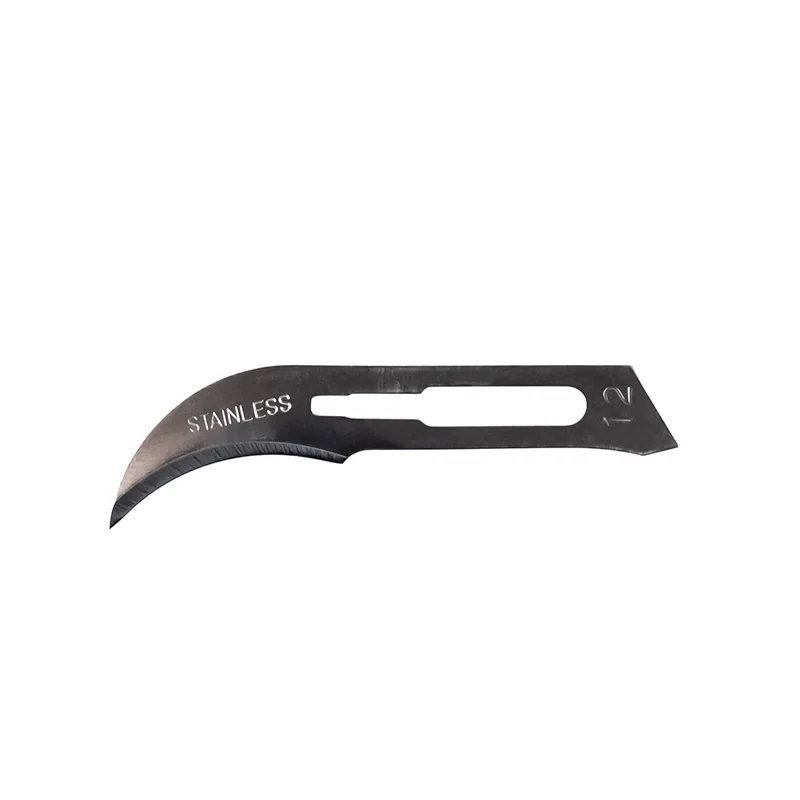
#12 Scalpel Blade
Which blade fits your project?
Best for
- Crafters cutting stencils, film, or photographs who need precise curved lines
- Hobbyists working with paper, vinyl, tape, or thin plastic who value a sharp, light blade
Not for
- Heavy-duty cutting of thick cardboard, leather, or wood (choose a thicker blade)
- Long, straight cuts in rigid materials (a straight-edged blade is more efficient)