Quick Answer
To choose the right Sew Kind of Wonderful ruler, first identify the curve style your pattern calls for: the Quick Curve Ruler (QCR) for larger curves, the QCR Mini for smaller blocks, or the Wonder Curve Ruler for versatile curved piecing. For straight-piecing projects that need squaring up, the Sew Trim ruler is the go-to. Match the ruler to your pattern's specified size and technique.
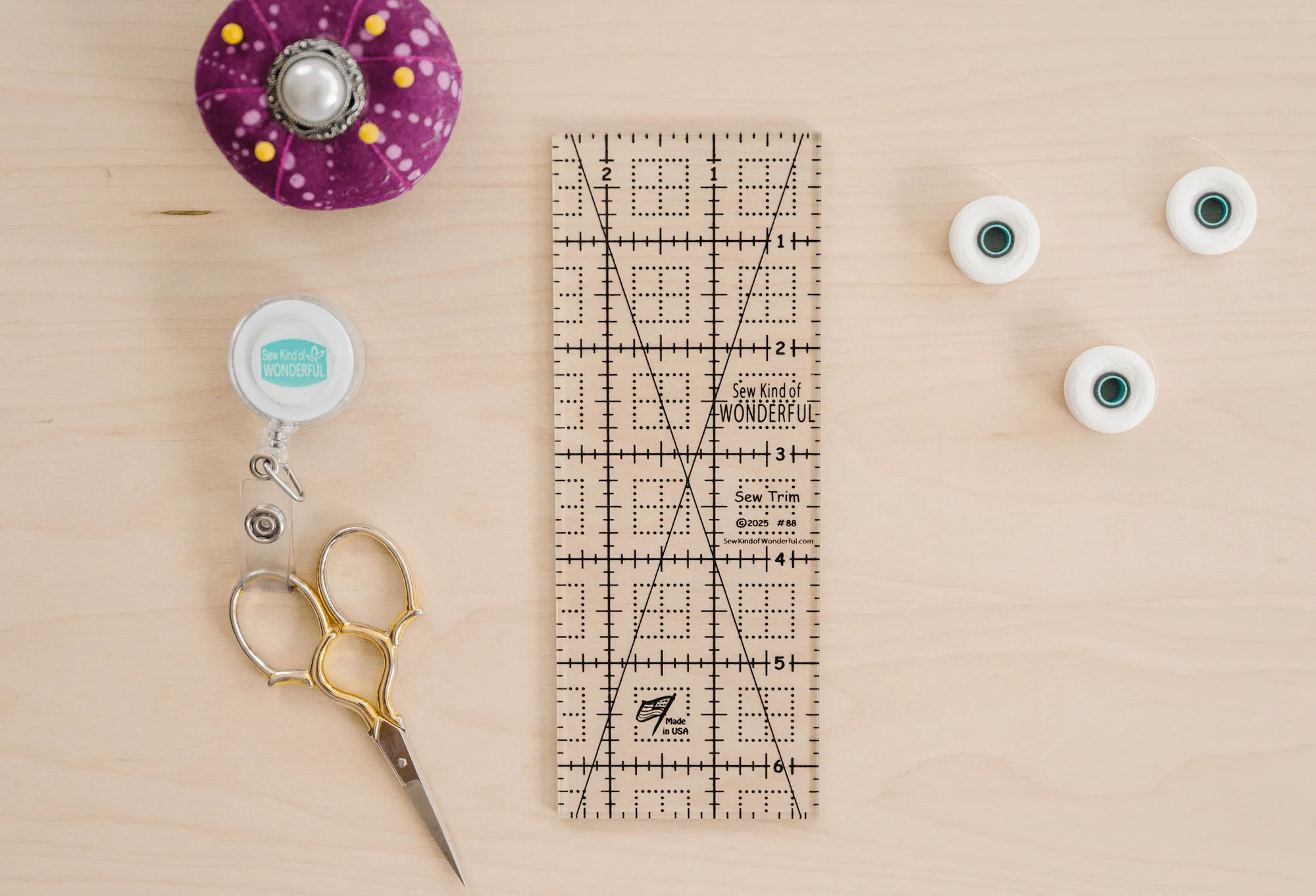
Sew Trim
Choosing the right ruler is the difference between smooth, accurate curved piecing and a frustrating session of wrestling with fabric. Sew Kind of Wonderful offers a family of rulers designed for specific techniques, and picking the wrong one can lead to miscut pieces and wasted fabric. This guide breaks down each ruler's purpose, size, and trade-offs so you can make an informed choice.
We'll cover the Quick Curve Ruler (QCR), QCR Mini, Wonder Curve Ruler, and Sew Trim, and give you clear decision rules based on your project's pattern requirements. Whether you're a beginner or a seasoned quilter, you'll know exactly which ruler to reach for.
Understand the Ruler Families
Sew Kind of Wonderful rulers fall into two main families: those for curved piecing (the Quick Curve Ruler and Wonder Curve Ruler) and those for squaring up straight-pieced units (the Sew Trim). The Quick Curve Ruler comes in a standard size and a mini version, each suited to different block scales. The Wonder Curve Ruler is a separate tool used for patterns that feature a different curve style, such as the Wonderful Curves Sampler Quilt Block Book.
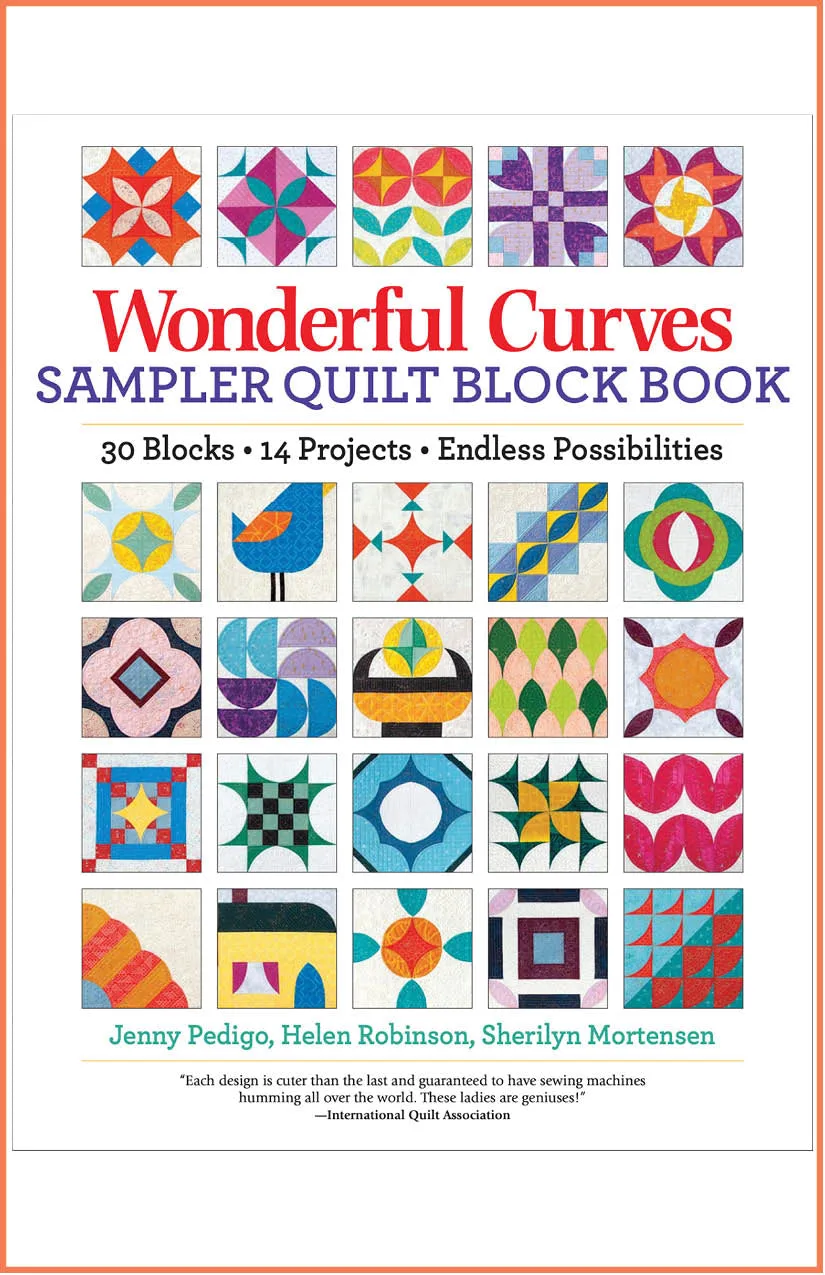
Wonderful Curves Sampler Quilt Block Book
Before you buy, check your pattern's materials list. It will specify which ruler is required. For example, the Posh Buddy pattern calls for the QCR Mini Ruler, while the Mod Citrus pattern requires the Quick Curve Ruler. Using the wrong ruler can alter the curve's radius and throw off your seam allowances, so always match the pattern's recommendation.
- Always check the pattern's materials list for the exact ruler name.
- Curved piecing rulers are not interchangeable; each has a distinct curve shape.
- Sew Trim is not for cutting curves—it's for squaring up units.
Compare Sizes and Curve Styles
The standard Quick Curve Ruler is designed for larger blocks, typically those that finish at 12 inches or more, and is used in patterns like Mod Citrus. The QCR Mini is smaller, suited for blocks like the 20-inch Mini Country or the 50-inch Posh Buddy, which feature smaller curved pieces. The Wonder Curve Ruler is used for a different curve technique, often in sampler blocks that mix curved and straight piecing, as seen in the Wonderful Curves Sampler Quilt Block Book.
If you're unsure which size you need, consider the finished block size: smaller blocks generally require the Mini, while larger ones use the standard. However, always defer to the pattern's instructions, as some larger quilts may still use the Mini for specific units.
- QCR Mini: best for small blocks and mini quilts.
- Standard QCR: for medium to large blocks.
- Wonder Curve Ruler: for patterns that specify it, often with different curve geometry.
Consider Your Skill Level and Project Type
Beginners often worry about curved piecing, but Sew Kind of Wonderful rulers are designed to eliminate pinning and centering, making curves approachable. The QCR Mini is a great starting point for small projects like the Mini Country quilt, which works up quickly and builds confidence. The Wonder Curve Ruler opens up more complex sampler blocks, which may be better for intermediate quilters who want to play with color and layout.
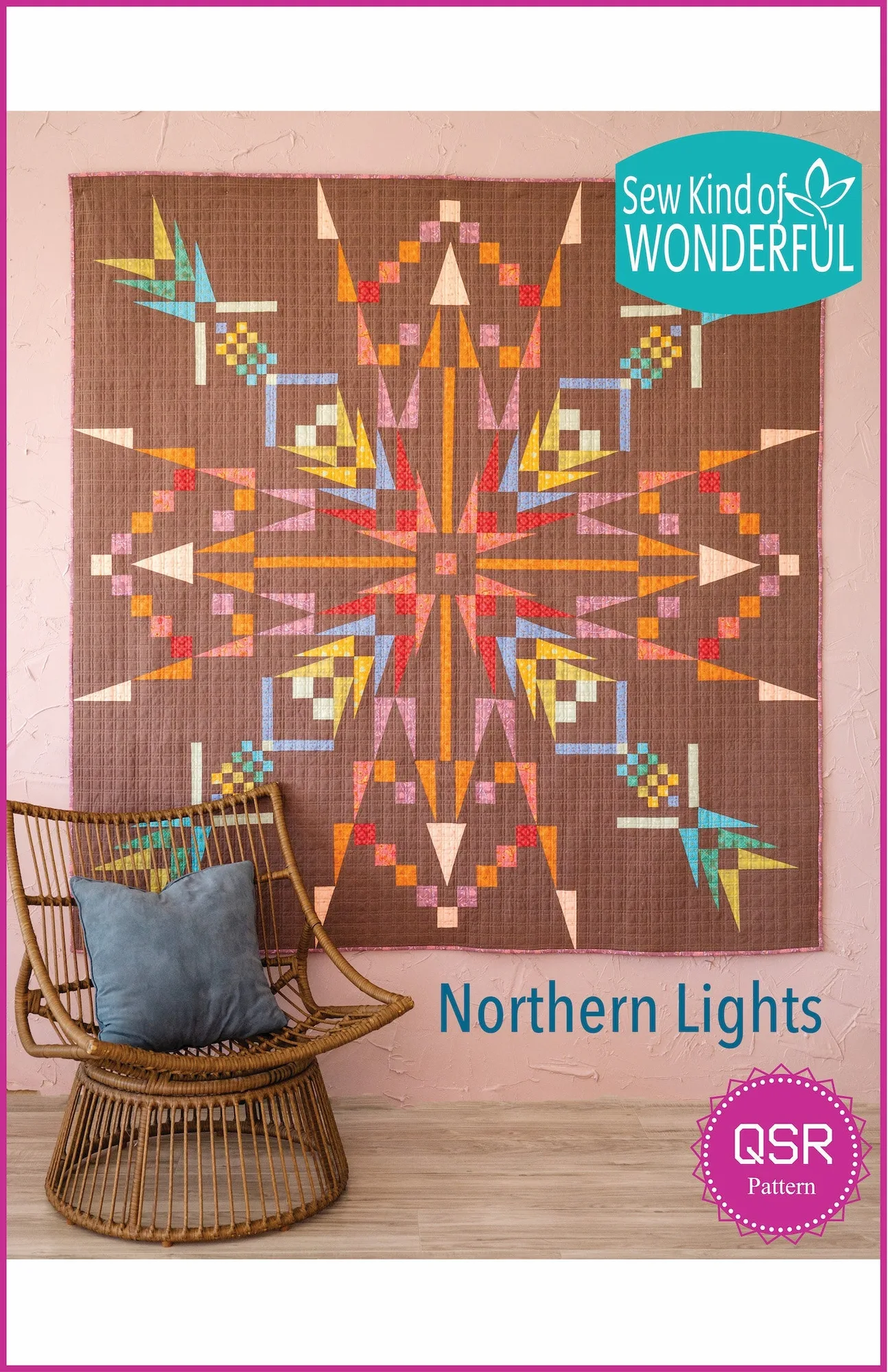
For straight-piecing projects that require squaring up, the Sew Trim ruler is essential. It has unique marks for 2-1/2" by 6-1/2" units, which are common in patterns like Northern Lights and Tripping Out. If you're working on those patterns, you'll need the Sew Trim, not a curved ruler.
- Start with a small project like Mini Country to learn curved piecing.
- Sampler blocks with the Wonder Curve Ruler offer more design flexibility.
- Sew Trim is a must-have for patterns that specify its squaring-up marks.
Decision Rules for Choosing a Ruler
- Pattern specifies QCR Mini?: Use the QCR Mini Ruler for small blocks and mini quilts, such as Posh Buddy or Mini Country. Look for patterns that list 'QCR Mini Ruler' in materials.
- Pattern specifies Quick Curve Ruler?: Use the standard QCR for larger curved blocks, like Mod Citrus. If the pattern says 'Quick Curve Ruler', do not substitute the Mini.
- Pattern specifies Wonder Curve Ruler?: Use the Wonder Curve Ruler for sampler blocks and character quilts like Quittles. The Wonder Curve Ruler is a separate tool, not a size variant.
- Need to square up straight units?: If your pattern asks for squaring up to 2-1/2" x 6-1/2", choose the Sew Trim ruler. Sew Trim complements straight-piecing patterns, not curved ones.
Rulers at a Glance
- Sew Trim: Sew Trim is a 2-1/2" x 6-1/2" clear acrylic ruler with unique marks for squaring-up units from patterns like Northern Lights and Tripping Out. If your pattern lists a square-up to 2-1/2" x 6-1/2", this is the exact tool you need to ensure accurate, uniform blocks.
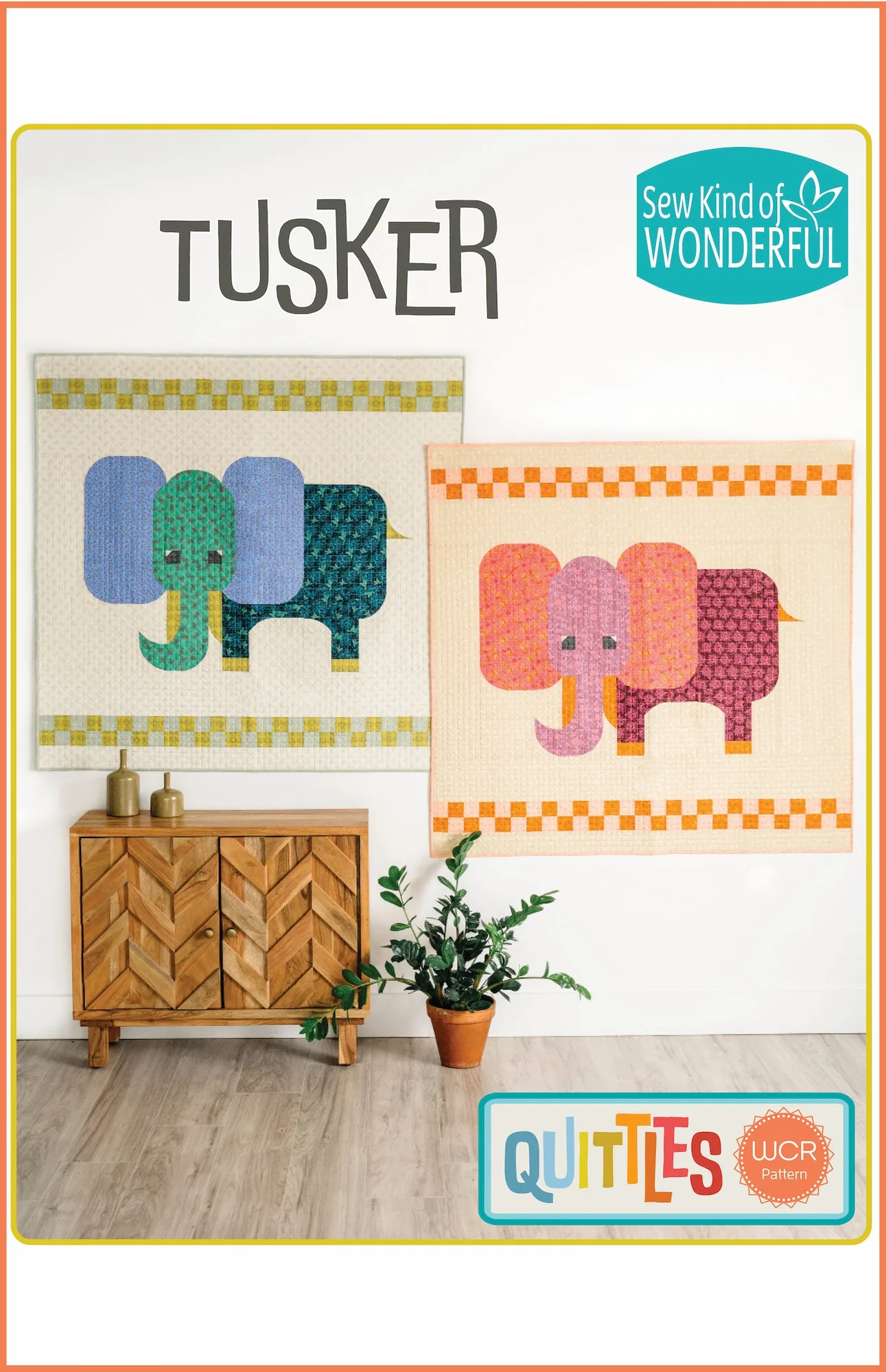
- Quittles - Tusker: Quittles patterns use the Wonder Curve Ruler and Sew Square 4, and are lap size, sewing up quickly with easy curved piecing. This example shows that character quilts like Tusker require the Wonder Curve Ruler, not the QCR, so check your pattern for the correct curve ruler.
Which Ruler Fits Your Project?
Best for
- Quilters working on small curved blocks or mini quilts (QCR Mini).
- Quilters making larger curved quilts like Mod Citrus (standard QCR).
- Quilters exploring sampler blocks or character quilts (Wonder Curve Ruler).
- Quilters needing precise squaring of 2-1/2" x 6-1/2" units (Sew Trim).
Not for
- Projects that require a different curve radius than the ruler provides—always check the pattern.
- Straight-piecing projects that don't use the specific squaring-up marks of the Sew Trim.
Choosing the right Sew Kind of Wonderful ruler comes down to reading your pattern's materials list and understanding the scale of your blocks. Whether you need the QCR Mini for a quick mini quilt or the Wonder Curve Ruler for a sampler adventure, matching the tool to the technique ensures accurate, enjoyable piecing. When in doubt, start with a small project and let the pattern be your guide.