Finding the right harness for your dog is more than just picking a color or style. A properly fitted harness ensures your dog's comfort, safety, and control during walks, training, or work. The K9R harness line offers several models, each designed with specific features, but the key to getting the most out of them is choosing the correct size for your dog's breed and body shape.
In this guide, we'll walk you through how to measure your dog accurately, interpret the K9R harness size chart, and match the right harness to your dog's breed. Whether you have a small terrier or a large shepherd, you'll learn how to ensure a snug, secure fit that both you and your dog will appreciate.
Why Correct Harness Sizing Matters
A harness that is too loose can slip off or allow your dog to wriggle free, posing a safety risk during walks or in public spaces. On the other hand, a harness that is too tight can cause chafing, restrict movement, or even lead to breathing difficulties. Proper sizing is especially important for active dogs that pull, run, or work in demanding conditions.
K9R harnesses are designed with adjustability in mind, but starting with the right base size is crucial. Each model has specific sizing parameters, and understanding how to measure your dog will help you make an informed choice. A well-fitted harness distributes pressure evenly, reducing strain on your dog's neck and back, and allows for natural movement.
- Measure your dog's girth (chest circumference) at the widest point, just behind the front legs.
- Check the harness's weight and height recommendations, as some breeds have unique proportions.
- Always allow for two fingers to fit snugly between the harness and your dog's body.
How to Measure Your Dog for a Harness
Before consulting any size chart, you need accurate measurements. Use a flexible measuring tape and have your dog stand in a relaxed, natural position. Measure the girth, which is the circumference of the chest at its widest point, typically just behind the front legs. This is the primary measurement for most harnesses.
Also measure the neck circumference, especially if the harness has a neck strap. For breeds with thick necks or deep chests, like Bulldogs or Boxers, you may need to consider both measurements to ensure a comfortable fit. Write down the numbers and compare them to the specific harness's sizing guide.
- Use a soft tape measure and keep it snug but not tight.
- If your dog is between sizes, size up and use the adjusters to fine-tune the fit.
- Re-measure your dog periodically, especially if they are still growing or if their weight fluctuates.
Understanding the K9R Harness Size Chart
The K9R harness range includes models like the K9R - M5 MOLLE Light Harness and the K9R - D5 MOLLE Light Harness, both of which offer modular attachment points for pouches and accessories. These harnesses typically come in sizes based on girth measurements, and the size chart will list a range for each size (e.g., Small: 20-28 inches).
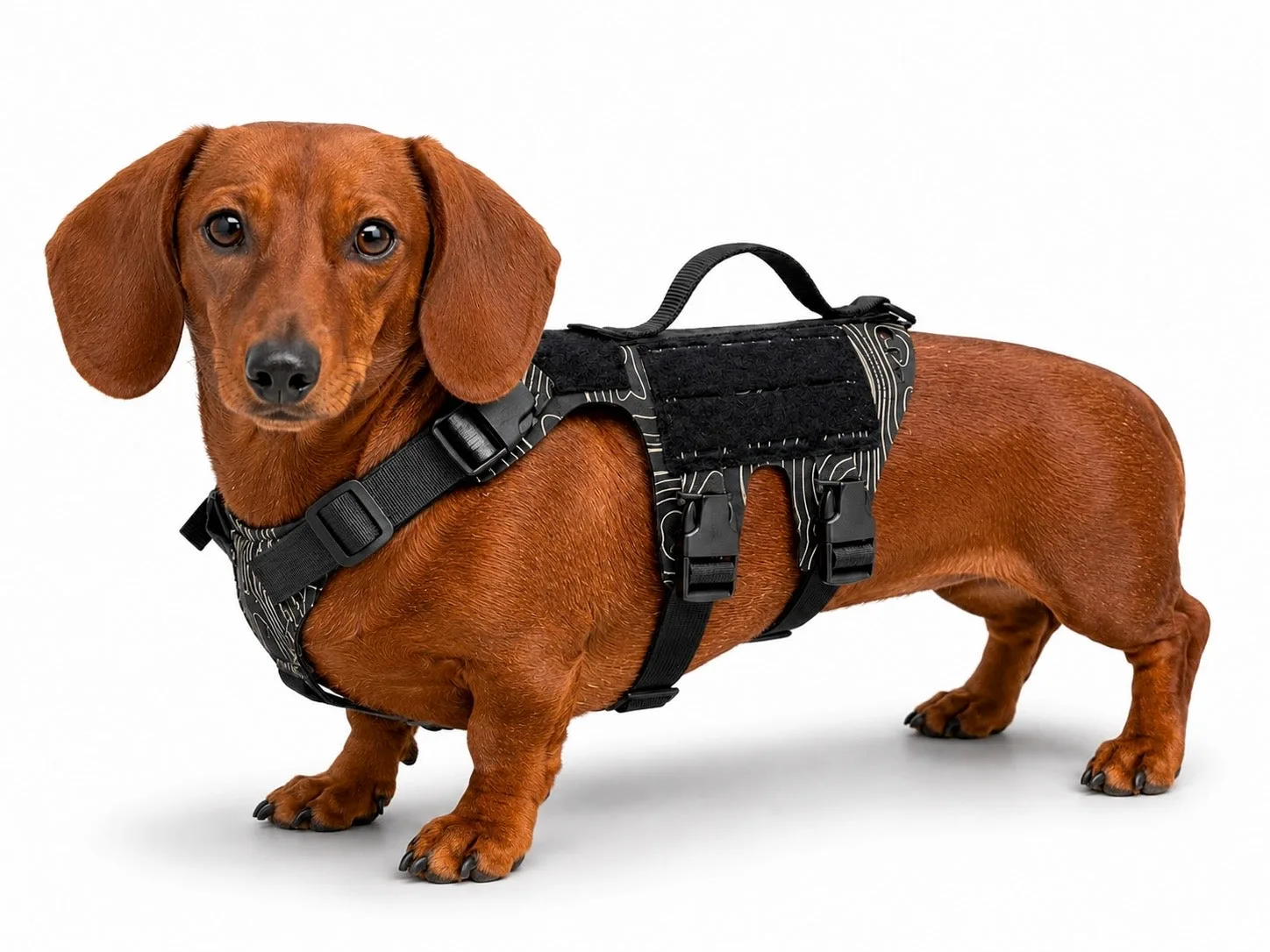
K9R - D5 MOLLE Light Harness
For larger breeds, the https://kiloninerpetsgo.com/products/m1bdb1-dffdf81966df4cb241271396-509417K9R - M1 LightSpeed Harness Large is designed to accommodate bigger dogs, providing extra adjustability and support. When using the size chart, always cross-reference your dog's girth with the recommended weight range. Some harnesses also have specific notes for breeds like Greyhounds, which have deep chests and narrow waists, or Dachshunds, which have long bodies and short legs.
- Always check the specific product's size chart, as dimensions can vary between models.
- For breeds with unusual proportions, consider a harness with more adjustment points.
- If you're unsure, contact customer support with your dog's measurements.
Breed-Specific Considerations
Different breeds have different body shapes, and a one-size-fits-all approach rarely works. For example, breeds like German Shepherds and Labrador Retrievers have broad chests and muscular builds, so they may need a larger size even if their weight suggests otherwise. Conversely, breeds like Whippets and Italian Greyhounds have slender necks and deep chests, requiring a harness that fits securely without slipping.
For brachycephalic breeds (like Pugs or French Bulldogs), a harness that avoids pressure on the neck is essential. The K9R harnesses are designed to distribute pressure across the chest and shoulders, making them a good choice. Always consider your dog's specific anatomy when selecting a size, and don't hesitate to size up if the harness seems tight at the shoulders.
- For deep-chested breeds, measure the widest part of the chest and ensure the harness has enough room.
- For long-bodied breeds, check that the harness doesn't restrict movement along the spine.
- For puppies, choose a harness with room to grow, but not so loose that it twists.
Common Sizing Mistakes and How to Avoid Them
One of the most common mistakes is choosing a harness based solely on your dog's weight. While weight is a helpful indicator, it doesn't account for body shape. Another mistake is measuring your dog while they are sitting or lying down, which can lead to inaccurate numbers. Always measure in a standing position.
Also, beware of harnesses that are too tight around the neck or too loose around the chest. A good rule of thumb is to ensure you can fit two fingers between the harness and your dog's skin at any point. If the harness shifts more than an inch in any direction, it's probably too loose.
- Measure your dog at least twice to ensure accuracy.
- Put the harness on your dog and check for any signs of discomfort, such as excessive scratching or reluctance to move.
- Adjust the straps gradually, and test the fit during a short walk before committing to a full outing.
Final Tips for a Perfect Fit
Once you've selected the right size, take the time to adjust the harness properly. The chest strap should sit comfortably behind the front legs, and the neck strap should not press against the throat. The harness should be snug enough that you can't twist it more than a few degrees, but not so tight that it digs into your dog's skin.
Remember that the K9R - M1 LightSpeed Harness Large offers multiple adjustment points, making it easier to customize the fit for your dog's unique shape. For dogs that are between sizes, the adjustable features of K9R harnesses can often bridge the gap, but it's always better to start with the closest size and fine-tune from there.
- Perform a 'two-finger test' at the chest and neck.
- Check for any signs of rubbing or chafing after a longer walk.
- Re-evaluate the fit as your dog grows or changes weight.
Choosing the right K9R harness size for your dog is essential for their comfort and safety. By measuring accurately, understanding the size chart, and considering your dog's breed-specific needs, you can ensure a perfect fit. Whether you opt for the modular K9R - M5 MOLLE Light Harness or the robust K9R - M1 LightSpeed Harness Large, a well-fitted harness will make every walk and training session more enjoyable for both of you. Explore our selection today and give your dog the comfort they deserve.