Quick answer
For wet, muddy trails, prioritize a waterproof upper if you want dry feet, a grippy outsole with deep lugs for muddy trail grip, and a fit that locks your foot without squeezing your toes. If you cross streams or run in heavy rain, a waterproof shoe can trap water once it gets in, so decide between staying dry and draining fast before you buy.
Start with your water strategy, not the shoe
Before you look at any trail shoe, decide how you want to handle water. A waterproof trail running shoe keeps rain, puddles, and splashes out, but if water enters over the collar, it stays inside. A non-waterproof mesh shoe drains and dries faster but lets water in immediately. Your choice should match your trails: if you run through shallow puddles and wet grass, waterproof wins; if you cross creeks or run in sustained rain, fast drainage may be more comfortable. This decision shapes every other choice, from upper material to sock thickness.
Match outsole traction to the mud you actually run
Muddy trail grip comes from lug depth, lug shape, and rubber compound. Shallow, tightly spaced lugs pack with mud and turn slick; deeper, more widely spaced lugs bite and self-clean as you run. For soft mud and loose dirt, look for aggressive lugs. For wet rock and roots, the rubber compound matters more than depth, because hard rubber slides on wet stone. Vibram® outsoles are common on trail shoes for this reason, and specific models tune the rubber for different terrain.
Check the upper for waterproofing and debris protection
A waterproof upper like GORE-TEX Invisible Fit blocks water while aiming to stay light and breathable. That matters when you run in cold rain or wet grass and want to avoid soaked socks. But waterproof uppers also reduce airflow, so your feet may run warmer. Look for a snug collar and a gusseted tongue to keep debris and water from entering around the ankle. If the shoe has a leather upper, it adds durability and water resistance but may need more break-in.
Test fit with the socks and conditions you'll use
Wet conditions change how your foot moves in a shoe. Wet socks can bunch, and cold feet may swell differently. Try shoes with the socks you plan to wear, and check that your toes have room to splay without sliding forward on descents. A secure midfoot and heel hold prevents blisters when your feet are wet. If the shoe feels loose now, it will feel worse when wet.
Your step-by-step wet trail shoe selection process
- 1. Define your water exposure: List the wettest conditions you regularly run in: rain, puddles, wet grass, creek crossings, or deep mud. Decide whether you want waterproof protection or fast drainage. Checkpoint: If you cross ankle-deep water, a waterproof shoe may hold water in; choose drainage instead.
- 2. Pick your outsole by terrain: For soft mud, look for deep, widely spaced lugs. For wet rock and roots, prioritize a sticky rubber compound. For mixed wet trails, a versatile lug pattern with good rubber works best. Checkpoint: Press a thumbnail into the lug—if it feels hard and slick, it may slide on wet rock.
- 3. Choose an upper that matches your climate: Waterproof uppers like GORE-TEX keep water out but run warmer. Non-waterproof mesh breathes and drains but lets water in. Consider a mid-height collar for ankle protection and debris blocking. Checkpoint: If your feet overheat easily, test a waterproof shoe on a warm day before committing.
- 4. Fit with wet-weather socks: Bring the socks you wear in wet conditions. Your heel should lock in without pressure, and toes should have room to splay. A gusseted tongue helps keep debris out. Checkpoint: If your heel lifts when you walk, try a different size or lacing pattern.
- 5. Test on a short wet run: Before a long run, do a short loop in wet conditions. Check for rubbing, water entry, and traction on the surfaces you'll encounter most. Next step: If water pools inside, consider a drainage-focused shoe or a waterproof sock system.
Trail shoes built for wet conditions
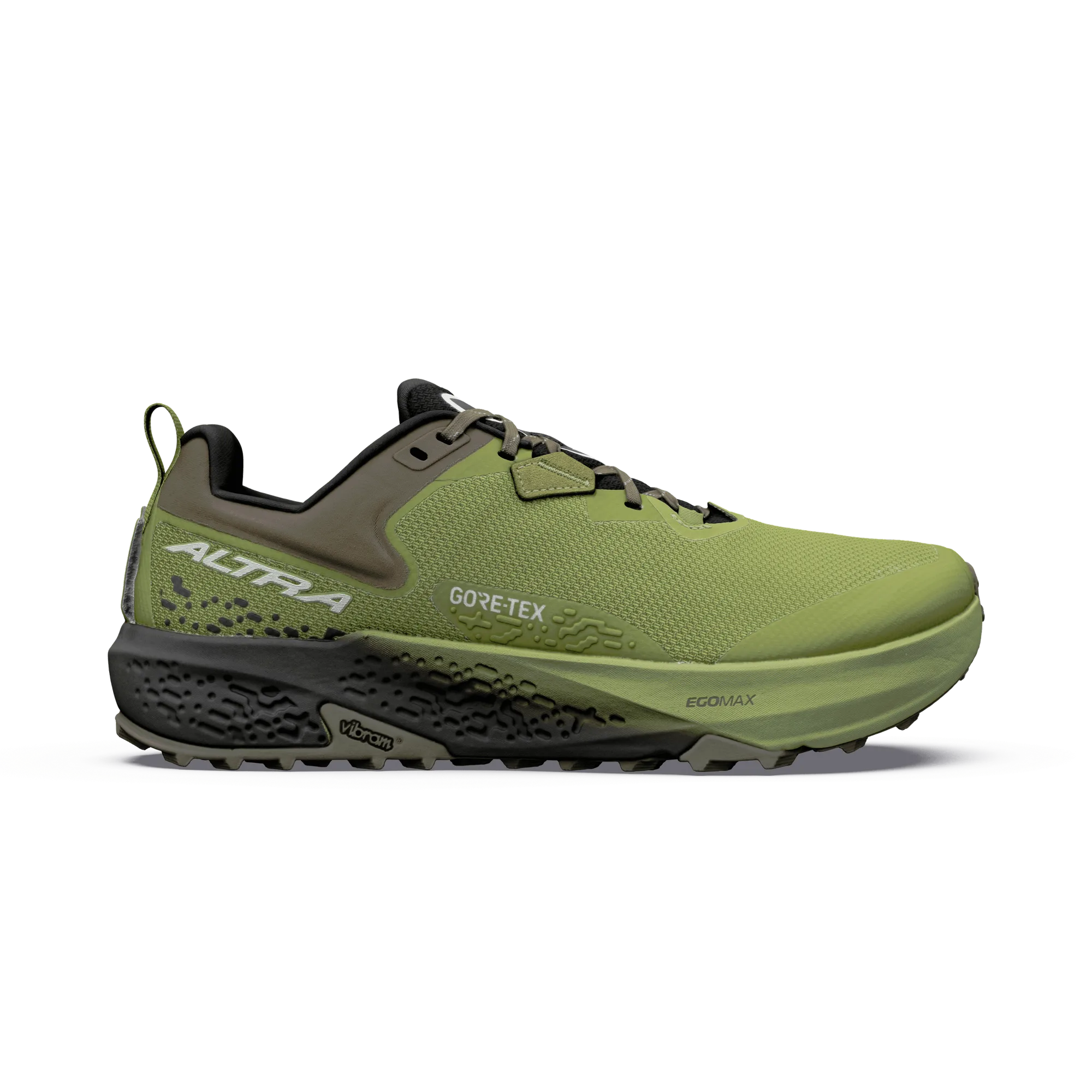
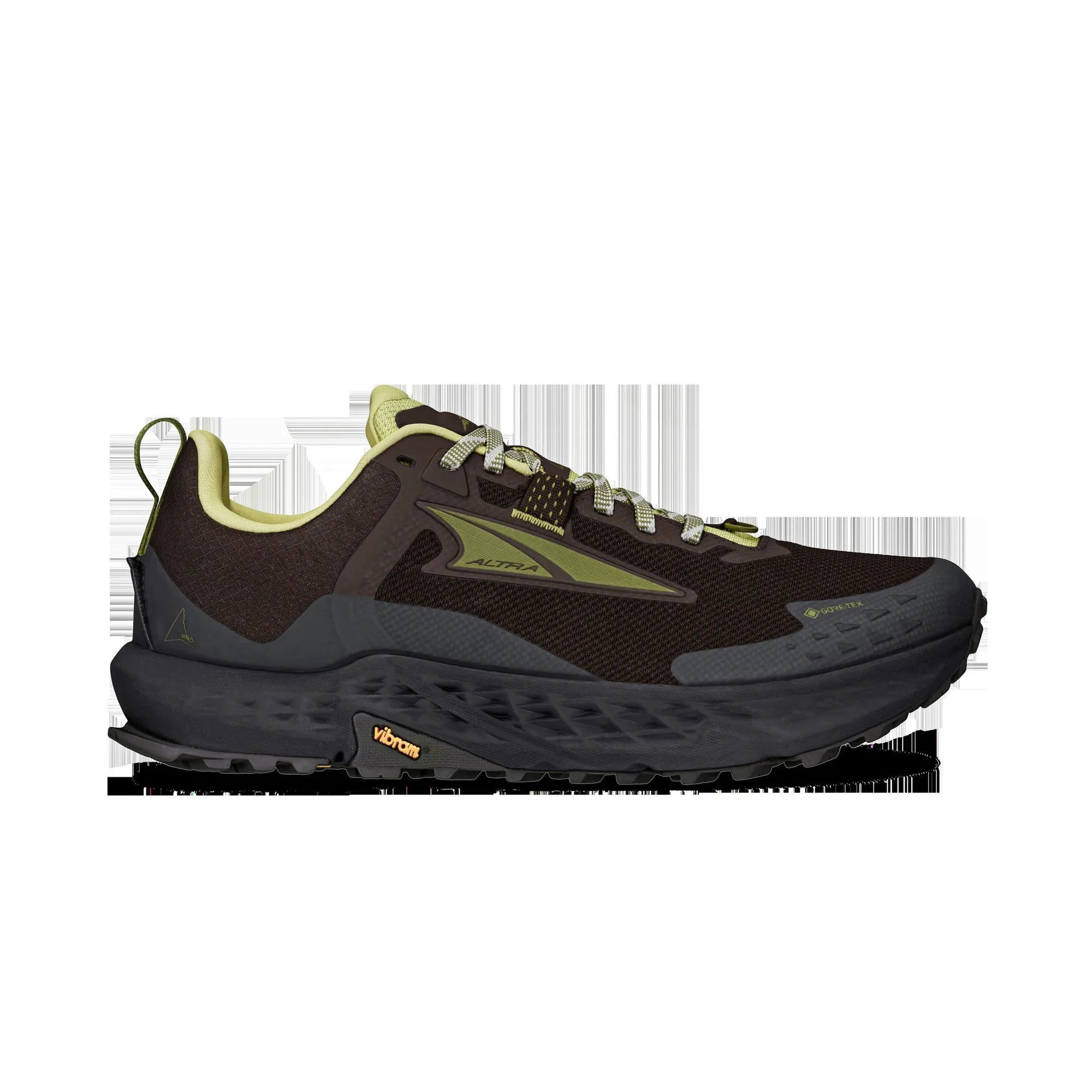
- Men's Timp 6 GTX: Waterproof GORE-TEX upper with a redesigned Vibram® Megagrip outsole and Altra EGO MAX midsole foam. The waterproof upper keeps rain and splashes out, while Megagrip rubber is designed for traction on wet, slippery terrain.
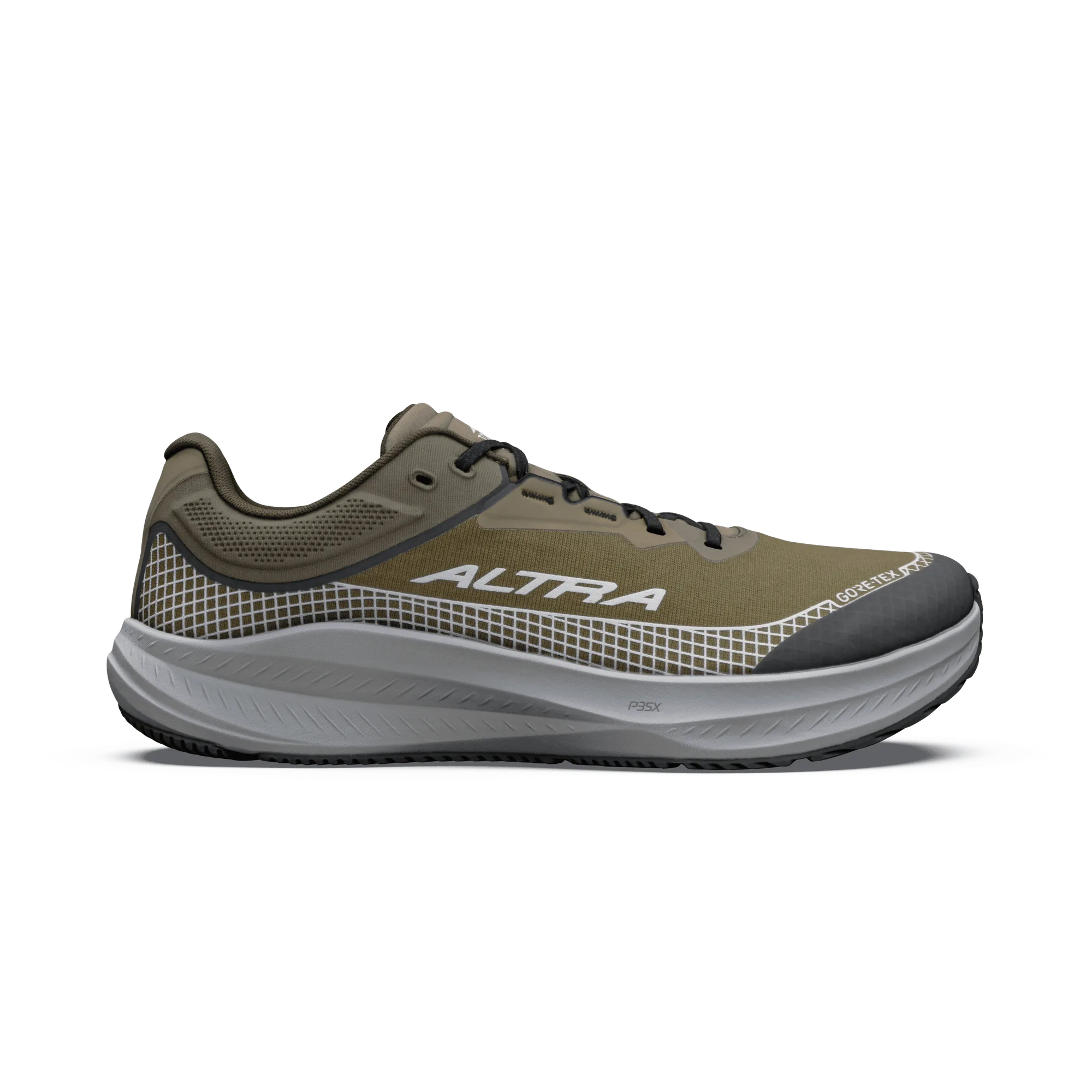
- Men's Torin 9 GTX: Lightweight, waterproof GORE-TEX Invisible Fit upper with a durable Vibram® XS DURA rubber outsole, noted as 8.5% grippier than the Torin 8. A waterproof road-to-trail option for wet pavement and light trails where you want grip without a full lugged mud shoe.