Quick answer
Choose a ball head for stills, especially portraits and travel, because one lever locks every axis. Choose a pan-and-tilt head when you need separate, repeatable adjustments for architecture, macro or long lenses. Choose a fluid head for video, where smooth pan and tilt drag matters more than fast repositioning. Whichever you pick, the head's rated load must cover your camera, lens and any cage or light you add.
Ball head vs pan and tilt head: what changes in use
A ball head moves on a single sphere. Loosen one knob and the camera swings freely, so you can reframe a portrait in a second. The trade-off is fine control: small adjustments near the horizon can feel fiddly, and a heavy lens may droop slightly before you tighten the lock.
A pan-and-tilt head gives you separate controls for pan, tilt and often a levelling base. That makes it slower to set up but far easier to adjust one axis without disturbing the others, which is why architectural, macro and studio shooters often prefer it. It also keeps a long lens balanced without the sudden flop a ball head can produce.
When a fluid head for video is the right call
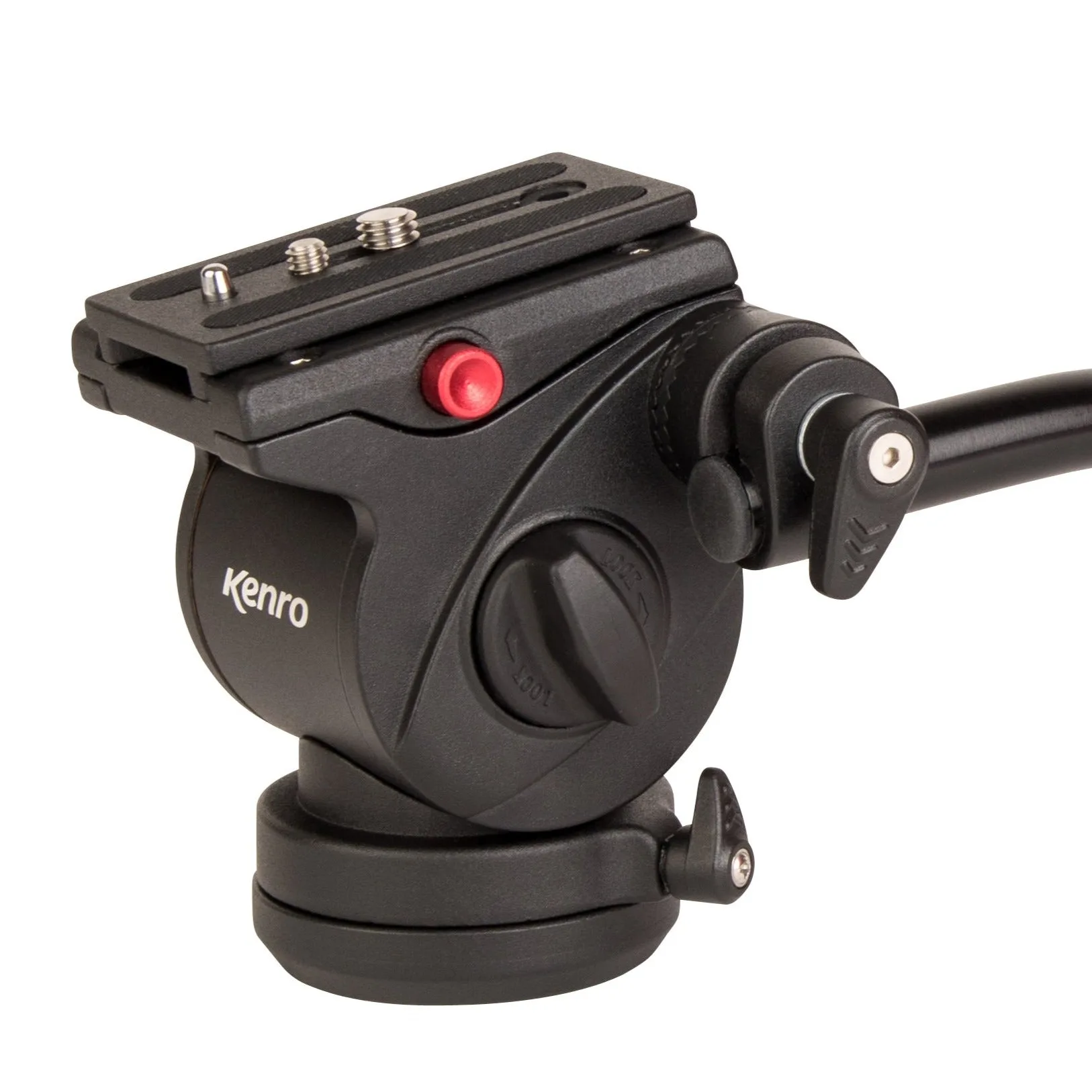
Fluid heads use internal drag, not just friction, so pan and tilt start and stop smoothly. If you shoot interviews, sport or any moving subject, that smoothness is the difference between usable and jarring footage. They also usually include a long sliding plate and a pan handle for controlled moves.
The cost is weight and size, and many fluid heads are awkward for stills because they do not tilt far past horizontal. If you shoot both, a fluid head with a flat base and a removable plate is the more flexible compromise; a dedicated ball head remains faster for stills.
Weight capacity and the quick release plate guide
Head load ratings are usually conservative, but they assume a balanced camera. A 3 kg rating on a compact head covers a small camera or phone rig, while a 40 kg body rating on a clamp-style support refers to the structure, not the head, so read both numbers separately before trusting them.
Quick release plates decide how quickly you move between supports. The most common mistake is buying a head whose plate does not match your other gear. Standardise on one plate system if you can, and check that spare plates and adapters exist for the head you choose, because a missing plate turns a working head into a paperweight.
Match the head to the support you already own
A head is only as stable as the legs or clamp underneath it. A heavy fluid head on a light travel tripod will flex and vibrate; a tiny ball head on a sturdy studio tripod wastes the legs' capacity. Check the base thread, usually 3/8" on full-size tripods and 1/4" on compact ones, and confirm the head's base diameter fits the bowl or platform.
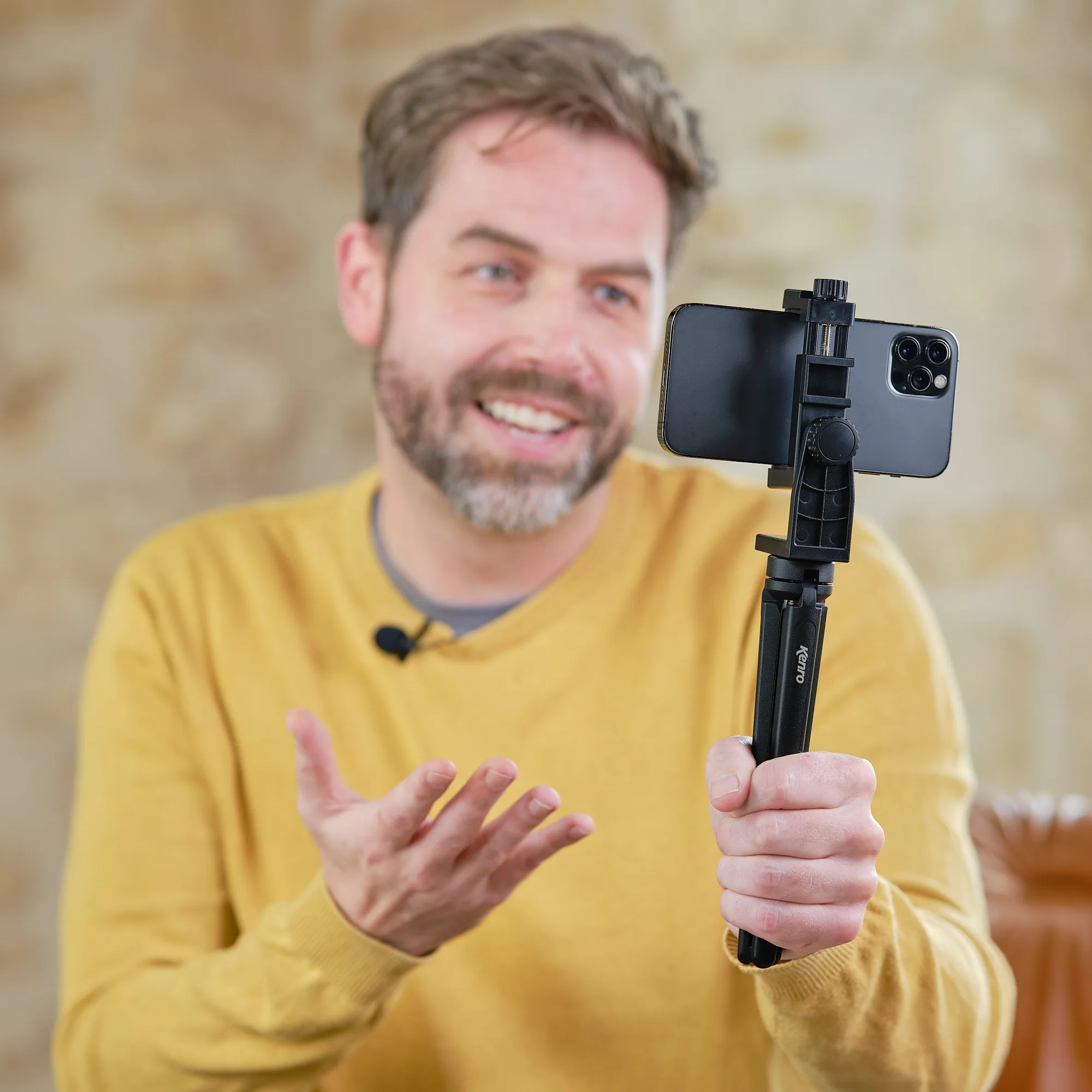
For phone and tablet shooting, a clamp-style support with its own mini ball head is often more practical than adding a full tripod head, because the phone's weight is low and the priority is quick positioning rather than fine drag control.
Decision rules: pick your head in four checks
- If your subject moves, go fluid: Interviews, sport, wildlife and any panning shot need drag-based movement. Choose a fluid head with a sliding plate and a pan handle, and accept the extra weight. Checkpoint: can you tilt past horizontal? If not, it is a video-first head.
- If your subject is still and you reframe often, go ball: Portraits, travel and street work reward one-knob locking. Pick a ball head with a separate pan base so you can rotate without disturbing the ball. Checkpoint: does the ball lock without drifting under your heaviest lens?
- If you need repeatable single-axis moves, go pan and tilt: Architecture, macro and long-lens work benefit from independent pan and tilt locks. Slower to set up, easier to fine-tune. Checkpoint: does it have a levelling bubble or base?
- If you shoot phone or tablet, keep it light: A clamp or mini tripod with a built-in ball head is usually enough. Only add a full head if you also mount a camera or light on the same support. Checkpoint: does the base thread match your tripod, 1/4" or 3/8"?
Kenro gear worth knowing about
- Quick Release Plates & Accessories: Quick release plates and a 65mm Video Head Bowl Adapter for the Kenro KENVH01F and KENVH02F video heads; the adapter has a 65mm base diameter, 3/8" bush thread and weighs 188g. If you already run a Kenro video head, buying the matching plate or bowl adapter is cheaper than replacing the head, and the 3/8" thread fits most full-size tripod legs.
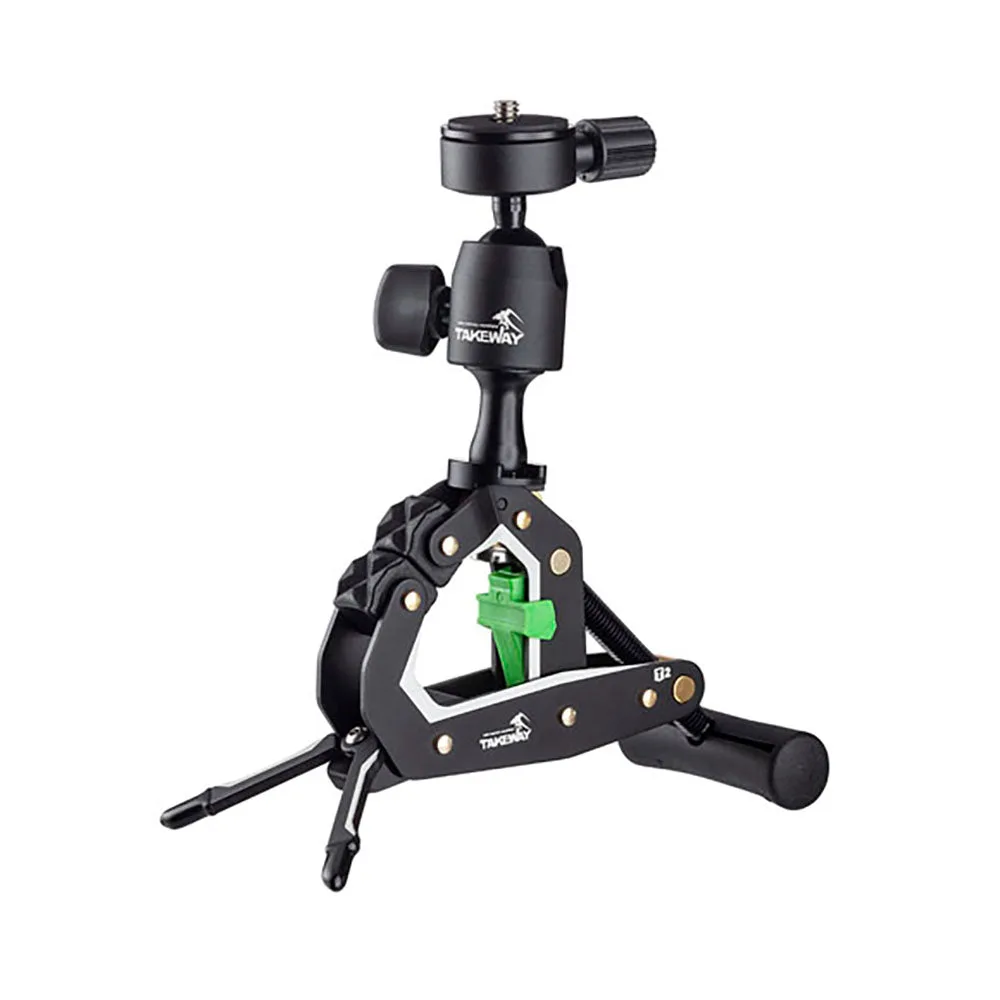
- Takeway T2 Clampod: The Takeway T2 Clampod weighs 207g, folds to fit a backpack, uses aerospace-grade aluminium alloy, supports up to 40kg as a body, and its tripod base and mini ball head are rated to 3kg. A good example of why you read two ratings: the 40kg figure describes the clamp body, while the 3kg figure is the realistic limit for whatever head or base you attach.
- Kenro Smart Lite 7" Mini Tripod & Handgrip: The Kenro Smart Lite 7" Mini Tripod & Handgrip is a 2-in-1 aluminium alloy mini tripod and handgrip that folds to 198mm. For tabletop stills or a small light, this replaces a separate head and legs, which is simpler than adding a ball head to a compact support.
Who should buy which head
Best for
- Photographers who reframe quickly and travel light: ball head
- Video shooters and anyone panning: fluid head
- Architecture, macro and long-lens stills: pan-and-tilt head
- Phone and tablet users who want a compact all-in-one support
Not for
- Video shooters who need smooth pans: a basic ball head
- Travel photographers counting grams: a full-size fluid head
- Anyone with a heavy lens and no spare plate: an unmatched quick release system