Quick answer
For most children, a weighted plush works best when it weighs roughly 10% of their body weight, though for plush toys the more practical rule is to match the plush to how your child will use it. A lap-sized buddy for cuddles, a full-body size for sleep, and a small one for travel all behave differently even at the same weight. If you're unsure, start with a mid-size plush around 1.5 kg (about 3.3 lb) and adjust from there.
Why weight matters less than you think
Weighted plush toys aren't medical devices, and there's no universal chart that says a 4-year-old needs exactly 1.5 kg. The 10% guideline is a starting point borrowed from weighted blanket advice, but plush toys are used differently: they're held, hugged, carried, and sometimes slept with. That means the shape and size of the plush often matter more than the number on the scale.
A heavy plush that's too large can feel bulky and get pushed off the bed. A light plush that's too small may not give the steady, grounding pressure a child is looking for. The goal is a plush your child can comfortably hold or rest against without feeling pinned or uncomfortable.
Match the plush to your child's size and strength
A good test is whether your child can pick up and carry the plush on their own. If they struggle to lift it or drag it, it's too heavy for everyday use. For toddlers and preschoolers, a smaller plush they can wrap both arms around usually works better than a large one. For older kids, a bigger plush that rests across the lap or chest can feel more comforting.
If your child is between sizes, choose the lighter option first. You can always add a second smaller plush later, but a too-heavy toy tends to get abandoned.
Consider how and where it will be used
A plush that lives on the bed can be larger and heavier because it doesn't need to travel. A plush for the car, school bag, or grandma's house should be small enough to carry easily. If your child uses the plush mainly during meltdowns or transitions, a medium size that fits on their lap is often the most practical.
Think about whether the plush needs to be warm or cool. Some weighted buddies can be warmed or chilled for extra sensory comfort, which can make a bigger difference than a small weight change.
Safety checks before you buy
Check the age recommendation. Most weighted plush toys are designed for ages 3 and up because they contain weighted inserts that could be a hazard for younger children. If you have a toddler under 3, look for a plush specifically labeled for their age or wait until they're older.
Look for secure stitching and no loose beads or pellets. The plush should be machine washable or easy to spot clean, because a weighted toy that can't be cleaned won't last long. Also check the return policy: if your child doesn't take to the weight, you want the option to exchange it.
When to size up or down
Size up if your child is constantly seeking deep pressure, loves tight hugs, or sleeps better with a heavy blanket. Size down if they're sensitive to feeling restricted, run hot at night, or need something portable. If your child is in occupational therapy, ask their therapist for a specific recommendation—they can suggest a weight range based on your child's needs.
Remember that all Weighted Buddies from Mindful and Co Kids USA weigh the same 1.5 kg, so the choice is really about which friend your child connects with, not about finding different weights. That simplifies things: pick the shape and size that fits your routine.
Decision rules for choosing a weighted plush
- If your child is under 3: Skip weighted plush for now unless the product is specifically labeled for that age. Most are designed for ages 3+ due to small weighted inserts. Safety first: wait or choose a non-weighted alternative.
- If your child is 3–5 and small for their age: Choose a plush they can carry with one hand or tuck under an arm. A 1.5 kg plush is often a good fit if they can lift it comfortably. Test the carry: if they can't pick it up, it's too heavy.
- If your child is 6+ and seeks deep pressure: A 1.5 kg plush may feel light. Consider a larger plush or pair it with a weighted blanket for sleep. You can combine tools; the plush doesn't have to do all the work.
- If the plush will travel: Choose a smaller buddy that fits in a backpack. Weight matters less than portability here. Portability beats pressure for on-the-go use.
- If your child runs hot or sleeps warm: Look for a plush that can be cooled, or use it only during wakeful calming, not overnight. Temperature comfort is part of the weight decision.
Weighted Buddies that fit this guide
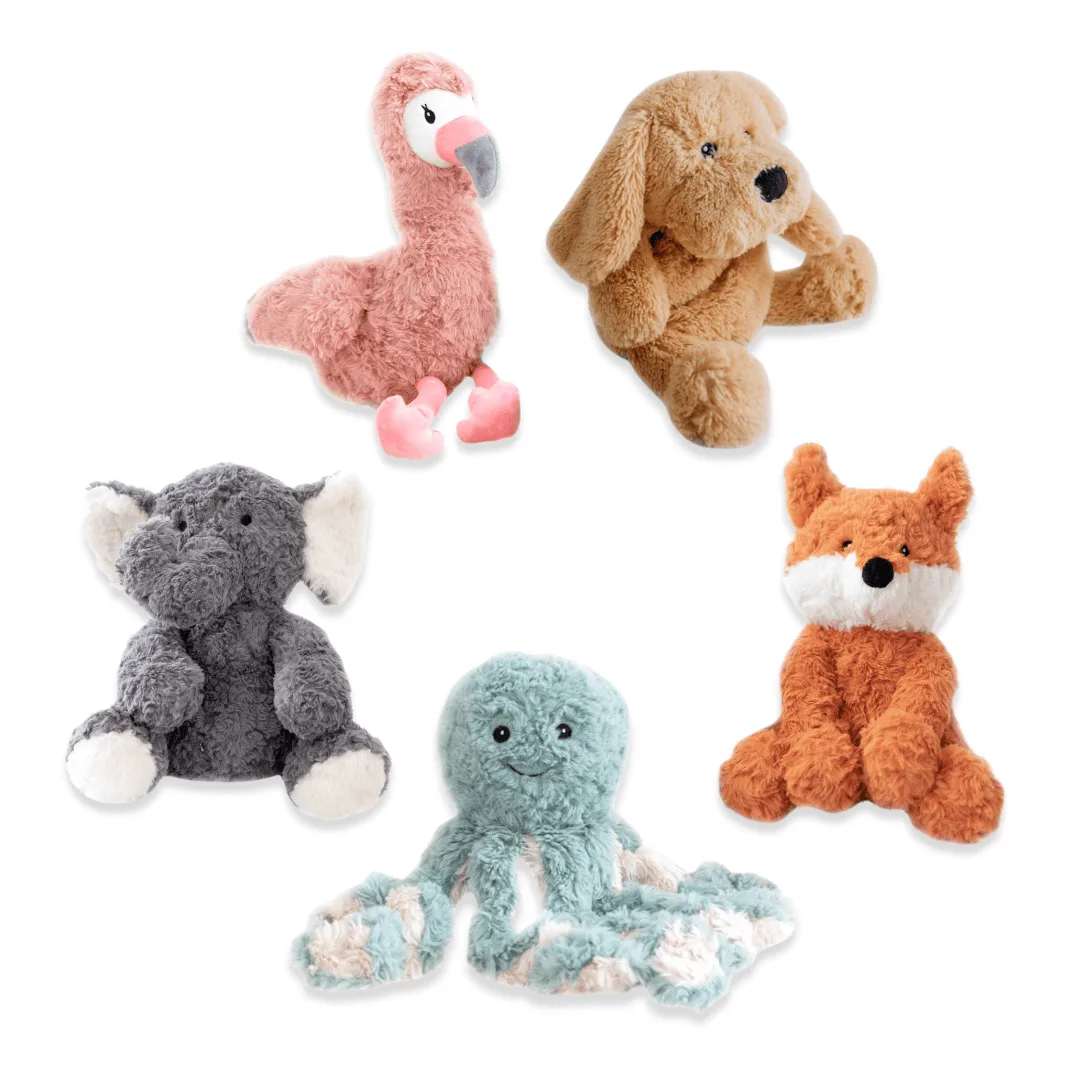
- Weighted Buddy Collection: The Weighted Buddy Collection includes five sensory buddies designed to engage touch, sight, sound, smell, and taste. If your child seeks multiple types of sensory input, a collection gives them options without needing to buy several separate plush toys.
- Weighted Buddy + Self-Regulation Toolkit: The Weighted Buddy + Self-Regulation Toolkit pairs a weighted buddy with a digital toolkit for building a mindfulness routine. Useful if you want a structured way to introduce the plush into daily calming practices, not just as a toy.
- Pickles The Weighted Cat: Pickles The Weighted Cat weighs 1.5 kg and is made for ages 3+, and can be warmed or cooled. A mid-weight option that works for lap cuddles or bedtime, with temperature options for extra comfort.
- Charlie The Weighted Puppy Dog: Charlie The Weighted Puppy Dog also weighs 1.5 kg and is designed for ages 3+ with warm or cool use. Same weight and features as Pickles, so the choice comes down to which animal your child prefers.
Is a weighted plush right for your child?
Best for
- Children ages 3+ who seek deep pressure or calm through hugs
- Kids who need help settling at bedtime or during transitions
- Families looking for a portable sensory tool that doesn't require batteries
Not for
- Children under 3, unless the plush is explicitly labeled for that age
- Kids who feel restricted or anxious with weighted items
- Anyone looking for a medical treatment—weighted plush is a comfort tool, not a therapy device