Quick answer
Measure your quilt top, add 8 inches to both the width and length, then buy wide backing fabric that covers that measurement in one piece. If your quilt is wider than about 100 inches after adding the overage, choose 108 inch backing fabric or piece two lengths. For most throw and twin quilts, a single wide-back cut is faster and avoids a center seam.
Backing is the part of a quilt you touch every time you use it, yet it is often the last thing quilters shop for. That is backwards. The backing determines whether your quilt layers smoothly, whether your longarmer can load it without fighting a seam, and whether you spend an afternoon piecing fabric or an afternoon quilting.
This guide walks through the measurements, the width options, and the trade-offs between wide backing fabric and standard 44/45-inch yardage. It also shows how to calculate how much backing fabric you need without guessing, and when a pieced back is actually the better choice.
Measure the quilt top, not the pattern
Start with the finished quilt top, laid flat and measured through the middle rather than along an edge. Quilt tops stretch and sag at the borders, so an edge measurement can run short. Add 4 inches to each side, which means 8 inches total on both the width and the length. That overage gives your machine or longarmer room to clamp, pin, or load the quilt without the backing pulling tight before the quilting is done.
Write the two numbers down as your minimum backing size. A 60 x 72 inch throw becomes 68 x 80 inches. A 90 x 108 inch queen becomes 98 x 116 inches. Those two figures decide everything else: whether a single cut works, whether you need 108 inch backing fabric, and how much yardage to order.
- Measure across the center of the quilt top, then again a few inches from each edge, and use the largest number.
- If you plan to longarm quilt, ask your quilter whether they want extra overage; some request 6 inches per side.
Match quilt backing width to your quilt size
Standard quilting cotton is usually 44/45 inches wide, which means a queen-size back needs two or three lengths pieced together with a horizontal seam. Wide backing fabric is sold in widths that cover a quilt in one piece, most commonly around 108 inches. That single width handles a queen or king quilt without a seam running down the middle of the back.
The trade-off is choice. Wide backing comes in fewer prints and colors than standard yardage, so if you have your heart set on a specific print, you may need to piece it. If you care more about a clean back and a faster finish, wide backing wins. Check the actual width on the product page before ordering, because not every wide back is exactly 108 inches.
- Throw and crib quilts: standard 44/45-inch yardage is often enough, pieced once.
- Twin and full: measure carefully; a single wide-back cut may or may not cover it.
- Queen and king: 108 inch backing fabric is the simplest route.
Calculate how much backing fabric to buy
For wide backing, you buy length only. Take your quilt length plus 8 inches and round up to the nearest half yard. A quilt that finishes at 90 x 108 inches needs a backing piece about 98 x 116 inches, so you would order 3.25 yards of 108-inch-wide fabric. Always round up rather than down; a few extra inches cost less than a backing that comes up short.
For standard-width fabric, divide your required backing width by 42 inches of usable width, round up to a whole number of panels, then multiply by your required length. A 68-inch-wide back needs two panels, and at 80 inches long that is about 4.5 yards total. Add a half yard if you plan to piece a decorative back with a label or a strip of leftover blocks.
- Pre-wash wide backing if you pre-wash your quilt top, so the two shrink at the same rate.
- Buy the backing and binding at the same time when you can; dye lots vary between orders.
Decide between a single cut and a pieced back
A single wide-back cut is the low-risk option. There is no seam to align, no bulk under the needle, and nothing to press flat before loading. It is also the better choice if you are sending the quilt to a longarmer, since a center seam can shift and create a ridge that shows through the quilting.
A pieced back makes sense when you want to use fabric you already own, when you want a design feature on the reverse, or when the print you love only comes in 44/45-inch width. If you piece, press the seam open and trim the panel square before basting. A wavy pieced back will fight you all the way through quilting.
- Run a horizontal seam rather than a vertical one if your longarmer prefers it; ask first.
- Trim the backing to your measured size plus overage before basting, not after.
Fabric weight, color, and quilting visibility
Backing does not have to match the quilt top, but it should be similar in weight. A lightweight backing under a heavy pieced top can pucker, and a stiff backing makes a quilt feel boardy. Quilting cotton is the safe default because it behaves predictably with cotton batting and cotton thread.
Color matters more than most quilters expect. A dark backing shows every stray light thread and every bit of lint, while a busy print hides quilting lines and small imperfections. If you are quilting an allover design you are proud of, a solid or low-contrast backing lets the stitches show. If you want the quilting to disappear, choose a print with movement.
- Lay your backing fabric next to the quilt top before cutting to check contrast and value.
- For a reversible quilt, treat the backing as a second quilt top and choose accordingly.
Backing decision rules
- If your quilt is 100 inches wide or less after adding overage: A single cut of 108 inch backing fabric covers it with no seam. Order length only, rounded up to the nearest half yard. One cut, no piecing, fastest path to basting.
- If your quilt is wider than 100 inches after adding overage: You need either a wider backing than 108 inches or two lengths pieced with a horizontal seam. Confirm the actual usable width on the product page first. Measure before you buy; wide back widths vary by manufacturer.
- If you already own backing yardage in 44/45-inch width: Piece two or three panels, press the seams open, and square the panel before basting. Expect a little more prep time and a seam to manage under the needle. Cheaper with fabric on hand, but slower and less forgiving.
- If the quilt is going to a longarmer: Ask their preferred overage and whether they accept a center seam. Many request extra inches per side and prefer a single wide-back piece. One phone call prevents a re-cut.
- If you want the quilting to be the star: Choose a solid or low-contrast backing so stitches read clearly. If you would rather hide the quilting, choose a busy print with movement. Backing color is a design decision, not an afterthought.
Fabrics that work well as backing
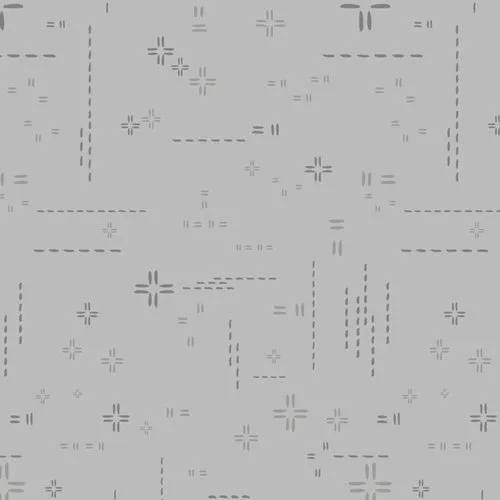
- Decostitch Reflection - 3 YARD - DSE-702: A continuous three yard cut of Decostitch Elements Reflection by Art Gallery Fabrics, 100% cotton. A continuous three-yard cut is convenient when your backing length lands near three yards, since you avoid joining two shorter pieces.
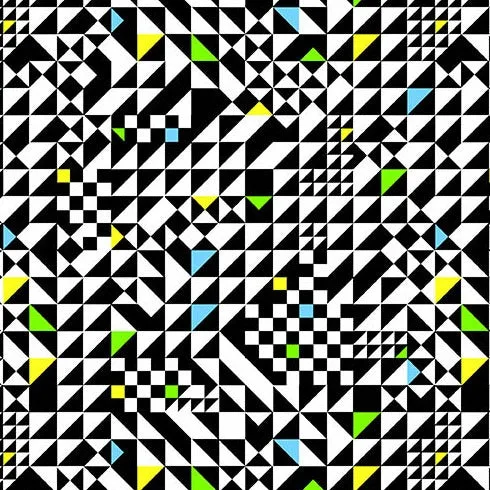
- Prismatic Check It Cosmic A-10439-K 1 Yard: A pieced-look patchwork of black-and-white triangles and checks by Libs Elliott for Andover Fabrics, 44/45 inches wide and sold as a 1 yard cut, not a continuous cut. At 44/45 inches wide this is a pieced-back candidate rather than a single-cut back, and the busy geometric print helps hide quilting lines on the reverse.
- Glaze Milkglass A830-L1: Glaze Milkglass from the Glaze basics collection by Libs Elliott for Andover Fabrics, 1 yard, 100% cotton, cut in 1 yard increments rather than continuous. A low-contrast basic like this is a good choice when you want the quilting stitches to stand out on the back.
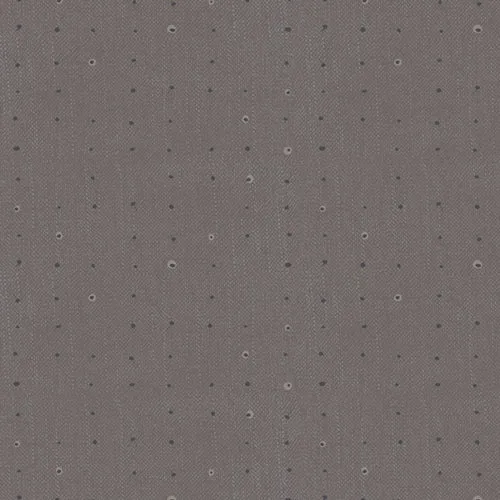
- Seedling Pewter SDL20117: Seedling Pewter from Art Gallery Fabrics, 1 yard, 100% cotton, cut in 1 yard increments rather than continuous. A neutral pewter tone hides lint and stray threads better than a dark solid, which matters on a large back panel.
Who should buy wide backing fabric
Best for
- Quilters making queen or king quilts who want a seamless back
- Anyone sending a quilt to a longarmer and wanting simple loading
- Quilters who would rather spend time quilting than piecing a backing
Not for
- Quilters who need a specific print that only comes in 44/45-inch width
- Small crib or wall quilts where standard yardage already covers the back
- Quilters who want a pieced or reversible back as a design feature
Measure your quilt top through the center, add 8 inches to both dimensions, and let that number pick your fabric. If a single cut covers it, wide backing fabric saves you a seam and an afternoon. If it does not, piece carefully, press flat, and trim square before you baste. Get the backing right and the rest of the quilt goes together more smoothly.