Why a windproof gilet is the spring cycling essential
Spring cycling is a game of layers. Mornings start cool, afternoons warm up, and the wind seems to change direction every few miles. A windproof gilet is the piece that bridges the gap: it blocks the chill on your core without trapping heat like a full jacket. It also packs down small, so you can stow it in a jersey pocket when the sun takes over.
The key is choosing a gilet that matches your riding style and the conditions you actually face. Here’s what to consider.
What to look for in a spring cycling gilet
Start with the windproof front. The whole point of a gilet is to protect your torso from the wind, especially on descents and exposed sections. Look for a fabric that is described as windproof on the front panel, not just a thin shell that flaps in the breeze.
Breathability matters just as much. A fully windproof back can turn you into a sweatbox on climbs. Many gilets use a breathable rear section to let heat and moisture escape. That balance is what makes a gilet work for spring, where effort levels change constantly.
Packability is another practical factor. A gilet you can fold into a jersey pocket is far more useful than one that needs a backpack. Check the product details for words like 'compactable' or 'ultra-light' to confirm it will stow easily.
Finally, consider the zipper. A full-length zipper lets you vent heat quickly, and a two-way zipper gives even more control—you can unzip from the bottom to access jersey pockets or let air in without fully opening the front.
The Edith gilet: a look at the details
-
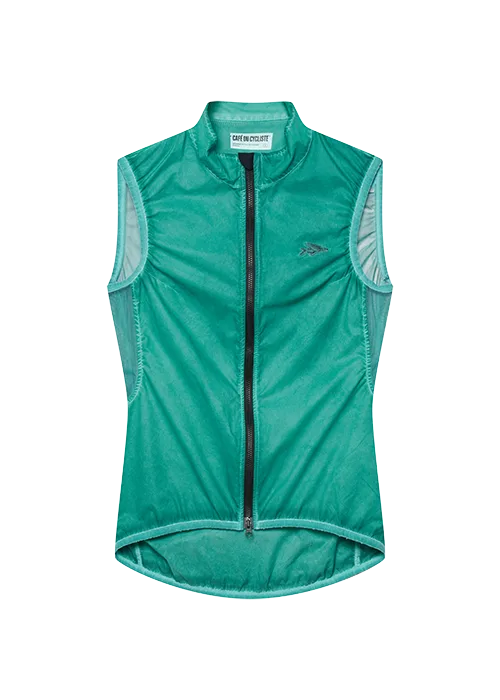
Edith: The Edith is made from an ultra-light recycled fabric and offers a fully windproof front with a breathable rear section. This combination is exactly what you need for spring: wind protection where you face the breeze, and breathability to avoid overheating on climbs.
Edith
-
Edith: It features a two-way YKK zipper for flexibility and practicality. You can unzip from the bottom to access jersey pockets or let in extra air without losing the windproof coverage on your chest.
-
Edith: The Edith is described as a highly compactable companion for long days in the saddle. When the sun comes out, you can fold it small and stow it in a pocket, so it won't weigh you down on the ride home.
How to layer a gilet for spring conditions
The beauty of a gilet is that it adapts to the day. On a cool morning, wear it over a long-sleeve base layer or a light jersey. As the temperature climbs, unzip the front to let in air, or remove the gilet entirely and pack it away.
For windier days, the gilet works as an outer layer over a thermal jersey. On warmer afternoons, you can wear it over a short-sleeve jersey to keep the wind off your arms without adding bulk.
The key is to start with a base layer that handles moisture, then add the gilet as the wind barrier. Avoid heavy mid-layers under a gilet, as they can restrict movement and trap too much heat.
Fit and sizing: what to check
A gilet should fit snugly but not tight. You need room for a base layer or light jersey underneath, but a too-loose gilet will flap in the wind and defeat its purpose. Check the size chart and consider how many layers you plan to wear beneath it.
The Edith is available in sizes XXS to XL, so there's a wide range to suit different body types. If you're between sizes, think about your typical layering: if you always wear a thicker jersey under the gilet, you might prefer the larger size.
What the product records don't tell you
The Edith's description confirms its windproof front, breathable back, and compactable design, but it doesn't specify exact fabric weight or care instructions. If you're sensitive to fabric feel or need specific washing guidance, it's worth checking the care label or contacting customer service.
Also, the gilet is not described as waterproof. It's built for wind protection, not rain. For wet spring days, you'd want a separate rain shell. Knowing this limitation helps you choose the right tool for each ride.