Quick answer
For active working breeds, choose a complete working dog food that matches your dog's workload—light, moderate, or heavy—and check protein, fat, and calorie density before switching.
Why workload matters more than breed
Working dogs—herding, hunting, sledding, or search and rescue—burn far more energy than typical pets. A light-work dog (a few hours a day) needs different fuel than a dog working all day in cold conditions. Feeding a high-energy food to a dog in light work can lead to weight gain, while underfeeding a heavy worker risks muscle loss and fatigue.
Instead of choosing by breed alone, estimate your dog's weekly workload: hours per day, intensity, and environment. Then match the food's energy density to that level.
Key nutrients to compare
Protein supports muscle repair and maintenance. Look for a named animal protein source (like chicken) as the first ingredient. Fat is the primary energy source for working dogs—higher fat means more calories per cup, which helps dogs eat less volume while meeting energy needs. Carbohydrates provide quick energy but should not dominate.
Also check for balanced calcium-to-phosphorus ratios for bone health, and omega fatty acids for joint and coat condition. If the label doesn't list these, don't guess—contact the manufacturer or choose a food with transparent nutrient profiles.
Practical trade-offs
Higher-calorie foods often cost more per bag, but you may feed less, so compare cost per day, not per bag. Some dogs with sensitive stomachs may need a single-protein formula; chicken is a common, well-tolerated option, but watch for allergies. Also, very high-fat diets can cause pancreatitis in predisposed dogs, so transition gradually over 7–10 days.
Decision rules for choosing working dog food
- Estimate workload: Track your dog's work hours and intensity for a week. Light work = under 2 hours/day; moderate = 2–4 hours; heavy = over 4 hours or extreme conditions. Write down your dog's workload category before shopping.
- Check protein and fat levels: For light work, aim for 20–25% protein and 10–15% fat. For moderate work, 25–30% protein and 15–20% fat. For heavy work, look for 30%+ protein and 20%+ fat. Compare the guaranteed analysis on the label to your workload target.
- Match calorie density: If your dog eats less but still loses weight, choose a higher-calorie food. If they gain weight, switch to a lighter formula or reduce portions. Monitor body condition every two weeks and adjust portions, not just food type.
- Choose a named protein source: Look for chicken, beef, lamb, or fish as the first ingredient. Avoid generic 'meat meal' unless the source is specified. If your dog has allergies, try a single-protein food and observe for reactions.
- Consider your budget and bag size: Larger bags (like 12.5kg) often cost less per kg. Compare cost per day based on feeding guidelines, not just the bag price. Calculate daily cost to see the real value.
Product spotlight
-
Country Values Working Dog Chicken 12.5kg: Country Values Working Dog Chicken 12.5kg is a complete working feed formulated for adult working dogs over 1 year of age in light work. It provides balanced nutrition for dogs that work a few hours daily, without over-supplying calories that could lead to weight gain.
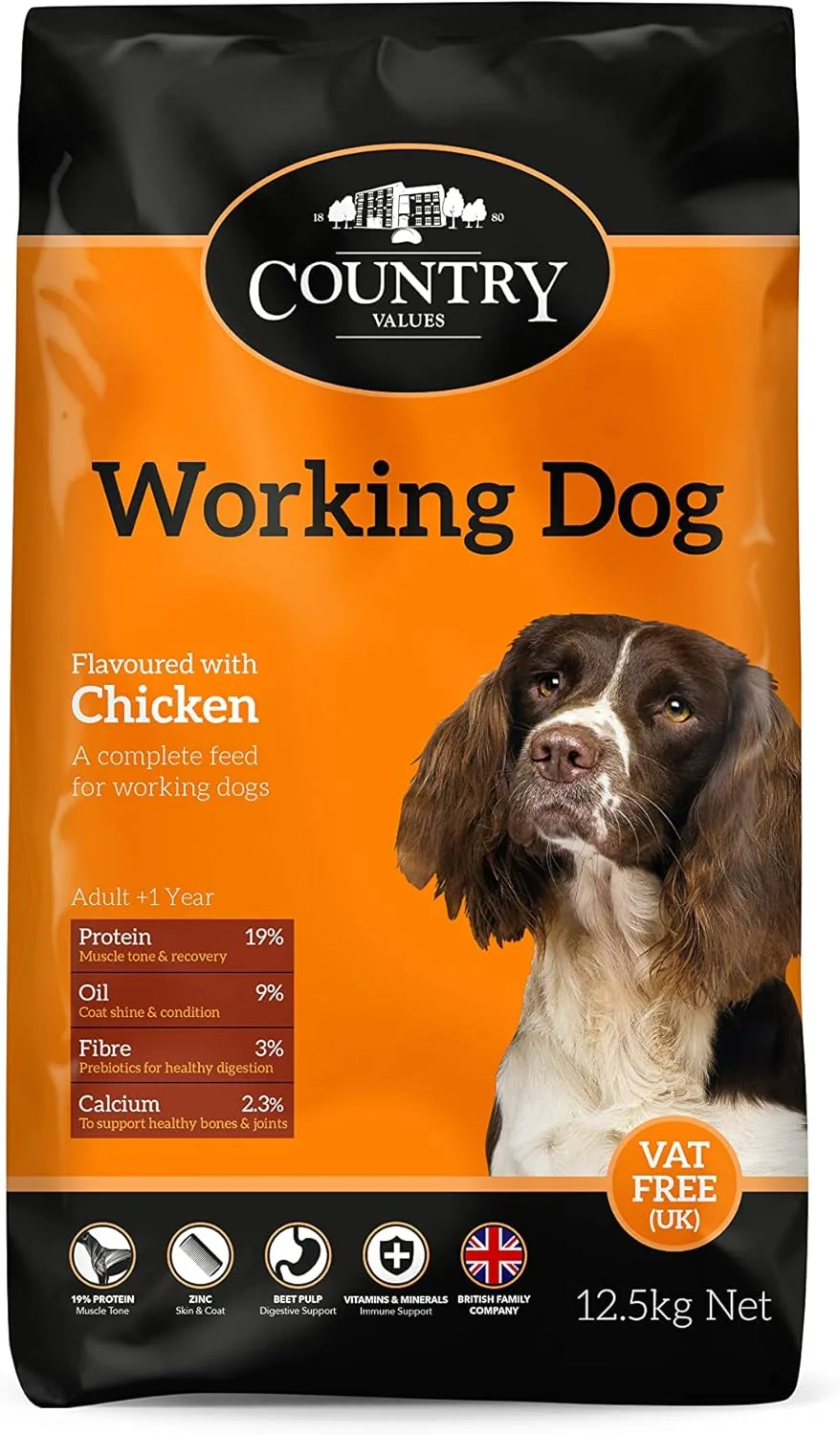
Country Values Working Dog Chicken 12.5kg
Who this food suits
Best for
- Adult working dogs over 1 year in light work (e.g., farm dogs, casual hunting companions)
- Owners wanting a complete, balanced chicken-based working feed at a budget-friendly price
Not for
- Puppies or pregnant/lactating dogs—they need specialized formulas
- Dogs in heavy work or extreme cold—they may need higher calorie density than this light-work formula provides