Quick Answer
For your first kendama, choose a standard-size wooden model with a balanced weight—unless portability is your priority, in which case a miniature wooden kendama is a fun, travel-friendly alternative.
Why Size Matters for Beginners
Kendama size directly affects how easy it is to learn. Standard kendamas (about 18-20 cm tall) have larger cups and a bigger target area, making basic catches and cup tricks more forgiving. Miniature kendamas, like the Miniature Wooden Kendama, are smaller and require more precision, but they fit in a pocket and are great for practicing on the go.
If you have smaller hands or plan to play with children, a slightly smaller model might feel more comfortable. However, be aware that mini kendamas are more challenging for beginners because the reduced size amplifies any wobble or misalignment.
Weight and Balance: What to Look For
Weight affects how the kendama moves. A heavier kendama is more stable and easier to control, but it can be tiring for long sessions. A lighter kendama is quicker and more responsive, but it may feel flimsy. For your first kendama, aim for a middle weight that feels solid without being heavy.
Balance is crucial: the ken (handle) and tama (ball) should be roughly equal in weight. This makes it easier to perform tricks like the spike and pull-up. The Miniature Wooden Kendama is engineered with a precise 2mm angle on the ball, which contributes to its balanced, responsive feel—even at a smaller scale.
Play Style: Casual, Freestyle, or Travel
Think about when and where you'll play. If you want to practice during commutes or while traveling, portability is key—a miniature wooden kendama is ideal. If you plan to learn advanced tricks at home, a standard-size model with a durable finish will serve you better.
Your play style also influences the material. Wooden kendamas are classic and provide a natural grip, while synthetic models may be more durable for outdoor use. For a first kendama, wood is a great choice because it offers good control and a satisfying feel.
Decision Rules for Your First Kendama
- If you're a complete beginner: Choose a standard-size wooden kendama with a balanced weight (around 80-100 grams). This gives you the largest target area and most forgiving feel for learning basic tricks.
- If you travel or play on the go: Opt for a miniature wooden kendama like the Miniature Wooden Kendama. It fits in your pocket and lets you practice anywhere, but expect a steeper learning curve due to its small size. Consider buying a mini as a secondary kendama, not your only one.
- If you have small hands or play with kids: Look for a slightly smaller standard kendama or a mini model. Test the grip to ensure the ken feels comfortable to hold. Kids may prefer a lighter weight to avoid fatigue. Let the player hold the kendama before buying to check comfort.
- If you want to focus on freestyle tricks: Prioritize balance and durability over size. A standard wooden kendama with a clear or matte finish provides good grip and control for advanced moves like juggling and lunar. Check that the spike is sharp but not too aggressive for safe play.
A Compact Option Worth Considering
-
Miniature Wooden Kendama: The Miniature Wooden Kendama is quarter-sized and engineered for genuine play, with a curved plane design that delivers authentic kendama mechanics. It's a great travel companion for practicing precision anywhere, though its small size means it's better for players who already have some experience or want a fun challenge.
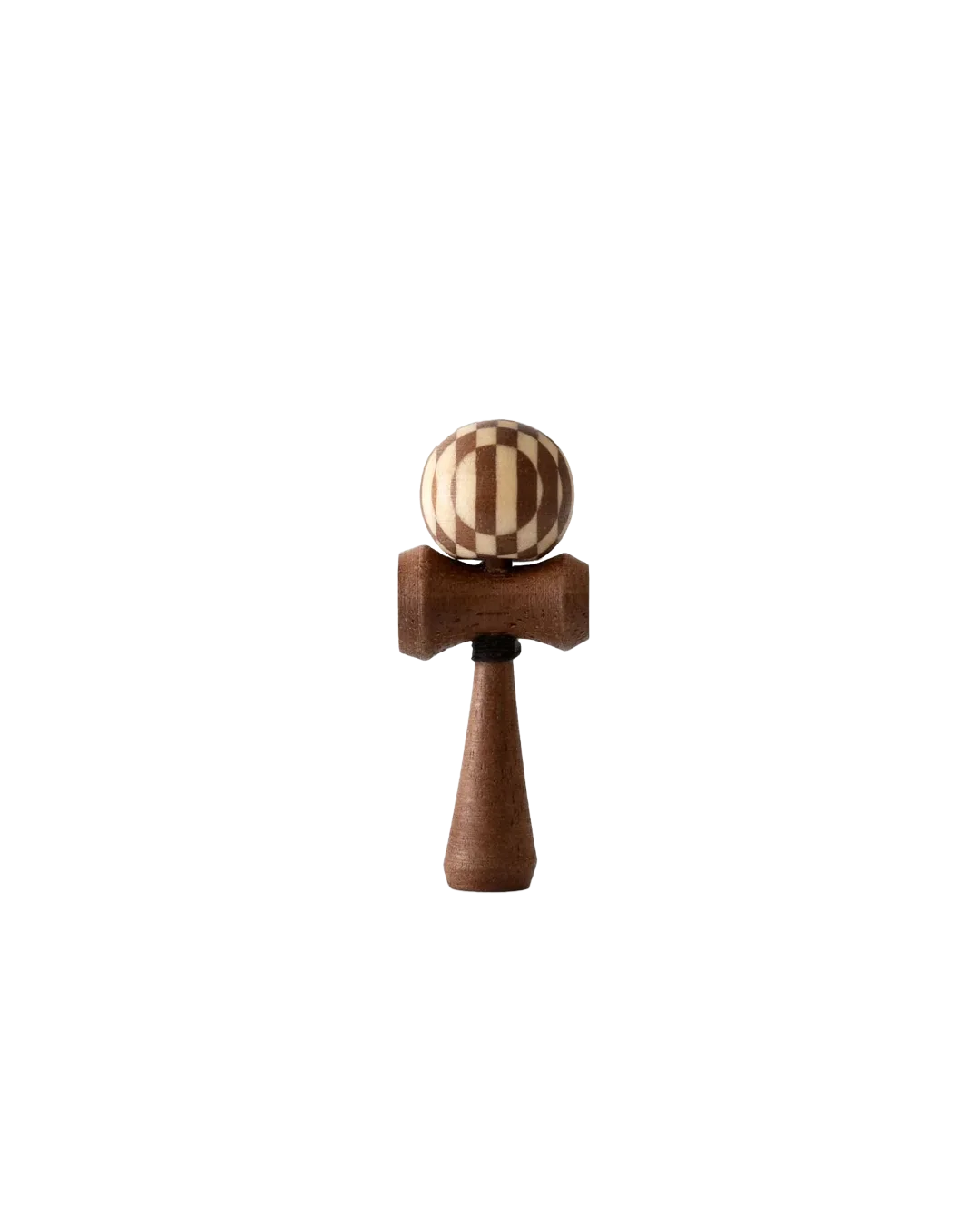
Miniature Wooden Kendama
Who Should Buy What
Best for
- Beginners who want a forgiving, standard-size kendama to learn basic tricks
- Travelers and commuters who want a portable kendama for practice on the go
Not for
- Players who already own a standard kendama and want a mini for travel (unless they want a collectible)
- Very young children who might struggle with the precision required by a miniature model