Quick answer
For your first Meh Dai, focus on a size that matches your baby's current height and a fabric weight that suits your climate and carrying style. The hope&plum Meh Dai Baby Carrier offers adjustable panel heights and a blend of wrap-like customizability with structured support.
Why fit matters more than brand
A Meh Dai that fits well distributes your baby's weight evenly across your shoulders and hips, preventing discomfort during long carries. The panel height should reach from your baby's bottom to the nape of their neck—too tall and the fabric presses on their face; too short and they lack head support. Most brands offer one-size panels, but adjustable options like the hope&plum Meh Dai let you tweak the height as your baby grows.
Fabric weight and climate
Meh Dais are typically made from cotton, linen, or a blend. Lightweight fabrics (around 190–230 gsm) breathe well in warm weather but may not provide enough support for heavier toddlers. Mid-weight fabrics (230–280 gsm) offer a good balance for most climates and ages. Heavier wraps (280+ gsm) give a supportive, cushioned feel for older babies and cooler days but can be hot in summer. If you live in a humid area, consider a linen-cotton blend for breathability.
Adjustability: one size vs. sized options
Many Meh Dais come in a single size that adjusts via a fold-down panel or a cinch system. This works well for most parents, but very petite or tall caregivers may prefer a carrier with multiple size options. The hope&plum Meh Dai uses a wrap-style waistband and shoulder straps that can be tied to fit different body types, giving you a custom feel without needing separate sizes.
Your first Meh Dai decision rules
- Check the panel height: Measure from your baby's bottom to the nape of their neck. The panel should cover that distance without going over the back of the head. If the carrier has a fold-down option, use it to adjust the height as your baby grows. A too-tall panel is a safety risk; a too-short panel offers no head support.
- Choose fabric weight by climate and age: For newborns to 6 months in warm weather, pick a lightweight (190–230 gsm) cotton or linen blend. For toddlers or cooler climates, go with a mid-weight (230–280 gsm) or heavy (280+ gsm) fabric for extra support. If you only plan to buy one carrier, a mid-weight all-cotton or cotton-linen blend is the most versatile.
- Test the waistband fit: The waistband should sit snugly on your natural waist or hips, not slide down. Woven wrap-style waistbands (like on the hope&plum Meh Dai) let you tie a custom knot for a secure fit, unlike buckle waistbands that have fixed sizes. A waistband that shifts during use will cause back pain and poor weight distribution.
- Verify shoulder strap length: Shoulder straps should be long enough to tie a secure knot behind your back without leaving excess fabric dangling. If you are very tall or plus-size, look for carriers with extra-long straps or a wrap-style design that allows custom cinching. Straps that are too short make a back carry impossible; too long can be a tripping hazard.
Product highlights
-
Meh Dai Baby Carrier: Our Meh Dai is the perfect blend of comfort, style, and versatility, combining the ease of a soft-structured carrier with the customizability of a wrap. This means you get the quick on/off convenience of a buckle carrier with the snug, personalized fit of a woven wrap—ideal for learning babywearing without a steep learning curve.
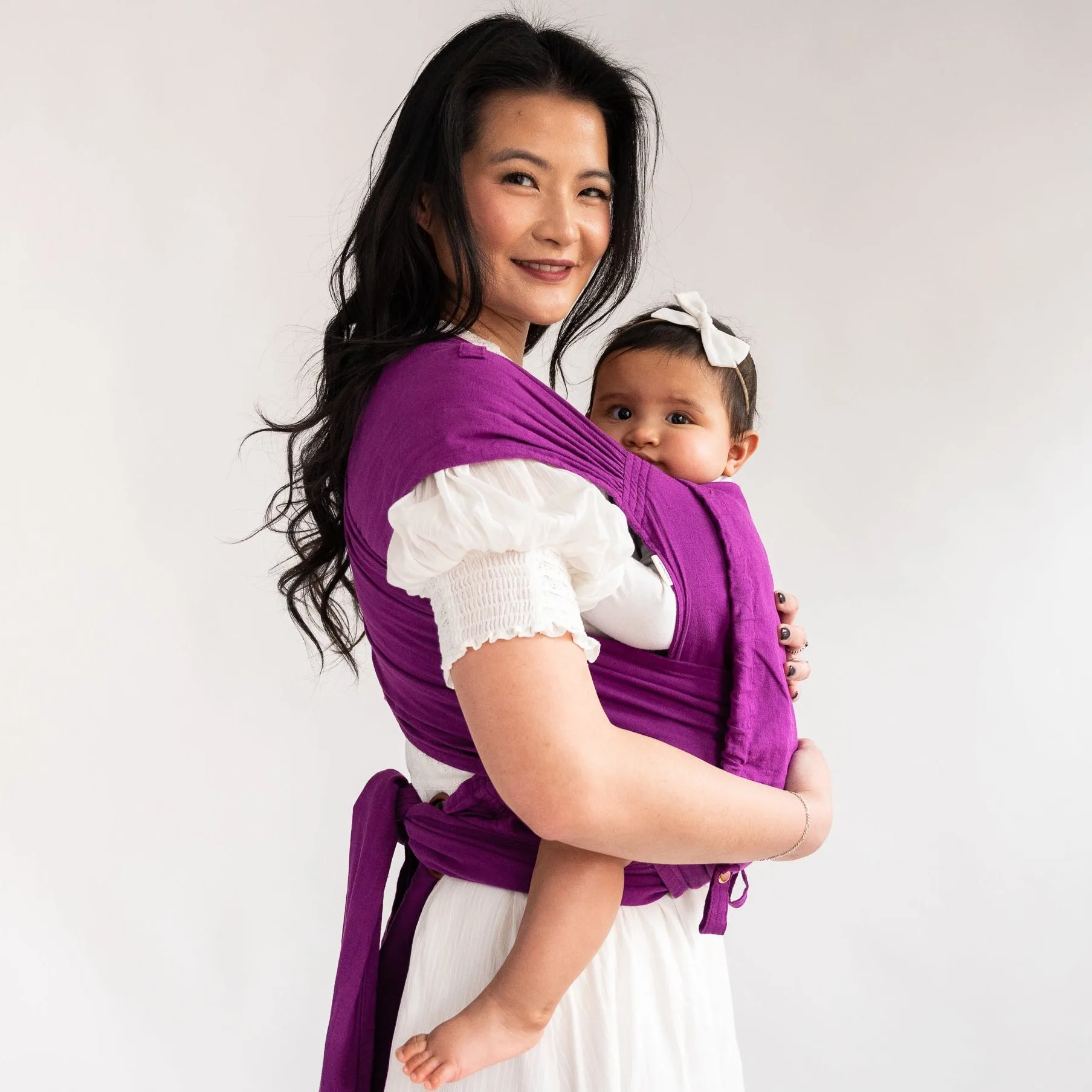
Meh Dai Baby Carrier
Who should buy a Meh Dai?
Best for
- New parents who want the custom fit of a wrap without the long learning curve
- Caregivers who plan to carry from newborn through toddlerhood and want one carrier that adapts via panel adjustments
Not ideal for
- Parents who prefer a quick buckle-on carrier with no tying required
- Those who need a carrier specifically for water use or heavy outdoor activities (look for a mesh or structured option instead)