Quick answer
To clean a hard shell suitcase, wipe the exterior with a soft cloth dampened in mild soapy water, then dry it thoroughly. For scuffs on polycarbonate or polypropylene cases like Antler's Icon Stripe or Single Stripe, use a melamine sponge gently. Always test any cleaner on a hidden spot first.
What you need to clean a hard suitcase
Start with a soft microfiber cloth, mild dish soap, warm water, and a separate dry cloth. For tougher scuffs, a melamine sponge (like a magic eraser) works on polycarbonate and polypropylene shells without scratching. Avoid abrasive powders, bleach, or alcohol-based wipes—they can dull the finish or damage the shell over time.
How to remove scuffs from a hard suitcase
Scuffs from airport conveyor belts or car trunks are common on hard luggage. Lightly dampen a melamine sponge and rub the scuffed area in one direction using gentle pressure. Wipe away any residue with a clean damp cloth. This method is safe for the recycled polycarbonate used in Antler's Icon Stripe cases and the polypropylene of the Single Stripe Medium. Avoid scrubbing hard—the sponge does the work.
Step-by-step cleaning process
- Empty and shake out debris: Remove all contents from your suitcase. Turn it upside down and shake out loose dirt or crumbs from the interior corners and wheel wells. Use a vacuum with a brush attachment for stubborn debris. Checkpoint: If you skip this step, dirt trapped in the wheels can scratch the shell when you roll the case.
- Wipe exterior with mild soapy water: Mix a few drops of mild dish soap with warm water. Dampen a soft microfiber cloth (not soaking wet) and wipe the entire outer shell in straight lines. Rinse the cloth frequently and change the water if it gets dirty. Dry immediately with a separate cloth to prevent water spots. Common mistake: Using too much water can seep into zippers or seams. Keep the cloth just damp.
- Treat scuffs with a melamine sponge: Lightly wet a melamine sponge and gently rub scuffed areas using circular or back-and-forth motion. Apply minimal pressure—the sponge's micro-abrasive action lifts marks without scratching polycarbonate or polypropylene. Wipe away any residue with a clean damp cloth. Checkpoint: Test on an inconspicuous area first. Never use a melamine sponge on matte or textured finishes—it can create a shiny patch.
- Clean interior lining and zippers: Vacuum the interior lining, then spot-clean stains with a cloth dampened in the same mild soap solution. For fabric linings, blot—don't rub—to avoid spreading the stain. Wipe zipper tracks with a dry cloth to remove grit that can cause sticking. Common mistake: Saturating the lining can cause mold. Use minimal moisture and let the case air out fully open for a few hours.
- Dry and store properly: Leave the suitcase open in a well-ventilated area away from direct sunlight until completely dry. Store it upright or on its side in a cool, dry place. Avoid stacking heavy items on top, which can deform the shell over time. Final checkpoint: Never store a damp suitcase—trapped moisture can lead to odors or mildew inside the lining.
Products that benefit from these cleaning tips
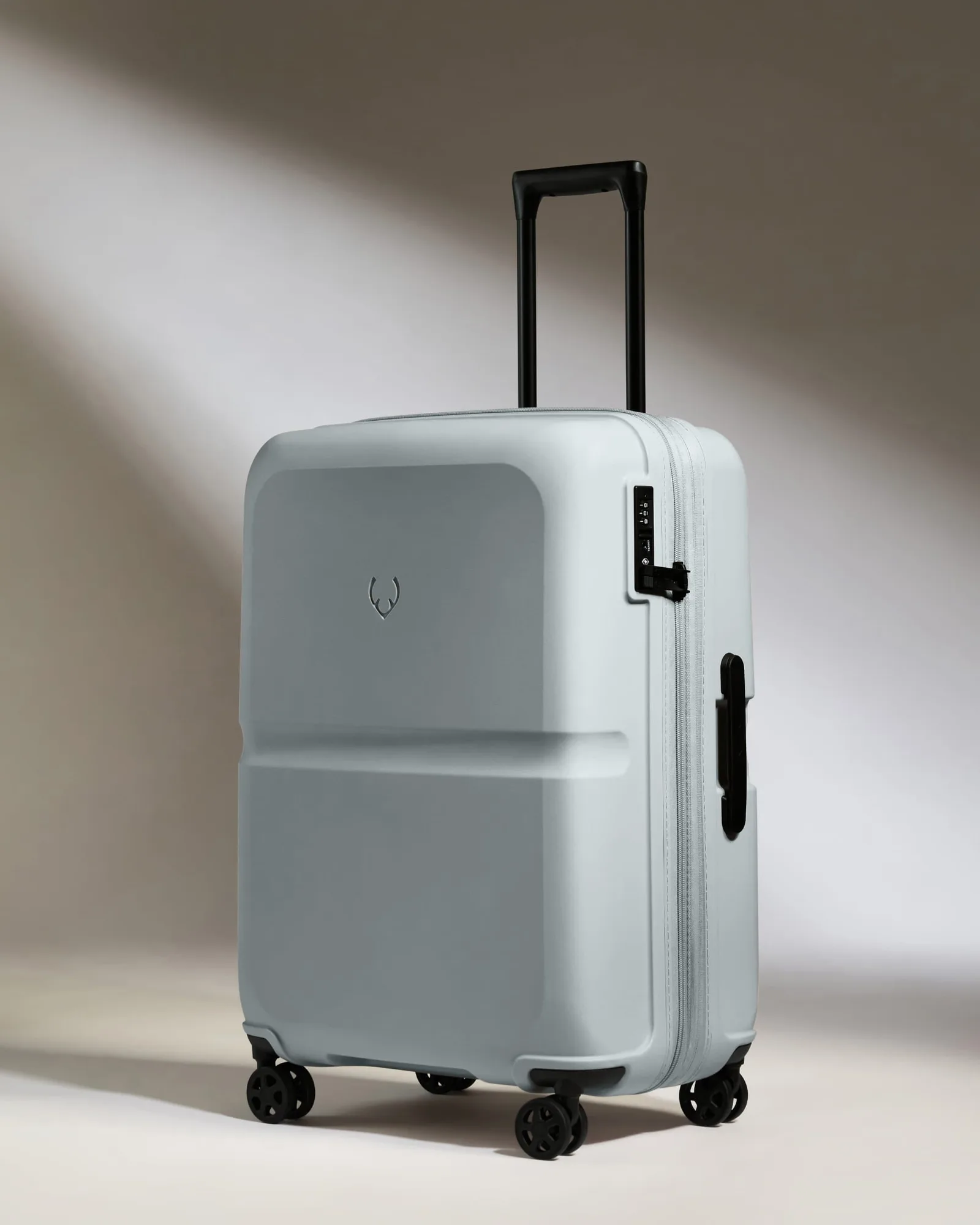
- Medium Luggage in Salt Blue - Single Stripe: Made with a durable polypropylene shell, Single Stripe protects your belongings while staying light and easy to handle. Polypropylene is naturally impact-resistant and easy to clean—just avoid harsh chemicals that can cloud the surface.
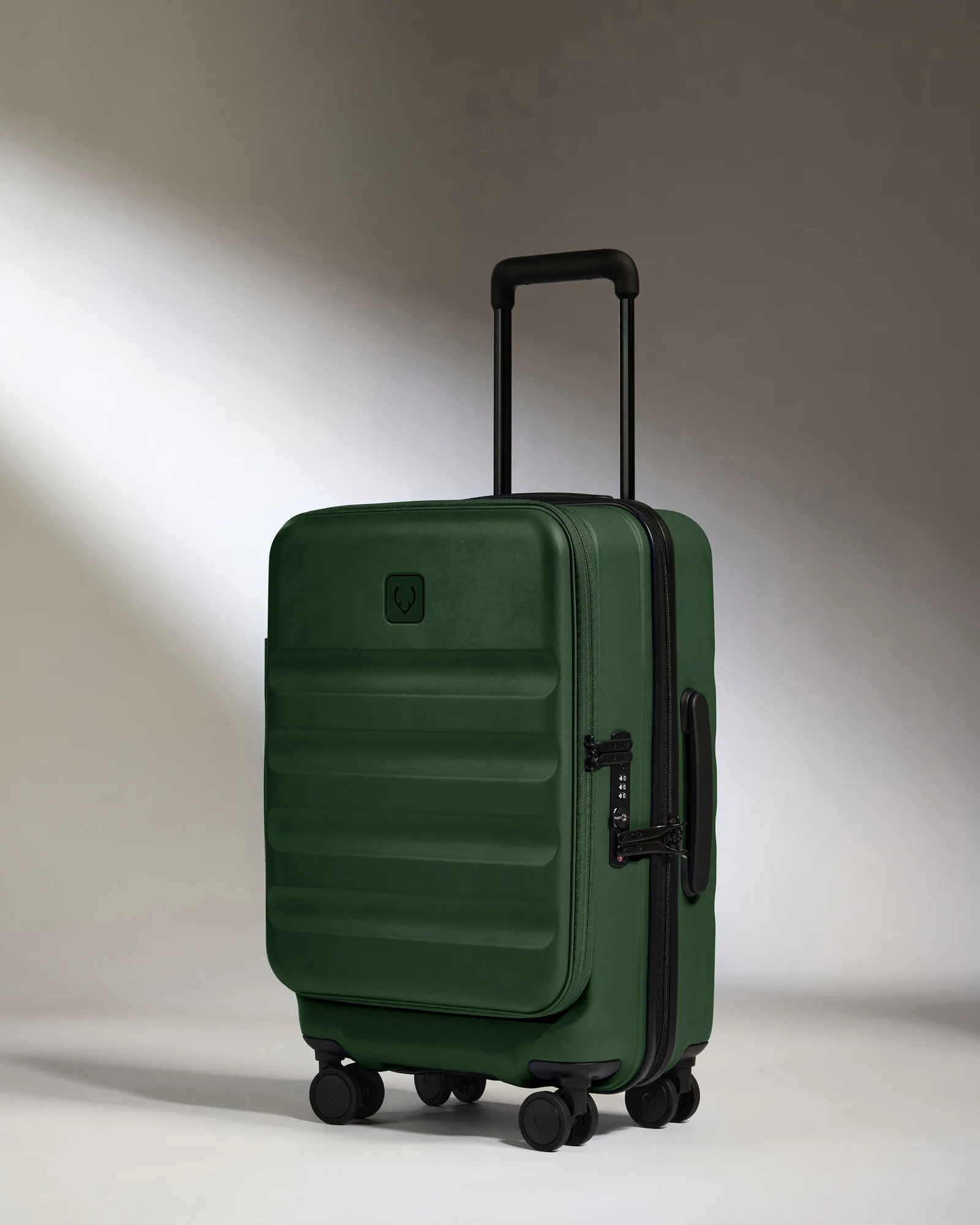
- Dual Opening Carry-On Luggage in Antler Green - Icon Stripe: The Icon Stripe Dual Opening Carry-on introduces a flexible front-access design to our best-selling Icon suitcase. The front-access panel means you can clean the interior more easily, but the polycarbonate exterior still needs gentle care to keep its glossy finish.
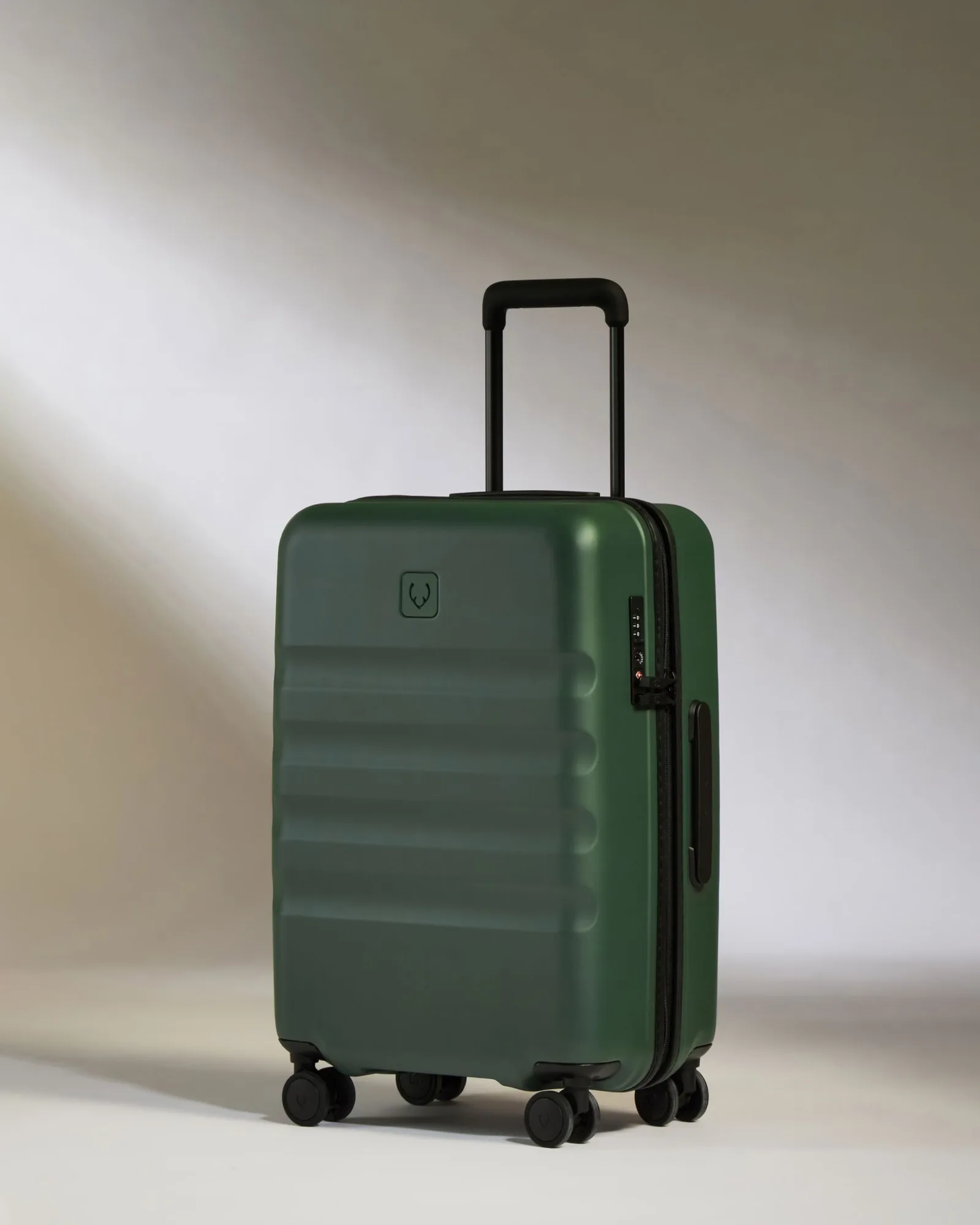
- Large Carry-on Luggage in Antler Green - Icon Stripe: Crafted from the highest quality, using recycled polycarbonate, the hardwearing shell keeps belongings secure. Recycled polycarbonate is durable and lightweight, but it can show scuffs more readily—regular gentle cleaning keeps it looking sharp.