Quick answer
To clean a leather wallet, start by emptying it completely and brushing off loose dirt. Use a damp microfiber cloth with a drop of mild soap to gently wipe the surface, then let it air dry away from heat. Condition the leather afterward to keep it supple and prevent cracking.
Why regular cleaning matters for your wallet
A leather wallet collects oils, dirt, and moisture from daily handling and pocket carry. Over time, these can dull the finish, cause discoloration, and weaken the leather fibers. Regular cleaning removes abrasive particles and prevents buildup that leads to cracking or peeling, especially on high-use areas like the edges and fold of a bi-fold wallet.
Leather is porous and absorbs what it touches. Skipping cleaning allows grime to settle into the grain, making restoration harder later. A simple monthly wipe-down keeps your wallet looking sharp and extends its usable life significantly.
What you need to clean a leather wallet
You only need a few basic items: a soft microfiber cloth (two if possible), lukewarm water, a drop of mild liquid soap (like castile or saddle soap), and a leather conditioner. Avoid alcohol-based wipes, bleach, or all-purpose cleaners—they strip natural oils and can dry out or discolor the leather. A soft-bristle brush (like an old toothbrush) helps reach creases and stitching without scratching.
Step-by-step leather wallet cleaning guide
- Empty and inspect your wallet: Remove all cards, cash, receipts, and coins. Shake out loose debris. Check seams, edges, and corners for wear or damage. Cleaning a wallet with torn stitching can worsen the damage, so repair first if needed. Common mistake: Forgetting to remove paper receipts, which can bleed ink onto wet leather.
- Brush off surface dirt: Use a soft-bristle brush or dry microfiber cloth to gently brush the entire wallet, focusing on creases and stitching where dust collects. This step prevents scratching the leather when you apply moisture. Checkpoint: If the brush leaves visible scratches, switch to a softer cloth.
- Wipe with a damp, soapy cloth: Dampen a microfiber cloth with lukewarm water and add one drop of mild soap. Wring it out well—the cloth should be barely damp, not wet. Gently wipe the entire surface in small circles. Avoid soaking the leather or getting moisture inside the wallet. Common mistake: Using too much water, which can stain or warp the leather. Less is more.
- Remove soap residue with a clean damp cloth: Use a second cloth dampened with plain water (wrung out) to wipe away any soap residue. Residual soap can attract dirt and dry out the leather over time. Checkpoint: Run your finger over the surface—if it feels slippery, you missed some soap.
- Air dry away from heat and sunlight: Place the wallet open on a towel at room temperature. Let it dry naturally for several hours or overnight. Never use a hair dryer, radiator, or direct sun—heat causes leather to shrink and crack. Common mistake: Putting a damp wallet in your pocket or bag, which traps moisture and promotes mold.
- Condition the leather: Once fully dry, apply a pea-sized amount of leather conditioner to a clean cloth. Rub it into the leather in circular motions, focusing on the fold and edges. Let it absorb for 10–15 minutes, then buff with a dry cloth for a subtle sheen. Checkpoint: If the leather feels stiff after conditioning, you may have used too little. Repeat with a slightly larger amount.
Product that complements your wallet care routine
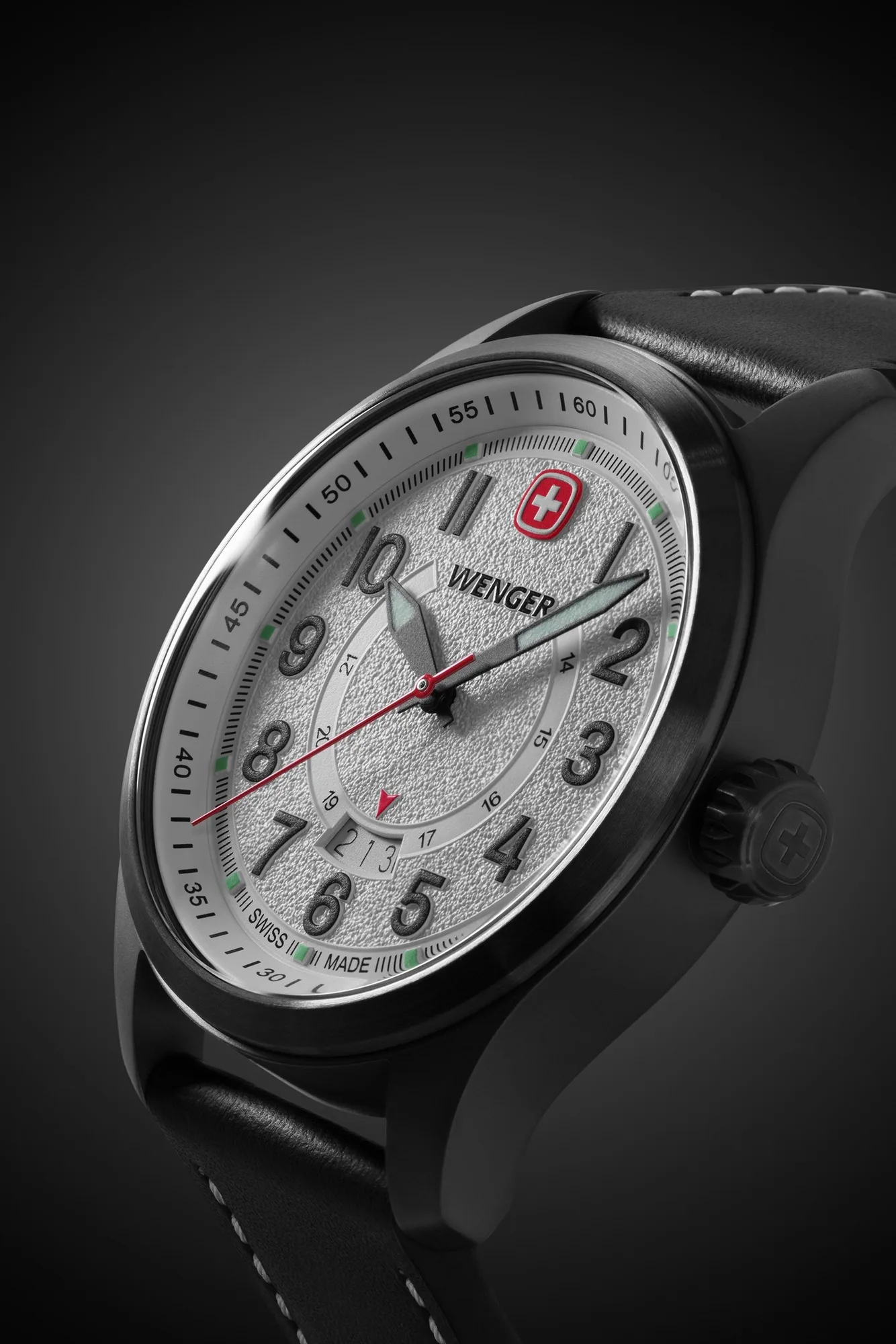
- Wenger Terragraph Swiss Watch in Black Ice with White Dial and Black Leather Strap: The Wenger Terragraph Swiss Watch in Black Ice features a white textured dial with large black Arabic numerals, a Swiss-red second hand, and Super-Luminova coated hands and markers for readability in any light. Pairing a clean, well-maintained wallet with a reliable Swiss watch elevates your everyday carry. The Terragraph's durable leather strap benefits from the same gentle cleaning and conditioning habits you use on your wallet, keeping both accessories in top shape.