Quick answer
Clean your wooden teether with a damp cloth and mild soap, then air dry completely. Avoid soaking, dishwasher, and harsh chemicals to preserve the wood.
Why wood needs different care than silicone
Wooden teethers are naturally antibacterial and free of harmful chemicals, but they are also porous. Unlike silicone, wood can absorb water, which may cause cracking or warping if not dried properly.
The key is to keep cleaning quick and drying thorough. A simple wipe-down after each use and a deeper clean a few times a week is all most wooden teethers need.
What to avoid when cleaning wooden teethers
Never soak a wooden teether in water or run it through the dishwasher. The heat and moisture can damage the wood and any natural finishes.
Avoid using bleach, vinegar, or essential oils, as these can be harsh on the wood and potentially unsafe for your baby. Stick to mild dish soap and water.
Step-by-step cleaning routine
- Wipe after each use: Use a clean, damp cloth to wipe away saliva and food residue from the teether's surface. Dry immediately with a soft towel. Never let the teether sit wet; moisture is the main enemy of wood.
- Deep clean weekly: Mix a small amount of mild dish soap with warm water. Dip a cloth in the solution, wring it out well, and gently wipe the entire teether, including any crevices. Avoid soaking the wood; a damp cloth is enough to remove buildup.
- Rinse and dry thoroughly: Use a second damp cloth with plain water to remove any soap residue. Pat dry with a clean towel and let the teether air dry completely on a drying rack away from direct sunlight. Check for any remaining moisture before giving it back to your baby.
- Inspect for damage: Regularly check the teether for cracks, splinters, or loose parts. If you notice any damage, stop using it immediately and replace it. Wooden teethers are durable, but regular inspection ensures safety.
Wooden teethers we recommend
-
wooden teether - heart: This teether is made of non-impregnated maple wood from FSC®-certified suppliers and is free of harmful chemicals. Non-impregnated wood means no chemical treatments, making it safe for your baby to chew, but it also means you should avoid soaking to prevent damage.
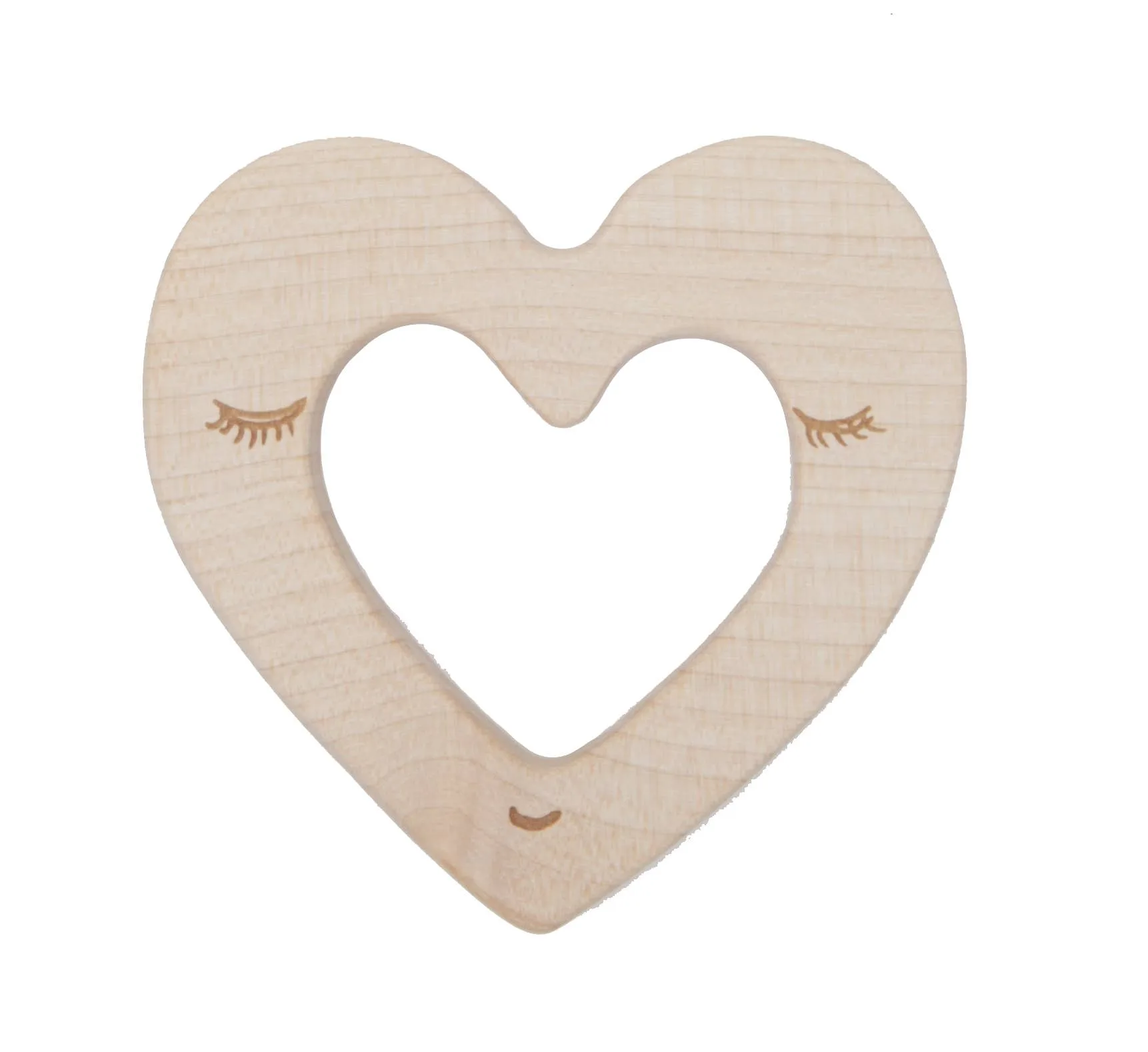
wooden teether - heart
-
rattle-teether - smily cat: This rattle-teether combines a teether and a rattle, made from maple wood that is free from beeswax and vegetable oils. The gentle rattle sound engages your baby's senses, but the moving parts require careful drying to keep the rattle functioning smoothly.
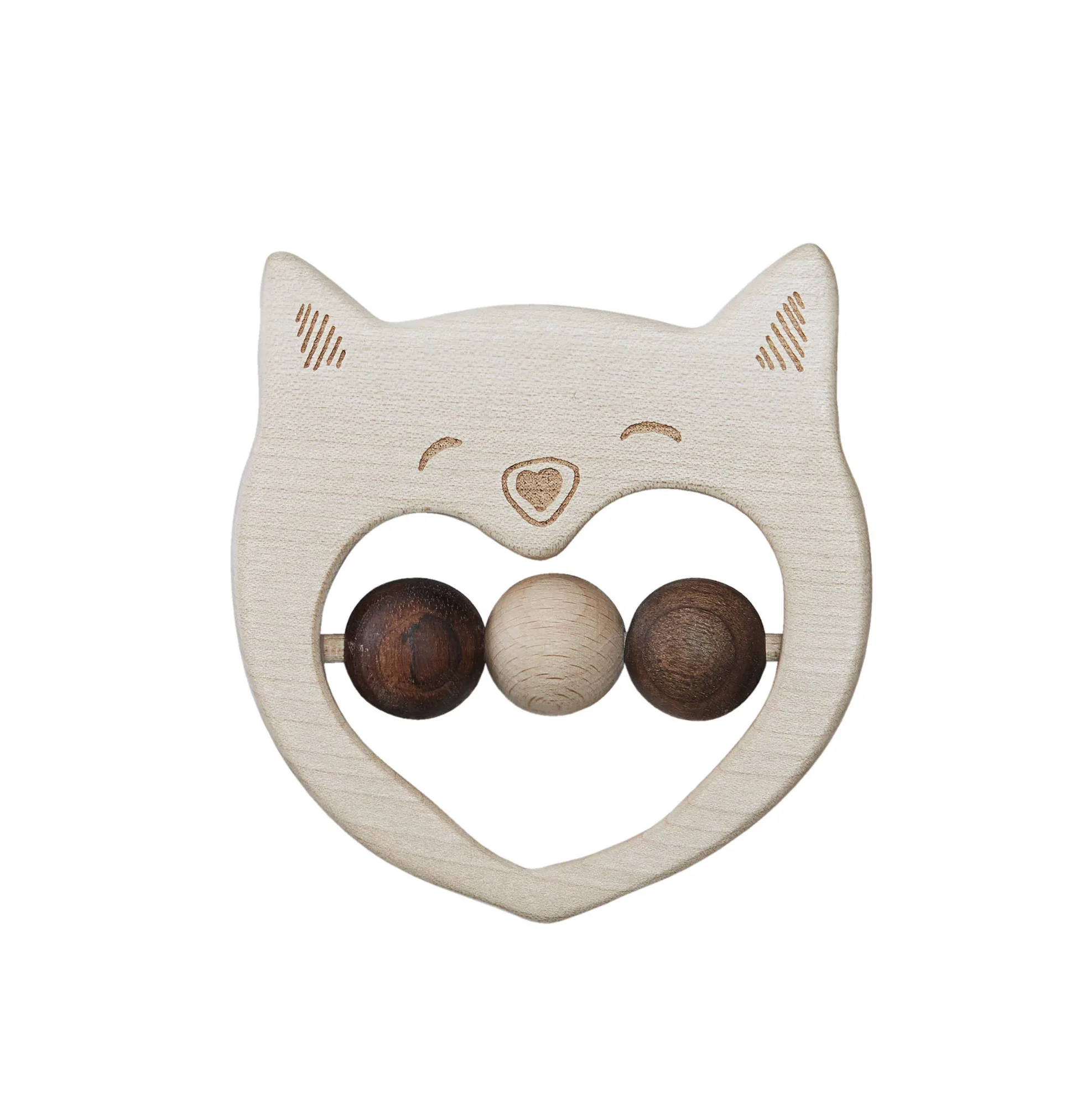
rattle-teether - smily cat