Quick answer
For everyday cleaning, wipe wooden toys with a barely damp cloth and mild soap, then dry immediately. For deeper cleaning, use a vinegar-and-water solution on sealed wood, never soak toys, and avoid harsh chemicals or the dishwasher. Store pieces dry and indoors, and check small parts and clips regularly.
Wooden toys earn their place in the toy box because they are sturdy, open-ended and pleasant to handle. They also pick up crumbs, sticky fingerprints and the occasional outdoor adventure, so a simple care routine keeps them safe and looking good for years.
This guide walks through the whole process, from a quick daily wipe to a monthly check of moving parts. It covers safe toy cleaning methods, how to clean wooden toys without warping the wood, and how to store play sets so small pieces stay together.
Start with a dry clean before anything wet
Before you reach for a cloth and water, remove loose dust, sand and crumbs with a dry microfiber cloth or a soft brush. This step matters because wetting dust turns it into a paste that can work into seams, printed details and moving joints. A dry brush also reaches the corners of puzzle pieces and the grooves of play sets without scratching the surface.
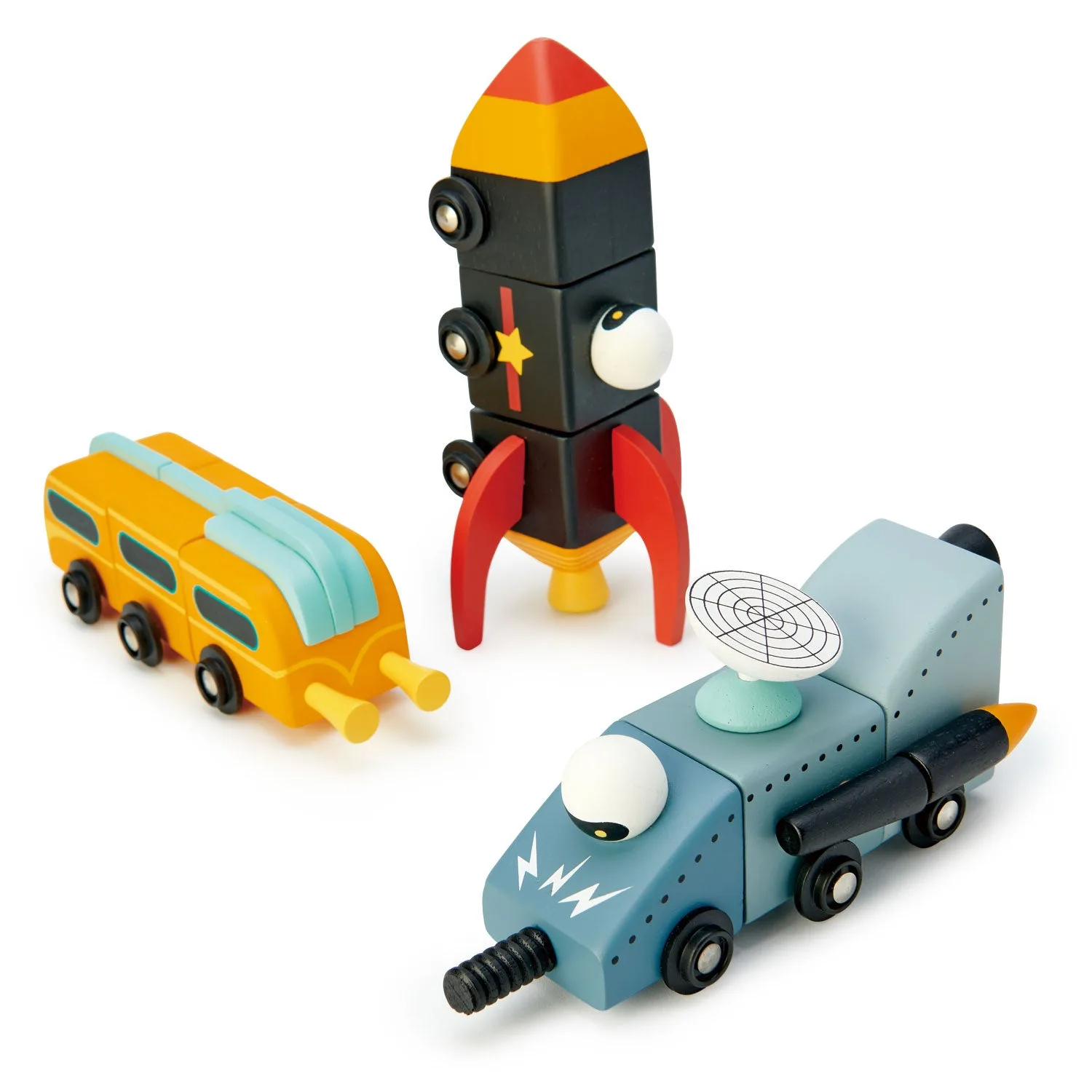
Work over a tray or a sheet of newspaper so small parts do not roll away. If a toy has moving pieces, such as the deconstructable vehicles in the Rocket Construction range, take a moment to check that clips and small parts are attached before cleaning. Losing a tiny connector mid-clean is the most common way a play set ends up incomplete.
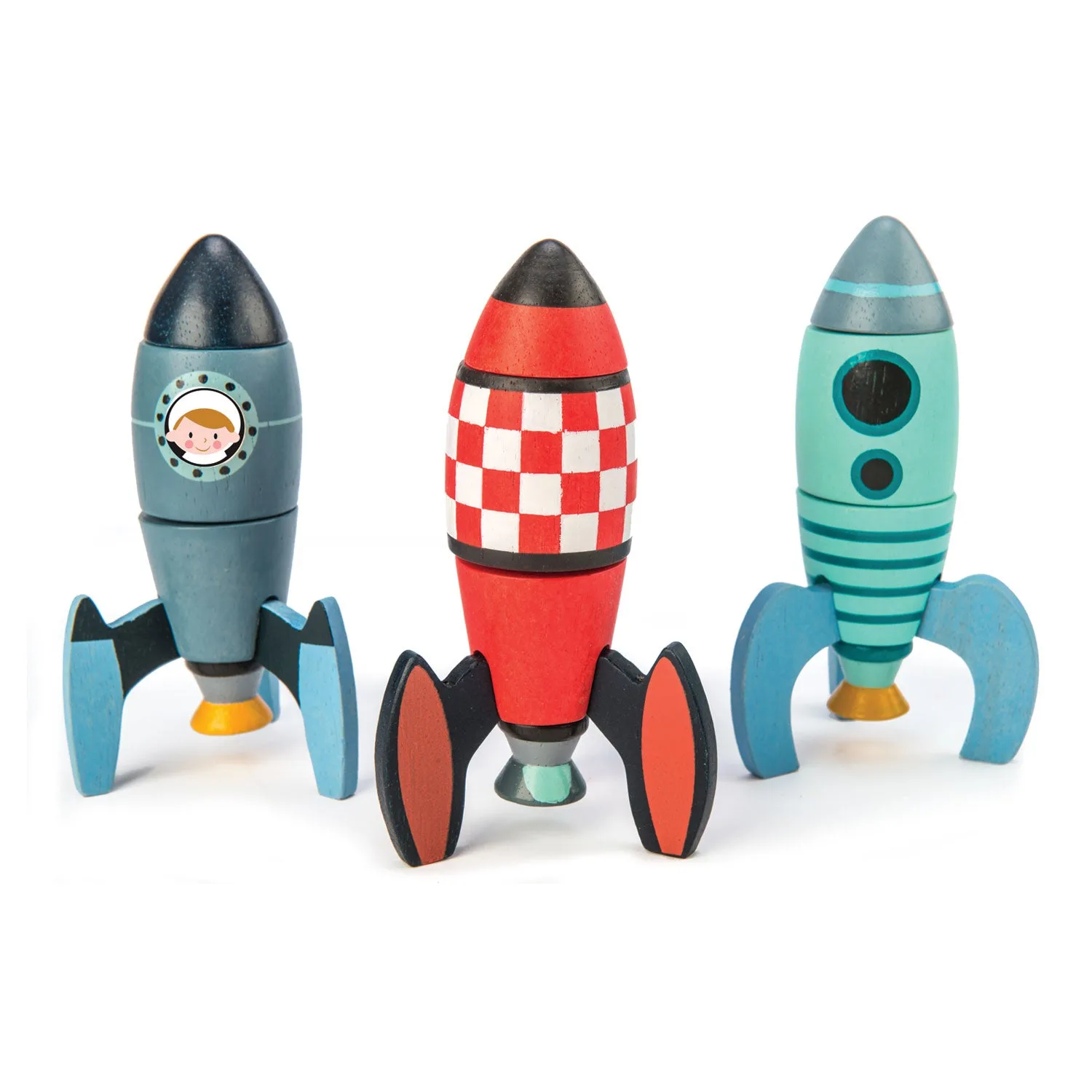
Rocket Construction
- Use a dry microfiber cloth or soft brush first, every time.
- Clean over a tray so small parts cannot disappear.
- Check that clips and connectors are secure before you start.
Choose a safe cleaning solution
For most day-to-day messes, a drop of mild dish soap in a bowl of warm water is enough. Dampen a cloth, wring it out until it is barely wet, and wipe the surface. Avoid abrasive cleaners, bleach, furniture polish and anything with ammonia, because these can dull the finish or leave residue that ends up on hands and mouths.
For a deeper clean on sealed wood, a 50/50 mix of white vinegar and water works well as a gentle disinfecting wipe. Test it on an inconspicuous spot first, especially on painted or printed surfaces. If a toy is unfinished or the finish looks worn, skip the vinegar and use only a damp cloth, then dry it right away.
- Mild dish soap and warm water for routine cleaning.
- 50/50 white vinegar and water for occasional deeper cleaning.
- Never use bleach, ammonia, abrasive cleaners or furniture polish.
- Test any solution on a hidden spot first.
Wipe, don't soak, and dry immediately
Wood is porous, so the golden rule is damp cloth, not running water. Never submerge wooden toys, and never put them in the dishwasher. Water that gets into end grain, joints or layered plywood can swell the wood, lift the finish and loosen glue over time. A wipe-down takes seconds; a soaked toy can take days to dry and may never sit quite right again.
After wiping, dry the surface straight away with a clean towel and let the toy air-dry fully before it goes back into the toy box. Pay attention to crevices, holes and the underside of play sets. If a toy feels cool or damp to the touch, give it more time. Damp wood stored in a closed bin is where mould and musty smells begin.
- Wring the cloth out until it is barely damp.
- Never submerge wooden toys or put them in the dishwasher.
- Dry with a towel, then air-dry completely before storage.
- Check holes, joints and undersides for trapped moisture.
Handle printed details and moving parts with care
Printed faces, patterns and small painted details are usually the most delicate part of a wooden toy. Wipe them gently with a soft cloth rather than scrubbing, and avoid soaking them. If a printed area starts to lift at the edge, stop cleaning that spot and let it dry; continuing to rub can peel it further. For stubborn marks on plain wood, a soft pencil eraser can lift scuffs without water.
Moving parts need a different kind of attention. Check clips, hinges and rotating pieces for tightness, and remove any loose part before a child plays with it. A small dab of child-safe beeswax on a stiff wooden joint can help it move freely again, but do not use oil, which can stain the wood and attract dust.
- Wipe printed details gently; never scrub them.
- Stop if a print starts to lift, and let it dry.
- Use a soft eraser for scuffs on plain wood.
- Tighten or remove loose clips and moving parts before play.
Store toys dry, indoors and organised
Where you keep wooden toys matters as much as how you clean them. Store them indoors, away from radiators, damp basements and direct sun, because heat and moisture are the two biggest causes of warping and cracking. A lidded bin or shelf keeps dust off, but leave a little airflow if the toys have just been wiped.
Small pieces are the easiest thing to lose, so keep them with their set. A canvas drawstring bag, like the one included with the Clever Cat Memory Game, makes tidy storage simple and is easy for children to use. For play sets with removable accessories, a shallow tray or basket under the main unit keeps everything together between play sessions.
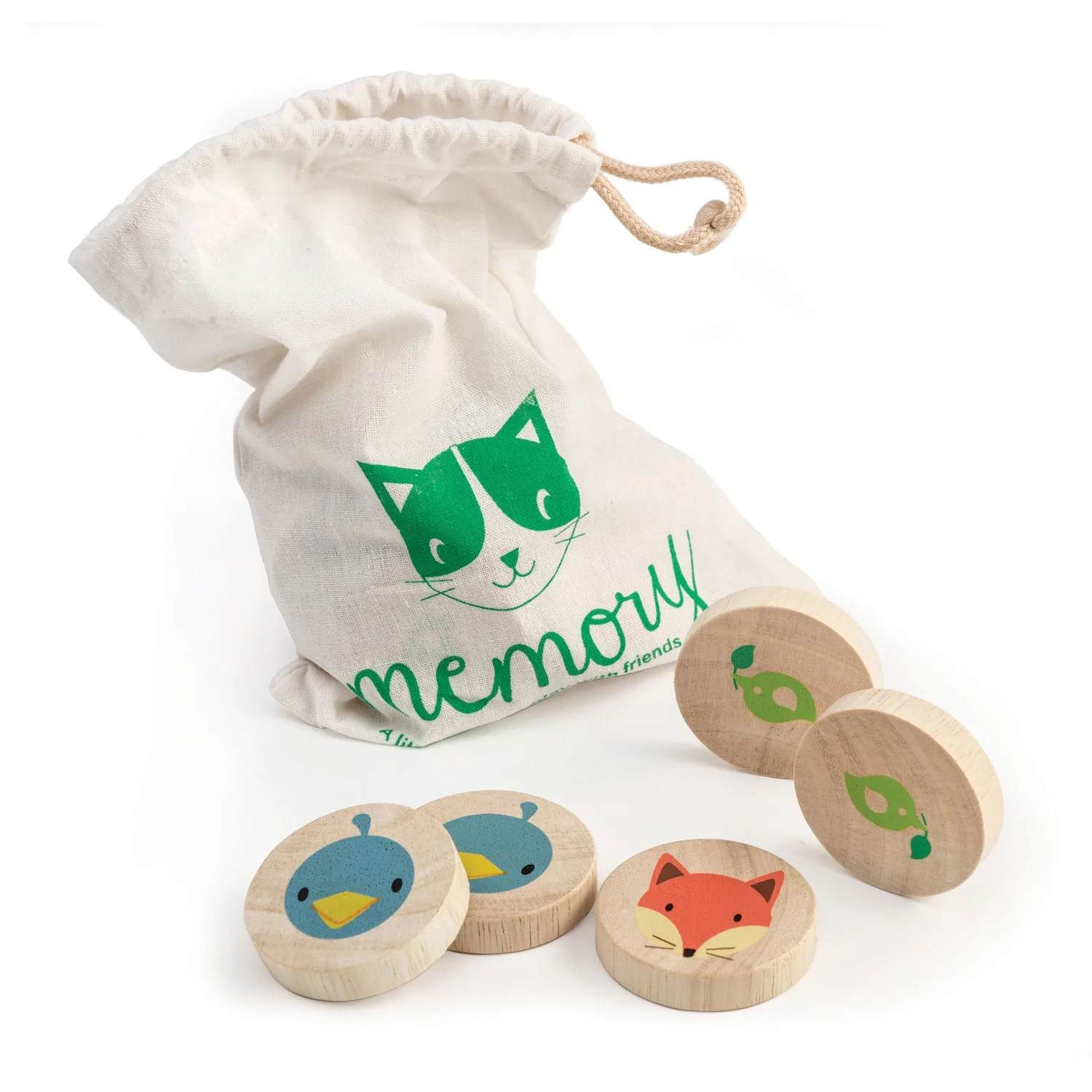
Clever Cat Memory Game
- Store indoors, away from radiators, damp and direct sun.
- Use a bag or tray to keep small pieces with their set.
- Leave a little airflow if toys were just wiped.
- Teach children to return pieces after play.
Do a monthly check and refresh the finish
Once a month, tip each wooden toy over and look at it properly. Check for splinters, cracks, loose clips, wobbly joints and worn finish. Run a finger along the edges; if anything feels rough, smooth it lightly with fine sandpaper and wipe away the dust. This five-minute check catches small problems before they become splinters or broken parts.
If the wood looks dry and pale, a thin coat of child-safe beeswax or food-grade mineral oil can restore it. Apply a small amount with a cloth, let it absorb for a few minutes, then buff off the excess. Do this only on unfinished or oil-finished wood, and never on printed or painted surfaces. A little care goes a long way, and a well-kept toy can be passed down.
- Check monthly for splinters, cracks and loose parts.
- Smooth rough edges with fine sandpaper.
- Use child-safe beeswax or food-grade mineral oil sparingly.
- Skip wax or oil on painted and printed surfaces.
Your step-by-step wooden toy cleaning routine
- Clear the play area and gather supplies: Put away other toys, then collect a dry microfiber cloth, a soft brush, a bowl of warm water with a drop of mild dish soap, a clean towel and a tray for small parts. Checkpoint: everything you need is within reach, so you are not leaving a damp toy while you search for a towel.
- Dry-clean first: Brush or wipe off dust, crumbs and sand while the toy is still dry. Work over the tray so small pieces cannot roll away. Mistake to avoid: skipping this step and turning dust into a paste that dries in the seams.
- Wipe with a barely damp cloth: Dip the cloth in the soapy water, wring it out thoroughly, and wipe each surface. For sticky marks, hold the cloth on the spot for a few seconds rather than scrubbing. Checkpoint: the cloth should feel damp, not wet. If water drips when you squeeze it, wring it out again.
- Clean printed details and joints gently: Use a soft, dry cloth on printed faces and patterns. For moving parts and clips, wipe around them rather than soaking the joint. Mistake to avoid: scrubbing printed details, which can lift the print at the edges.
- Dry immediately and completely: Towel-dry the surface, then let the toy air-dry in a well-ventilated spot. Turn play sets upside down so water can escape from holes and crevices. Checkpoint: the wood should feel dry and room temperature before it goes back in the toy box.
- Store dry and organised: Return small pieces to their bag, tray or carton, and store the toy indoors away from heat, damp and direct sun. Mistake to avoid: putting a slightly damp toy into a closed bin, which traps moisture and encourages mould.
- Check and refresh monthly: Inspect for splinters, cracks and loose clips, smooth rough edges with fine sandpaper, and apply child-safe beeswax or food-grade mineral oil to dry, unfinished wood only. Next step: set a monthly reminder so small repairs happen before they become bigger ones.
How Tender Leaf toys are built for care
- Space Race: Part of the Rocket Construction range, these futuristic space vehicles are made from three parts each so that they can be deconstructed and rebuilt into whacky racers. Several small parts are attached with small plastic clips. Because the parts come apart, clean each piece separately with a barely damp cloth and check the clips are secure before storage so the set stays complete.
- Clever Cat Memory Game: The game has 16 printed solid wood discs with 8 different animal faces for matching, and a canvas drawstring bag is included for easy storage and transport. Wipe the printed faces gently rather than scrubbing, and use the drawstring bag to keep all 16 discs together and dust-free between games.
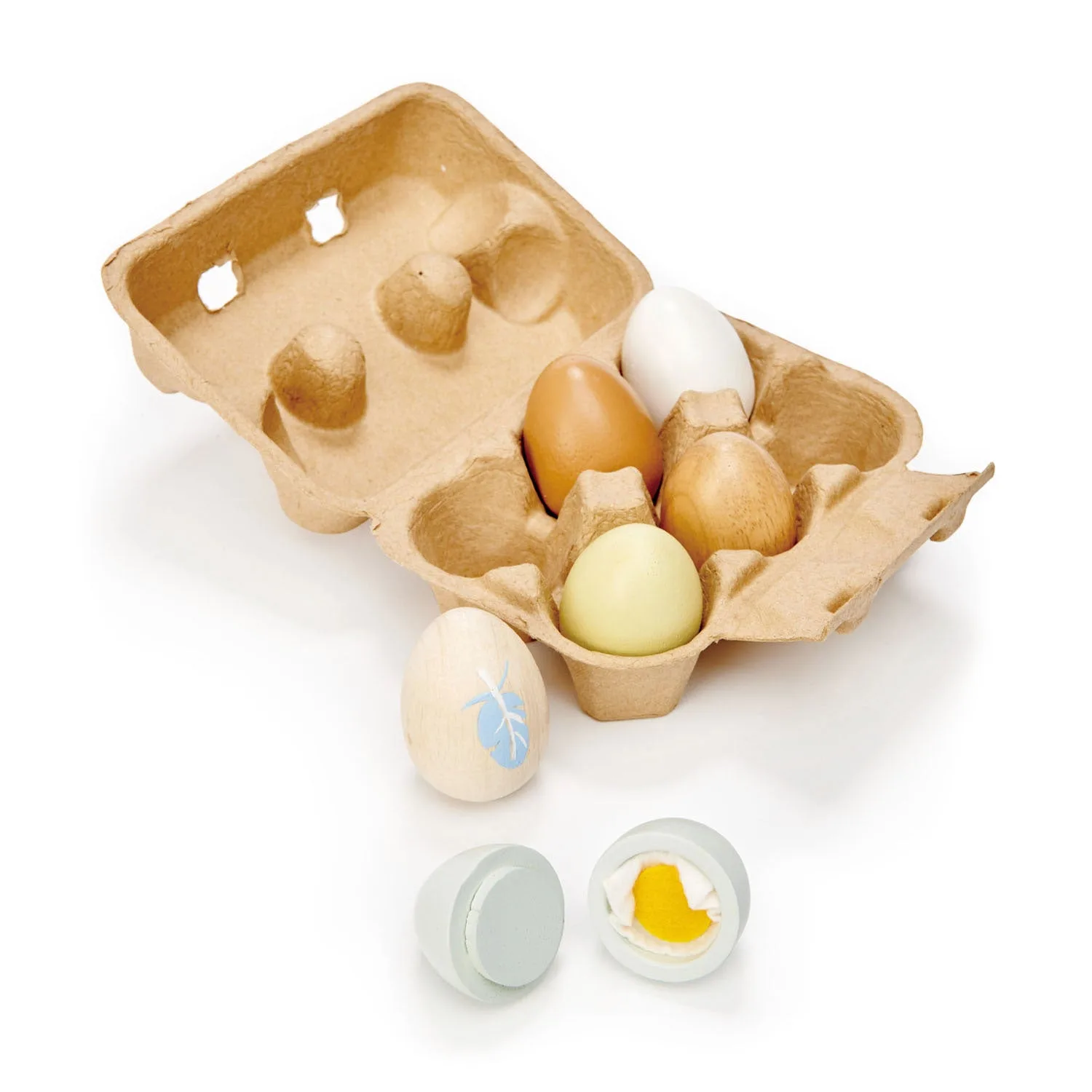
- Wooden Eggs: 6 cute little solid wood eggs in an authentic egg carton. The carton doubles as storage, so keep the eggs in it after cleaning to prevent them rolling away and to protect the solid wood from knocks.
A consistent routine, dry first, damp wipe second, dry fully, then store with care, keeps wooden toys safe, hygienic and ready for the next play session. A few minutes each week is all it takes to protect the toys your family loves.