Quick answer
To clean and descale your electric kettle, use a simple vinegar or citric acid solution to dissolve limescale, then rinse thoroughly. Regular maintenance keeps your water tasting fresh and your kettle performing efficiently.
Why descaling matters for taste
Mineral deposits from hard water, commonly called limescale, build up inside your kettle over time. These deposits can alter the flavor of your hot beverages and reduce heating efficiency. Regular descaling removes this buildup, restoring your water's natural taste and helping your kettle boil faster.
Choosing your descaling method
White vinegar and citric acid are both effective and food-safe options. Vinegar has a strong smell that rinses away completely, while citric acid is often odorless and may work faster. Avoid harsh chemical descalers unless recommended by your kettle's manufacturer, as they can damage internal components or leave residues.
Step-by-step descaling process
- Prepare the descaling solution: Mix equal parts white vinegar and water (or 1-2 tablespoons citric acid per liter of water) and pour into the kettle. Fill only to the halfway mark to avoid overflow during boiling. Using too much vinegar can leave a lingering smell; stick to a 1:1 ratio.
- Boil the solution: Turn on the kettle and let the solution come to a full boil. Once it switches off, let it sit for 15-20 minutes to allow the acid to dissolve the limescale. For heavy buildup, let it soak for up to an hour. Do not let the solution boil dry; stay nearby and unplug if the kettle does not auto-shutoff.
- Empty and rinse thoroughly: Discard the solution and rinse the kettle two to three times with fresh water. Fill and boil a full kettle of clean water, then discard it to remove any remaining acid taste or smell. If you still taste vinegar, repeat the fresh-water boil and rinse cycle until the odor is gone.
- Wipe the exterior and lid: With the kettle unplugged and cool, wipe the exterior with a damp cloth. Clean the lid and spout area with a soft brush or cloth to remove any mineral residue that may have splashed during boiling. Avoid abrasive cleaners or scouring pads, which can scratch the finish on colored or stainless steel models.
- Establish a maintenance schedule: Descale your kettle every 1-3 months depending on your water hardness. If you notice white flakes in your water or longer boiling times, it is time to descale again. Using filtered water can reduce mineral buildup and extend the time between descaling sessions.
Products that make the job easier
-
Pistachio: The KitchenAid Electric Kettle in Pistachio is designed for quick and efficient boiling. Efficient boiling means less mineral concentration buildup, so descaling is needed less often.
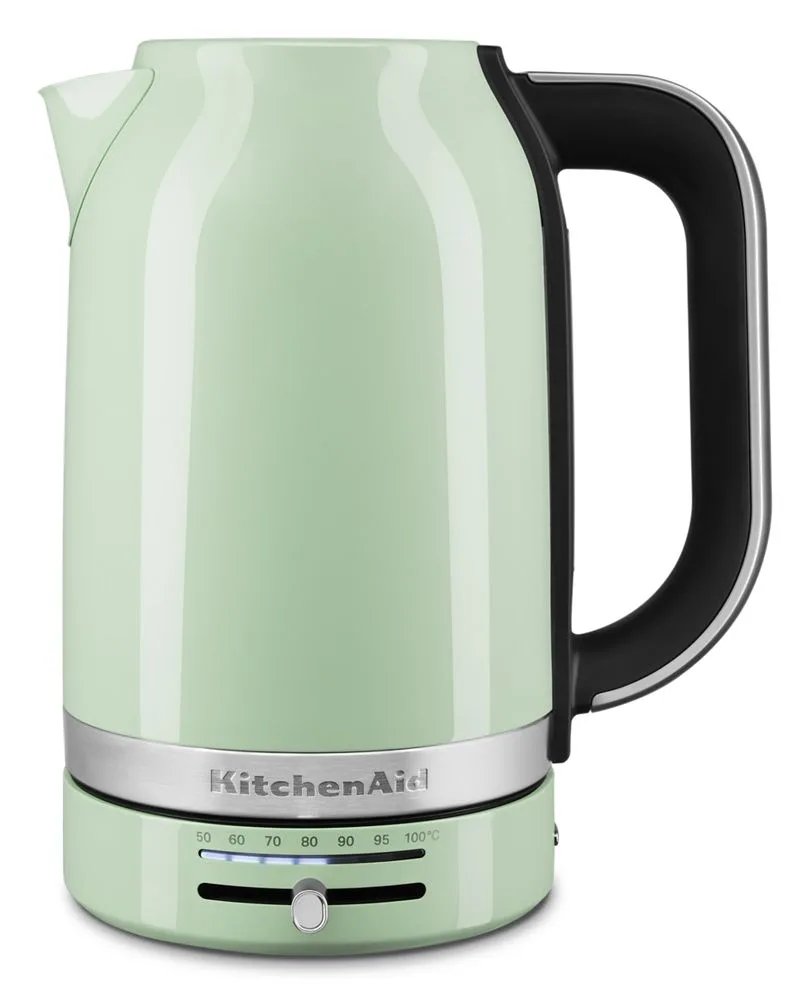
Pistachio
-
Brushed Stainless Steel: The KitchenAid Brushed Stainless Steel Electric Kettle offers a sleek, durable appearance. Its smooth stainless steel interior resists staining and is easy to wipe clean after descaling.
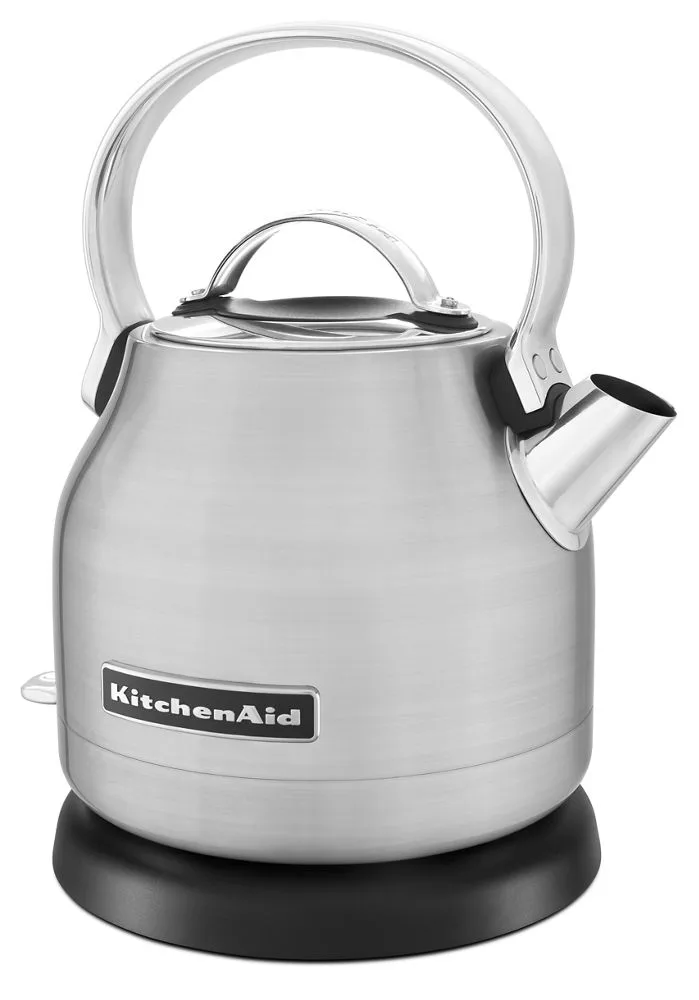
Brushed Stainless Steel