Quick answer
Clean stuffed animals by surface-cleaning with a lint roller or vacuum brush weekly, deep-cleaning with a gentle hand wash or mesh-bag machine cycle every few months, and displaying them on open shelves away from direct sun and floor dust. The biggest mistake is waiting until plush looks dirty—dust settles into fibers long before you see it.
Why plush collects dust faster than you think
Plush fabric has a deep, open pile that traps airborne particles. Unlike a smooth figure or poster, a stuffed animal has thousands of tiny fiber gaps where dust settles and stays. If you keep plush on a bed, floor, or crowded shelf, dust accumulates within weeks.
The fix is not constant washing—that wears out fibers. Instead, separate surface dust removal from deep cleaning and do each on its own schedule. This plush care guide walks through the full process in order.
Step 1: Surface-clean before dust settles in
Once a week, run a sticky lint roller over the plush in short strokes. For larger or textured items, use a vacuum with a brush attachment on the lowest suction setting. Hold the fabric taut with one hand and vacuum in the direction of the pile.
Common mistake: pressing hard with a vacuum brush. That pushes dust deeper instead of lifting it. Let the brush skim the surface. If the plush has loose parts or embroidery, switch to a lint roller only.
Step 2: Deep-clean with a gentle hand wash or mesh bag
Every two to three months, or when surface cleaning no longer freshens the plush, do a deeper clean. For hand washing, fill a basin with cool water and a small amount of mild detergent. Submerge the plush, gently squeeze suds through the fabric, then rinse until the water runs clear.
If the care label allows machine washing, place the plush inside a mesh laundry bag and use a cold, delicate cycle with low spin. Never use hot water or a dryer—heat can mat the fibers or melt glued details. Air-dry by reshaping the plush and laying it on a towel away from direct sun.
Step 3: Display to block dust at the source
Where you put a stuffed animal matters as much as how you clean it. Open shelving at eye level collects less dust than the floor or a low bookcase. Keep plush out of direct sunlight, which fades fabric, and away from open windows or fans that push dust around.
For stuffed animal display ideas, rotate pieces seasonally instead of crowding every plush onto one shelf. Crowded displays trap dust between items and make cleaning harder. If you have a large collection, store the off-season pieces in a breathable cotton bag or a clean pillowcase—not a sealed plastic bin, which can trap moisture.
Step 4: Store plush safely when it's not on display
Plush storage tips that actually work: use a cotton pillowcase or a fabric storage bag, add a silica gel packet if you live in a humid area, and keep the bag on a shelf rather than the floor. Avoid vacuum-sealed bags, which crush the pile and leave creases that may not bounce back.
Check stored plush every few months. If you spot musty smells or tiny holes, clean and air it out before returning it to display. This is also a good time to rotate a new piece into your shelf setup.
Your plush care routine at a glance
- Weekly: lint-roll or vacuum the surface: Use a sticky lint roller or a vacuum brush on low suction. Skim the surface in the direction of the pile—do not press hard. Checkpoint: if the roller comes up clean, you can skip the deep clean this month.
- Every 2–3 months: hand wash or mesh-bag machine wash: Use cool water and mild detergent. Hand wash by gently squeezing suds through the fabric, or machine wash in a mesh bag on cold, delicate cycle. Never use hot water or a dryer—heat mats fibers and can loosen glued details.
- Air-dry and reshape: Lay the plush on a towel away from direct sun. Reshape the ears, limbs, and tail while damp so it dries in its original form. Checkpoint: if the plush still smells musty after drying, repeat the wash with a half-portion of detergent.
- Display on an open shelf at eye level: Keep plush off the floor and away from direct sun, open windows, and fans. Rotate pieces instead of crowding them together. Crowded displays trap dust between items—leave a little space around each plush.
- Store off-season plush in breathable fabric: Use a cotton pillowcase or fabric bag with a silica gel packet in humid climates. Avoid sealed plastic bins and vacuum bags. Check stored plush every few months for musty smells or holes before returning it to display.
A plush that fits this care routine
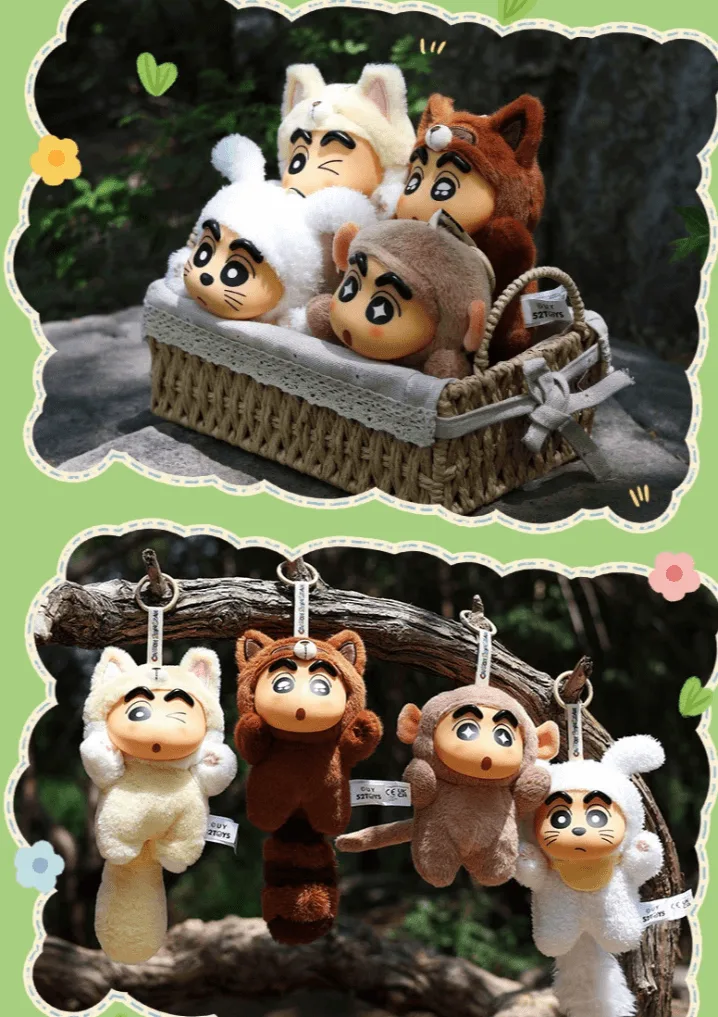
- 01621 Crayon Shinchan Big Tails series plush blind box: 01621 Crayon Shinchan Big Tails series plush blind box is a soft, huggable plush in the Big Tails series with a blind box surprise format. The soft plush surface responds well to weekly lint-rolling and gentle hand washing. Because it arrives as a blind box, you may want to display it right away—start with a surface clean to remove any packing dust before it goes on the shelf.