Quick Answer
Clean commercial quality windows using a lint-free cloth, optical-grade solvent, and a gentle wiping motion. Avoid household cleaners and abrasive materials to prevent scratches and surface degradation.
Why Cleaning Method Matters for Commercial Windows
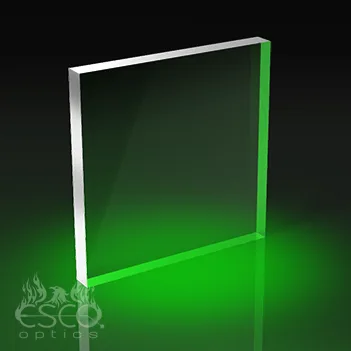
Commercial quality windows from Esco Optics, Inc. are available in N-BK7 optical glass and S1-UV grade fused silica. Both substrates have a surface quality of 60-40 scratch-dig or better, meaning even minor scratches or dust can degrade performance in sight glasses, instrument windows, or beamsplitter substrates. The fine-ground and safety-beveled edges also require careful handling to avoid chipping.
N-BK7 glass is more susceptible to chemical attack from strong acids or bases, while fused silica is harder but more brittle. Using the wrong cleaning solution or technique can permanently damage the surface or reduce transmission. Always match your cleaning method to the substrate and the window's intended use.
Step-by-Step Cleaning Process
- Step 1: Prepare a Clean Workspace: Lay down a clean, lint-free mat or optical tissue. Wear powder-free nitrile gloves to avoid transferring oils or dirt. Ensure the room is dust-free if possible. Checkpoint: Any debris on the work surface can scratch the window during handling.
- Step 2: Blow Off Loose Particles: Use a can of filtered compressed air or a rubber bulb blower to remove dust, lint, and grit from both surfaces. Hold the can upright and keep it at least 6 inches away to avoid propellant spray. Common mistake: Never use your breath or shop air, which can deposit moisture or oil.
- Step 3: Apply Optical-Grade Solvent: Dampen a lint-free optical wipe or a clean microfiber cloth with isopropyl alcohol (99%) or a dedicated optical cleaning solution. Do not pour solvent directly onto the window. Checkpoint: Avoid acetone on N-BK7 windows—it can attack the glass over time. Fused silica is more resistant.
- Step 4: Wipe in a Single Direction: Starting at one edge, gently drag the damp cloth across the surface in one smooth, straight stroke. Use light pressure—just enough to remove residue. Repeat with a fresh section of the cloth if needed. Common mistake: Circular wiping can trap particles and cause swirl scratches.
- Step 5: Inspect and Dry: Immediately after wiping, inspect the window under a bright light at an angle. If streaks or residue remain, repeat steps 3-4 with a clean cloth. Allow the window to air-dry completely before mounting or storing. Checkpoint: If you see scratches or chips, stop cleaning and evaluate whether the window is still within spec for your application.
Product-Specific Care Notes
- Commercial Quality Windows, Square, N-BK7 Optical Glass*: Diameter Tolerance +/- 0.125 mm, Thickness Tolerance +/- 0.125 mm, Surface Accuracy 1.0-3.0 mm thickness ≤ 5λ per inch, 4.76-12.7 mm thickness ≤ 2λ per inch, Surface Quality 60-40 Scratch-Dig or better, Parallelism <15', Edges Fine ground and safety beveled, Clear Aperture 85%. The 60-40 scratch-dig spec means even a single deep scratch can reject the window for precision use. Gentle cleaning preserves this surface quality.
- Commercial Quality Windows, Square, S1-UV Grade Fused Silica: Diameter Tolerance +/- 0.125 mm, Thickness Tolerance +/- 0.125 mm, Surface Accuracy ≤ 2λ per inch, Surface Quality 60-40 Scratch-Dig or better, Parallelism <10', Edges Fine ground and safety beveled, Clear Aperture 85%. Fused silica windows are more scratch-resistant than N-BK7 but still require careful cleaning to maintain the ≤2λ per inch surface accuracy.