Quick answer
Hand wash nonwoven shopping bags in cool water with a little mild detergent, press the water out instead of wringing, and air dry them fully before folding. Machine washing and hot drying are what shorten a nonwoven bag's life.
Why nonwoven bags need a gentler routine than cloth
Nonwoven bags are made from bonded fibres rather than woven threads, so the surface can pill or thin out when it is scrubbed hard or tumbled in a machine. The handles take the most strain, which is why outside stitched loop handles are worth checking before every wash: if the stitching is already loose, hand washing is the safer choice.
You do not need to wash a bag after every single shop. Spot clean crumbs and spills, and give the whole bag a wash when it smells stale, feels sticky, or has carried loose produce or meat packaging.
How to clean and reuse a nonwoven shopping bag
- Empty and shake out the bag: Turn the bag upside down over a bin and shake out crumbs, receipts and loose produce. Check the seams and handle stitching for splits before they get worse in water. Mistake to avoid: washing a bag with a torn seam, which can spread the tear. Set aside any bag with a split seam for repair first.
- Spot clean light marks first: Mix a drop of mild washing-up liquid in cool water and dab the mark with a soft cloth, working from the outside of the stain inwards. Rinse the cloth and repeat rather than scrubbing harder. Mistake to avoid: neat detergent on the fabric, which can leave a dull patch.
- Hand wash in cool water: Fill a basin with cool water and a small amount of mild detergent, then submerge the bag and press it gently with your hands for about a minute. Focus on the base, gussets and handles where grime collects. Mistake to avoid: hot water, which can distort the bonded fibres. Cool water only, no bleach and no fabric conditioner.
- Rinse until the water runs clear: Drain the basin and refill with cool water, pressing the bag under the surface two or three times. Repeat until no suds remain. Mistake to avoid: leaving detergent in the fabric, which attracts new dirt and can leave a sticky feel.
- Press out the water, do not wring: Lay the bag flat on a clean towel, fold the towel over it and press down with your palms. Never twist or wring the bag, as this pulls the stitched handles and stretches the gussets. Mistake to avoid: hanging a soaked bag by one handle, which can pull it out of shape. Support the full bag with both hands whenever you lift it wet.
- Air dry flat and fully: Reshape the bag and dry it flat in a ventilated spot away from direct sun and radiators. Turn it over once partway through so the base and gussets dry too. Mistake to avoid: folding or storing a damp bag, which causes a musty smell. A bag that still feels cool to the touch is not dry yet.
- Store folded and rotate your bags: Once dry, fold the bag flat and keep it with your other reusable bags rather than crammed into a cupboard. Rotate between two or three bags so each one gets a rest and a wash. Mistake to avoid: leaving bags in a hot car for weeks, which weakens the fabric. Keep one clean spare bag in the car for unplanned shops.
Product facts
-
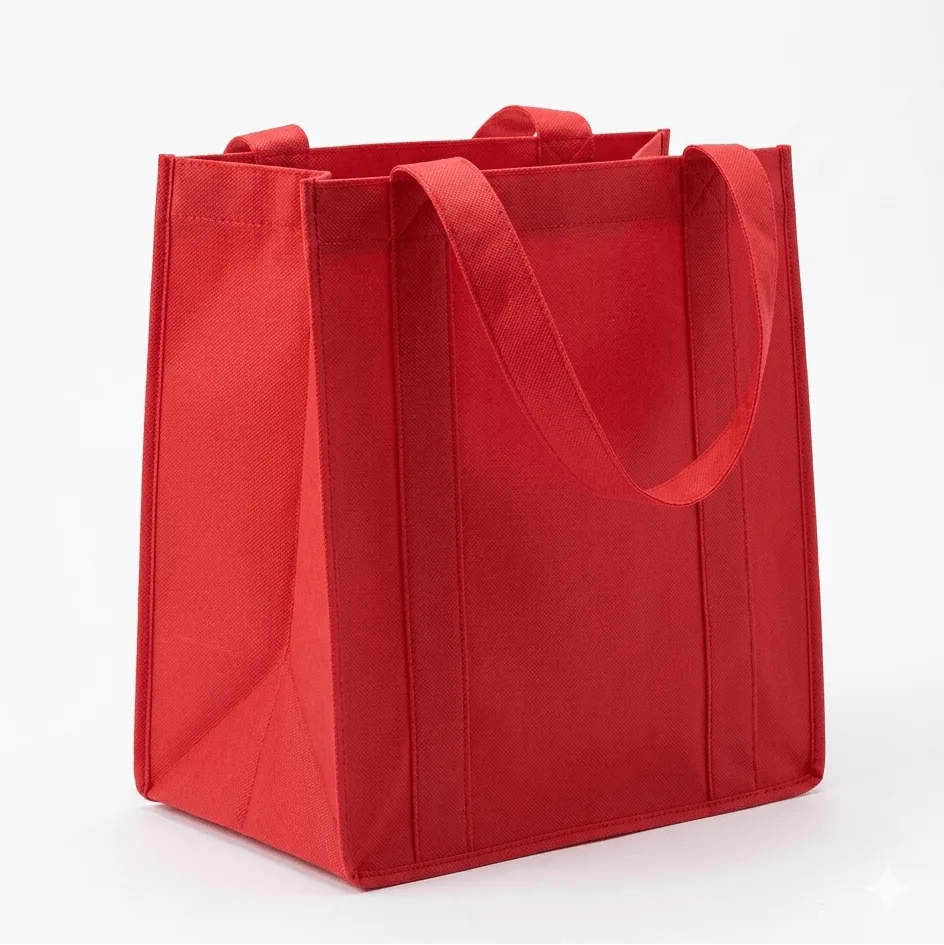
Red Nonwoven Bag with Outer Stitched Handle: Made from 100% recycled polypropylene with outside stitched non woven loop handles and wide side and bottom gussets. The stitched handles and gussets are the parts that wear first, so supporting them by hand and drying the bag flat helps it keep its shape.
Red Nonwoven Bag with Outer Stitched Handle