Quick answer
To clean and season an Argentine grill, burn off leftover food, scrub with a grill brush, rinse, dry completely, then apply a thin layer of high-smoke-point oil and heat until it polymerizes. Repeat the oiling step 2–3 times for a durable non-stick surface that protects against rust.
Why Cleaning and Seasoning Matter for Argentine Grills
Argentine grills, also called asado grills, rely on direct heat and open-flame cooking. Over time, grease and food residue build up, which can cause flare-ups and off flavors. Seasoning — the process of baking oil onto metal — creates a protective layer that prevents rust and makes food release easier. This is especially important for grills with heavy-duty steel grates, like the Argentine/Santa Maria Grill XL, which adjusts to multiple heights for precise searing. Without regular seasoning, moisture can lead to corrosion, shortening the life of your grill.
Tools You Will Need
You need a stiff wire grill brush, a bucket of warm soapy water, a soft cloth or paper towels, high-smoke-point oil (such as flaxseed, grapeseed, or canola), and a heat-safe container for oil. Avoid using vegetable oil blends with low smoke points — they can leave a sticky residue. If your grill has cast iron grates, skip soap on the cooking surface after the initial deep clean; soap removes the seasoning you are about to build.
Step-by-step guide to cleaning and seasoning your Argentine grill
- Burn off residue: Turn the grill to high heat and let it run for 15–20 minutes to burn off any leftover food and grease. This loosens stuck-on debris and makes scrubbing easier. Common mistake: skipping this step can leave thick carbon deposits that are hard to remove later.
- Scrub the grates: Once the grill cools slightly (but is still warm), use a stiff wire brush to scrape off any remaining charred bits. For stubborn spots, use a grill stone or a ball of aluminum foil. Checkpoint: if you see rust spots, scrub them thoroughly — any remaining rust will spread under the new seasoning.
- Rinse and dry completely: Wipe the grates with a damp cloth to remove dust and debris, then dry them thoroughly with a clean towel. Moisture is the enemy of seasoning — any water left on the metal will cause rust before the oil bakes on. Checkpoint: if the grates are still wet after wiping, place them back on the grill and heat briefly to evaporate moisture.
- Apply a thin coat of oil: Pour a small amount of high-smoke-point oil onto a cloth (not directly on the grill) and wipe it evenly over all metal surfaces, including the grates and any exposed steel. Use just enough to create a sheen — excess oil will drip and cause smoke. Common mistake: applying too much oil leads to a sticky, uneven layer that can peel off during cooking.
- Heat to polymerize the oil: Heat the grill to around 400–500°F (200–260°C) and let it run for 30–45 minutes. You will see light smoke — that is the oil bonding to the metal. After the grill cools, repeat the oiling and heating step 2–3 times for a durable seasoning. Checkpoint: after the final cool-down, the surface should look dark and feel smooth, not sticky. If it feels tacky, you used too much oil.
Product recommendations for your Argentine grill
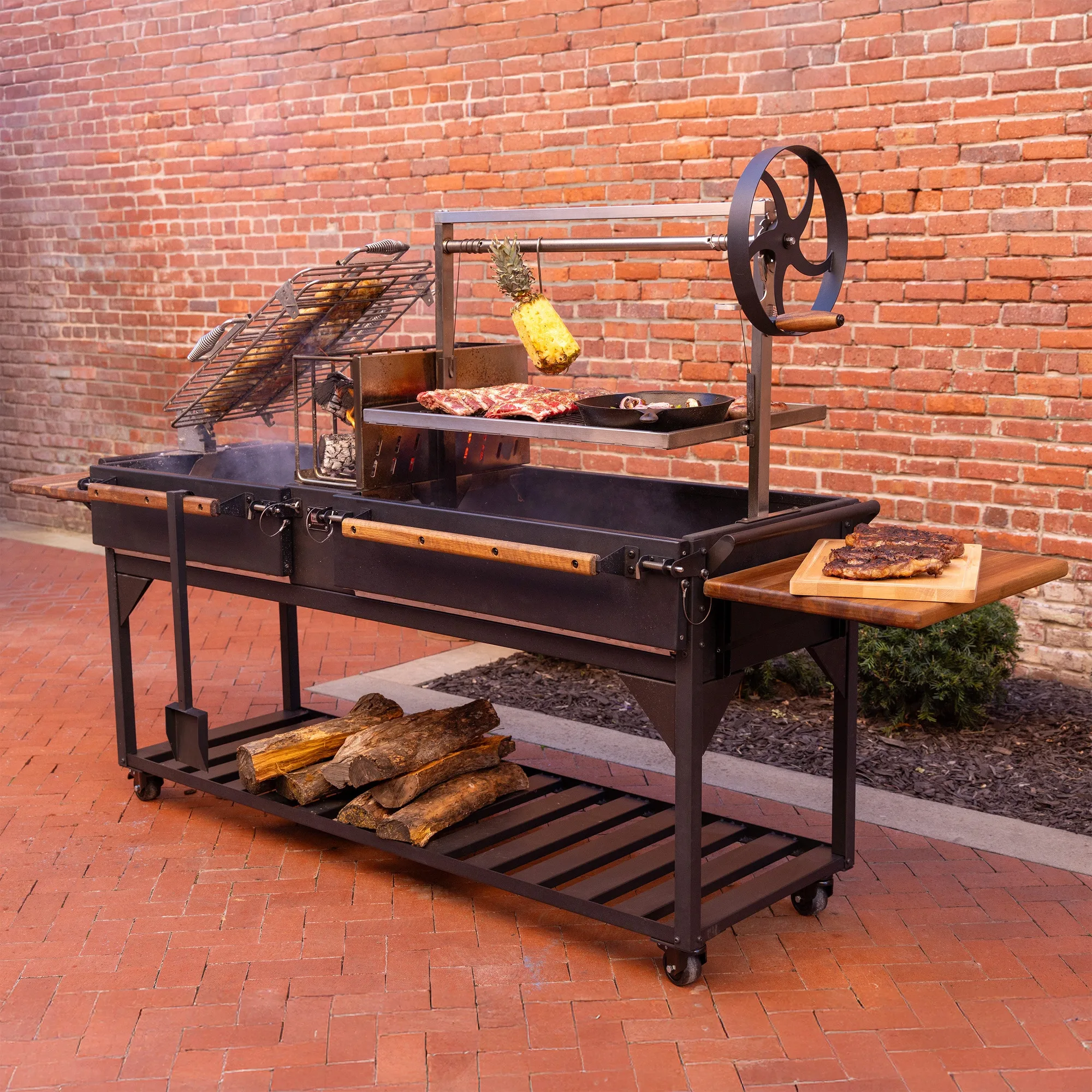
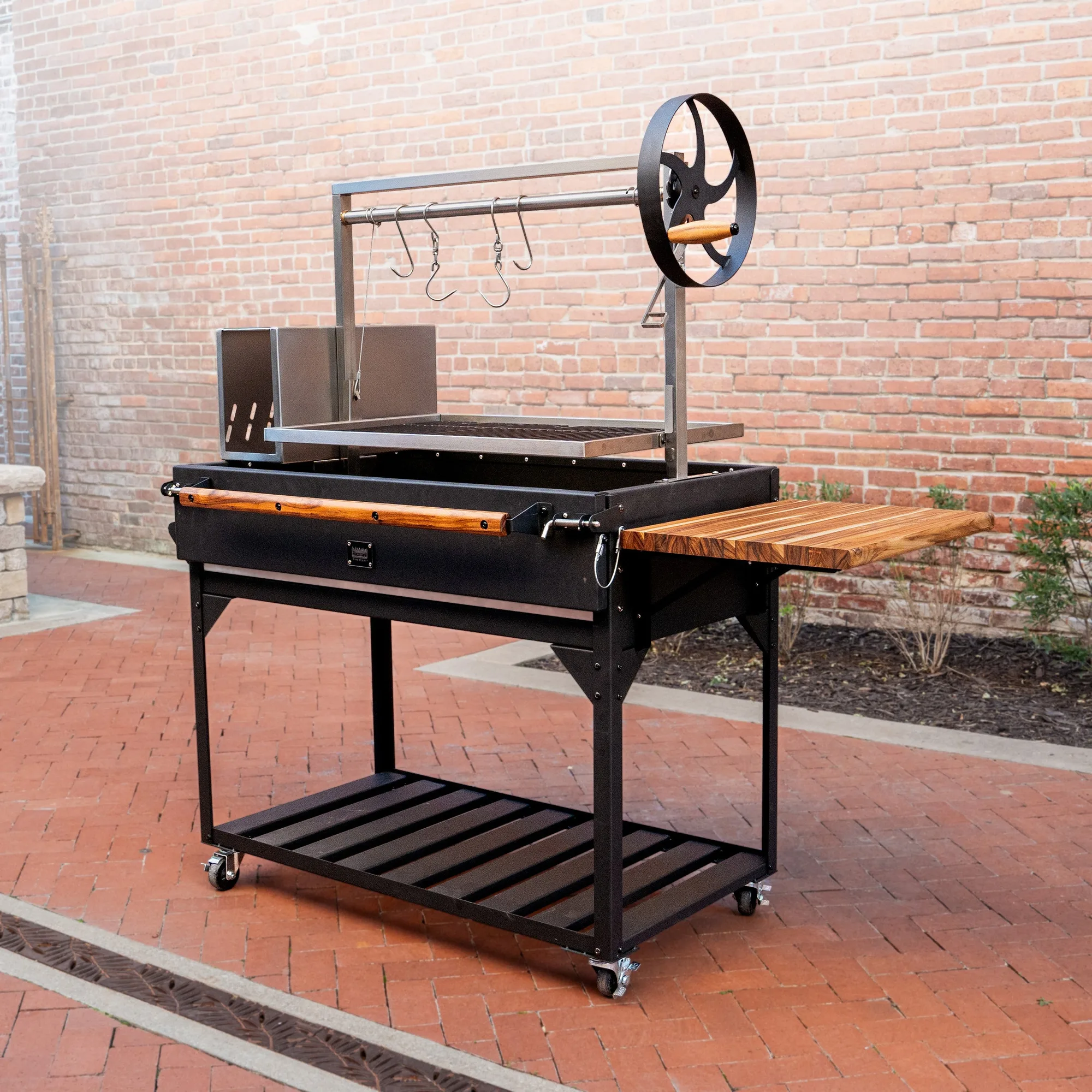
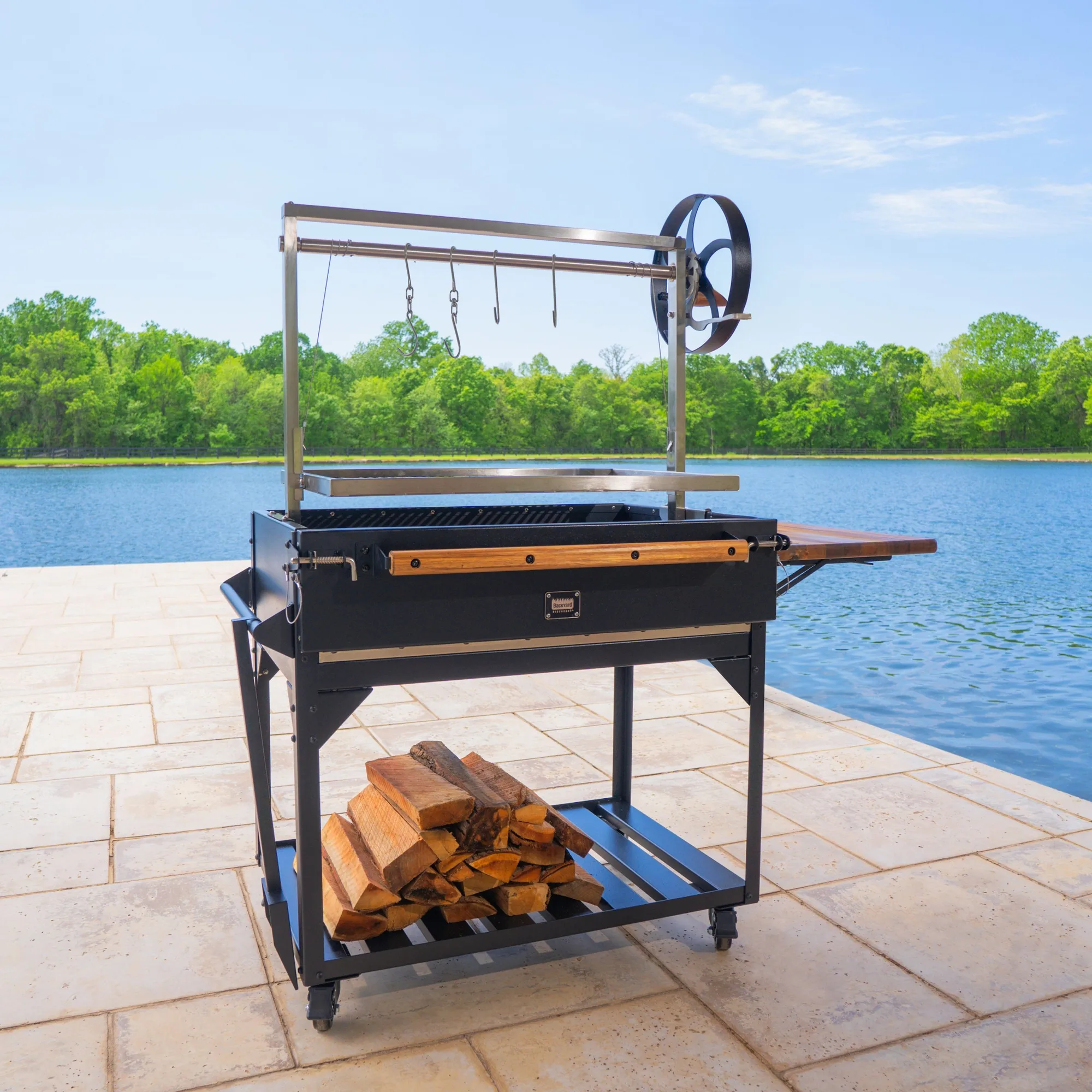
- Argentine/Santa Maria Grill XL: The Argentine/Santa Maria Grill XL from Backyard Discovery is crafted for authentic Gaucho-style grilling, with heavy-duty steel grill grates that adjust to multiple heights for precise control. The adjustable grates let you move food closer to or farther from the coals, making it easier to control heat during the seasoning process and during actual asado cooking.
- Timber Rock Outdoor Argentine Grill Cook Station: The Timber Rock Outdoor Argentine Grill Cooking Station is built from solid cedar and powder-coated galvanized steel, designed to resist rust, dents, and corrosion. The rust-resistant construction means the station itself requires less maintenance, letting you focus on keeping the cooking grates clean and seasoned for years of use.