Quick answer
To keep your pet's food fresh and safe, clean the storage container every time you refill it, store dry food in a cool, dark place, and use an airtight container to block pests and moisture.
Why proper storage matters for your pet's health
Dry dog and cat food can go rancid if exposed to heat, light, or air. Storing it correctly preserves the fats and nutrients your pet needs, and prevents mold, bacteria, or pantry moths from ruining the batch. A dedicated food storage cabinet also keeps the feeding area tidy and reduces mess.
Step-by-step guide to cleaning and storing pet food
- Step 1: Empty and inspect the container: Pour any remaining food into a temporary bin or bowl. Check the old food for signs of mold, bugs, or a stale smell. If it looks or smells off, discard it and wash the container thoroughly before adding new food. Always inspect the food before refilling; don't mix old and new batches.
- Step 2: Wash the storage container with warm, soapy water: Use a mild dish soap and a soft sponge to scrub the inside and outside of the container. Rinse thoroughly to remove all soap residue, which can taint the next batch of food. Let the container air-dry completely before refilling. Drying is critical—any trapped moisture can cause mold growth in dry food.
- Step 3: Choose a cool, dark storage spot: Place the container away from direct sunlight, heat vents, or appliances like ovens and refrigerators. A pantry, a low cabinet, or a dedicated pet food storage cabinet (like the models above) works well. Consistent temperature helps preserve fat content. Avoid garages or sheds that can get hot in summer; room temperature is best.
- Step 4: Seal the container airtight: If your storage container doesn't have a tight seal, transfer the food into an airtight bin or use a clip to secure the bag inside. This keeps out moisture, pests, and odors that can attract insects. A loose lid is the most common cause of stale food and pantry moth infestations.
- Step 5: Label and rotate: Write the purchase date on the container or bag with a marker. When you refill, use the oldest food first. Most dry pet food stays fresh for about 6–8 weeks after opening if stored properly. Don't rely on memory—a simple label saves you from feeding stale kibble.
- Step 6: Clean bowls and feeding station regularly: Wash food and water bowls daily with hot, soapy water. Wipe down the feeding station's drawer or elevated stand weekly to remove crumbs and grease buildup. For cabinets with hidden storage, vacuum the interior every month to catch stray kibble. A clean feeding station prevents bacterial growth and keeps your pet's area odor-free.
Product recommendations for easier storage
-
Dog Food Storage Cabinet with Bowls & Dog Feeding Station, White: This white dog food storage cabinet with bowls offers a minimalist look and a lifted feeding station suitable for large dogs up to 23.5 inches at the shoulder. It combines dry food storage and an elevated feeding area in one piece, reducing clutter and keeping the food container away from floor-level dust and moisture.
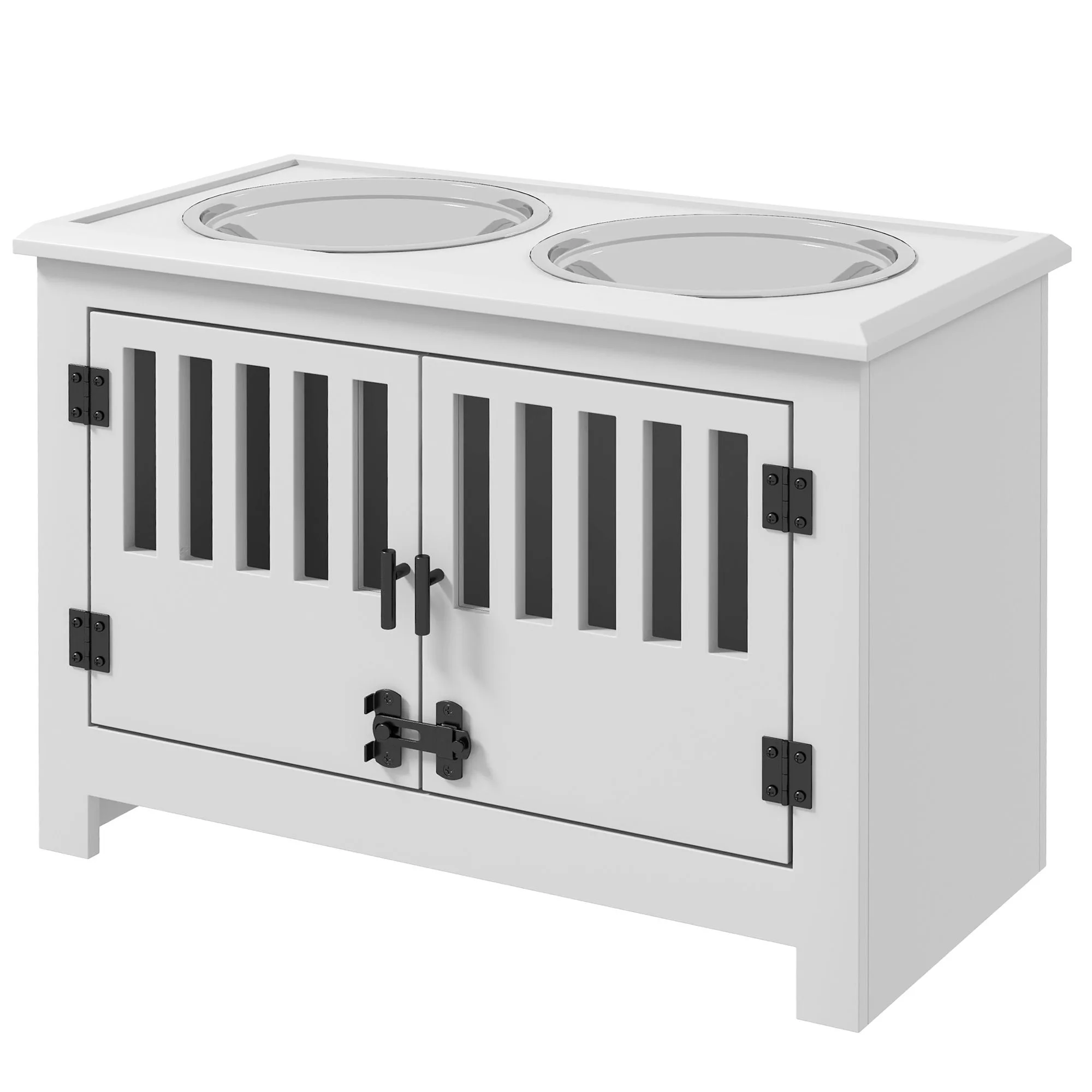
Dog Food Storage Cabinet with Bowls & Dog Feeding Station, White
-
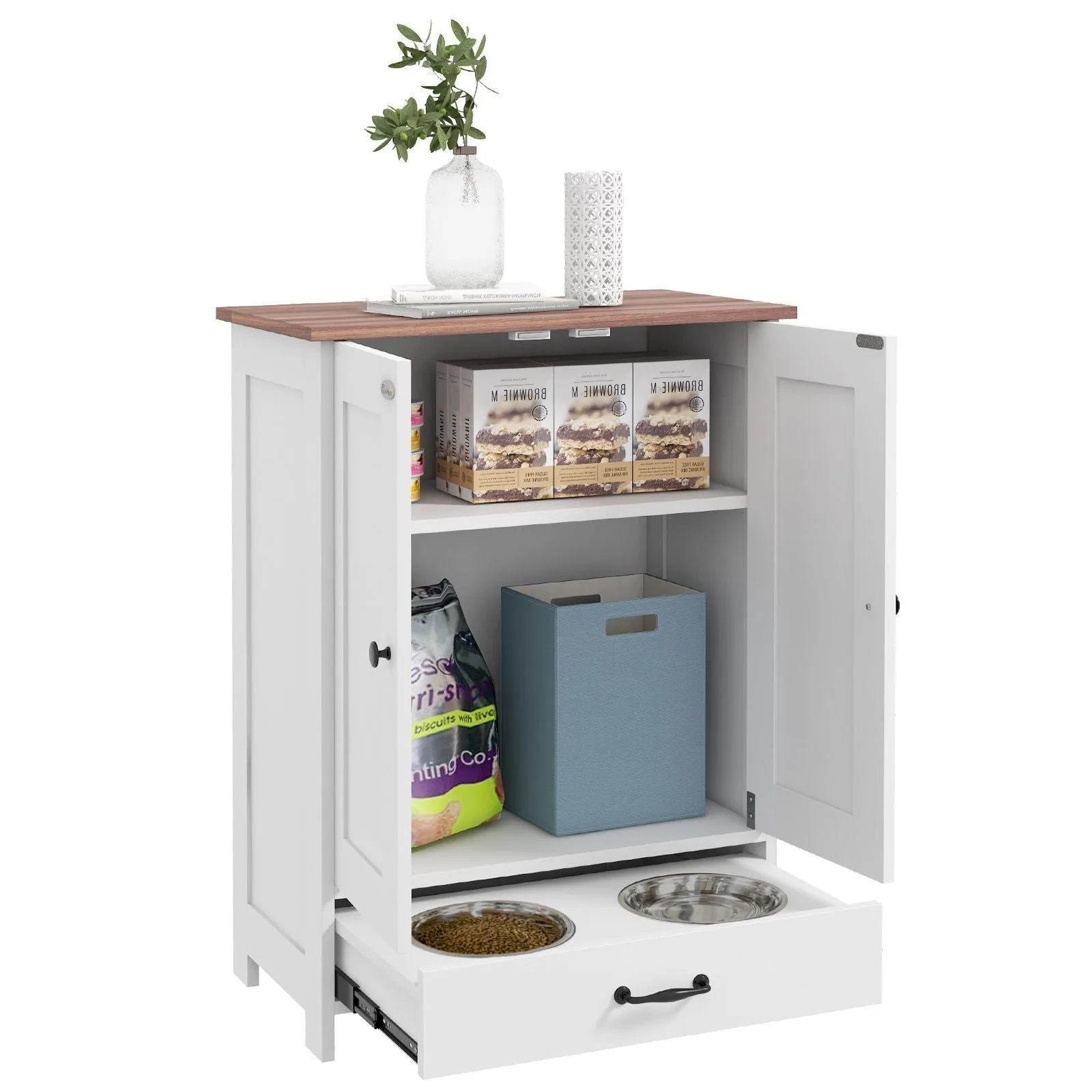
Pet Feeder Station Storage Cabinet, Dog Food Storage Container, Black: The black pet feeder station has a pull-out bottom drawer for food and water bowls, plus a top storage compartment for kibble bags. The hidden drawer design keeps bowls off the floor when not in use, and the enclosed storage helps protect dry food from light and pests.
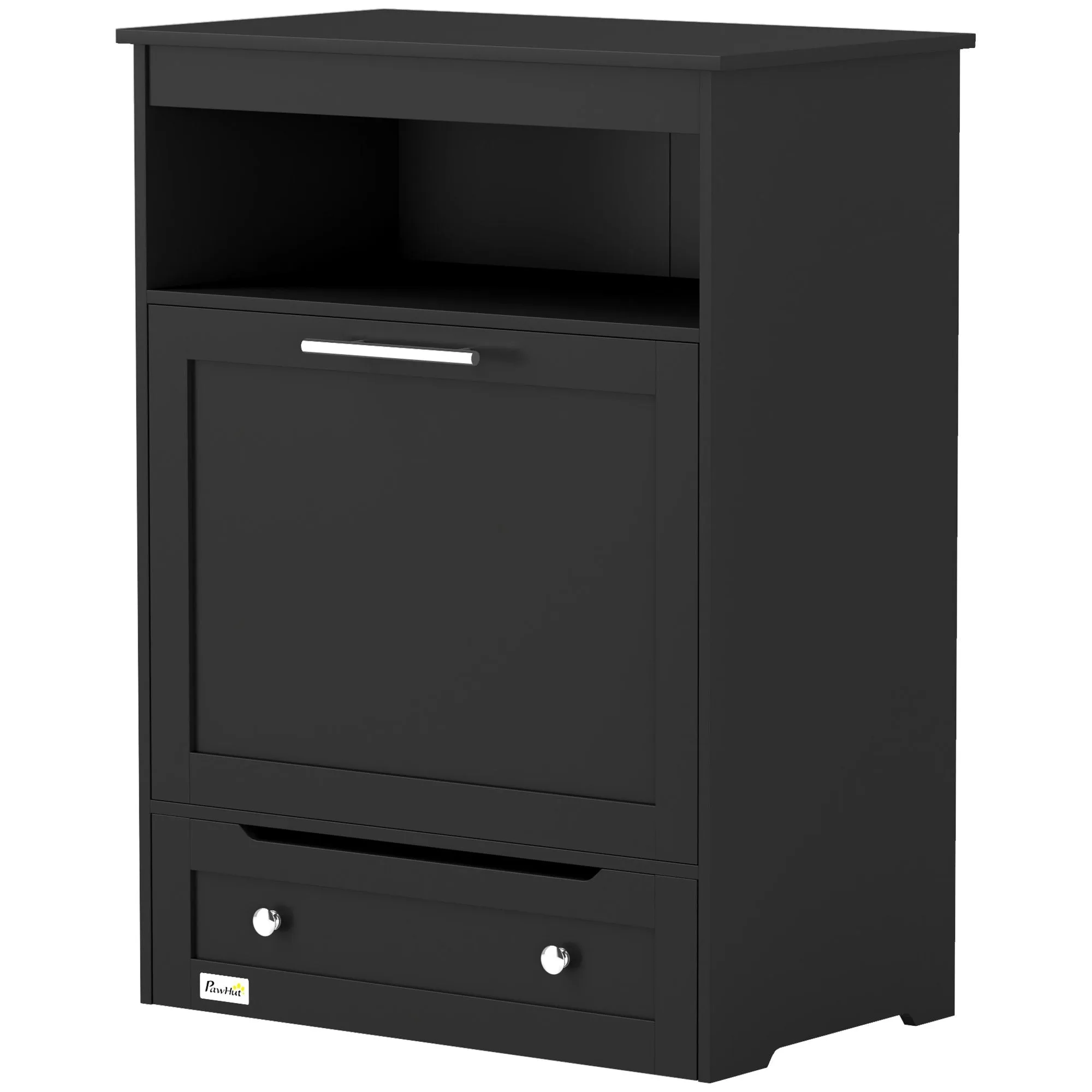
Pet Feeder Station Storage Cabinet, Dog Food Storage Container, Black
-
PawHut Dog Feeding Station, Dog Food Storage Cabinet with Hidden: This PawHut dog feeding station includes side hooks for leashes and collars, and fits medium-sized pets measuring 14–20 inches at the shoulder. The extra hooks let you keep feeding accessories organized, and the cabinet's enclosed design helps maintain a consistent temperature for stored food.