Quick answer
Empty the bag, hand wash it in lukewarm water with a drop of mild soap, rinse the zipper track and valve until the water runs clear, then air dry fully open before storing it flat and unzipped. Skip the dryer, the iron, and any sealed storage bin, because heat and trapped moisture are what shorten the life of a reusable vacuum bag.
Vacuum seal bags earn their keep by shrinking clothes down to a fraction of their packed size, but that same job puts them in contact with sweat, sunscreen, sand, and airport floors. A few minutes of care after each trip keeps the zipper track gliding and the valve sealing.
The routine below works for the TAKE OFF Vacuum Seal Bags - 5 Pack and for most reusable travel compression bags with a similar valve and zip design. It takes about five minutes per bag, and it is the difference between a bag that lasts a couple of seasons and one that stops holding a seal after two trips.
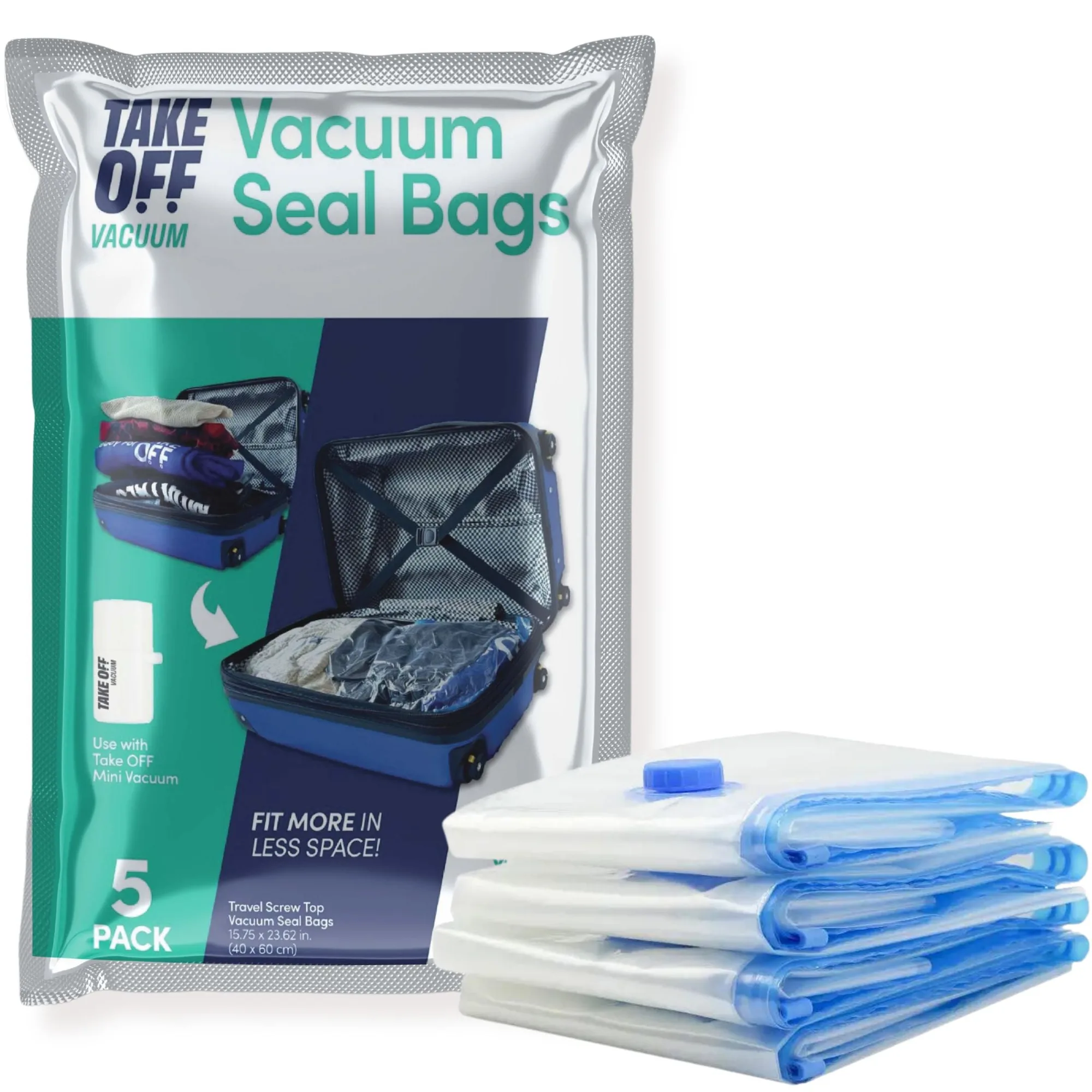
Vacuum Seal Bags - 5 Pack
Why reusable vacuum bags need a cleaning routine
A vacuum travel bag only works when two things stay clean: the zip track and the one-way valve. Grit, lint, and dried sunscreen in the track stop the two sides from locking, so air creeps back in. Residue or a bent valve flap does the same at the other end. Neither problem shows up until you are kneeling on a hotel floor trying to flatten a bag that will not stay flat.
Cleaning also protects your clothes. These bags compress items you wear against your skin, so leftover detergent, sand, or food residue from a previous trip ends up on the next load of shirts. Rinsing thoroughly matters as much as washing.
- Clean bags after every trip, not just when they look dirty.
- Never machine wash or tumble dry a vacuum bag unless the label explicitly says it is safe.
What you need before you start
Keep the kit small: lukewarm water, a drop of mild liquid soap, a soft cloth or sponge, and a towel to lay the bags on. Avoid bleach, fabric softener, and abrasive cleaners, which can degrade the plastic film and leave a residue that attracts dirt. A soft-bristle toothbrush is useful for the valve area if you travel with sandy gear.
Work over a sink or a bathtub so you can rinse freely. Do not fill a bag and let it soak for hours; a short wash is enough, and long soaking does not improve the result.
- Lukewarm, not hot, water protects the film and the valve.
- One drop of soap is plenty; excess suds are hard to rinse out of a sealed bag.
Drying and storing without trapping moisture
Moisture is the quiet killer of reusable vacuum bag care. If you fold a damp bag into a drawer, the trapped humidity encourages mildew and can warp the valve flap. Dry bags fully open, valve side up, away from direct sun and heat. A drying rack or a towel on the floor works fine; a radiator or a hot car does not.
For vacuum seal bag storage, keep bags flat and unzipped, stacked loosely rather than pressed under heavy luggage. If you store them inside a suitcase, leave that suitcase open or cracked so air can move. A sealed plastic bin holds in any residual dampness, so it is the one container to avoid.
- Store flat and unzipped so the track does not take a permanent crease.
- Keep bags away from sharp zippers, tools, and pet claws that can puncture the film.
Mistakes that shorten a bag's life
The most common error is sealing a bag while it is still damp inside. Even a faint clamminess can leave a musty smell on the next trip and make the valve stick. The second is overfilling: a bag packed past its comfortable capacity strains the zip and can split the seam when you compress it. The third is storing bags compressed. Once the trip is over, release the compression and let the bag relax.
If a bag no longer holds a seal, check the track for lint before you give up on it. A quick wipe with a damp cloth and a full dry often restores the seal. If the valve itself is cracked or the film is punctured, retire that bag and keep the rest of the set in rotation.
- Never store a bag compressed for months at a time.
- Retire punctured bags instead of using them for checked luggage.
Step-by-step: clean and store your vacuum seal bags
- Step 1: Empty and unzip fully: Take everything out, open the zip track all the way, and shake the bag over a bin to release sand, lint, and crumbs. Check the corners where grit collects. Checkpoint: if you can see debris in the track, remove it now rather than during the wash.
- Step 2: Hand wash in lukewarm water: Add a drop of mild soap to lukewarm water and wipe both sides of the film with a soft cloth. Run your fingers along the zip track and around the valve, but do not scrub the valve with anything abrasive. Mistake to avoid: hot water and harsh cleaners can dull the film and stiffen the valve.
- Step 3: Rinse until the water runs clear: Rinse the bag inside and out, paying extra attention to the zip track and valve where soap residue hides. Keep rinsing until no suds remain. Checkpoint: leftover soap attracts dirt and can leave marks on clothing.
- Step 4: Air dry fully open, valve up: Lay the bag flat or hang it open with the valve facing up, away from direct sun and heat. Let it dry completely, inside and out, before you think about folding it. Mistake to avoid: the dryer, an iron, or a hot radiator can warp the film and valve.
- Step 5: Store flat and unzipped: Once bone dry, lay bags flat in a loose stack with the zip open. Keep them away from sharp objects and out of sealed bins that trap moisture. Next step: before your next trip, do a quick seal test with a little air to confirm the valve still holds.
Product facts that affect care
- Vacuum Seal Bags - 5 Pack: Compression bags shrink your clothes so you can pack more into suitcases and carry-ons without adding extra weight. Because the bag is doing real compression work, the zip and valve are under load on every trip, which is why cleaning and full drying matter more than they would on a simple packing cube.
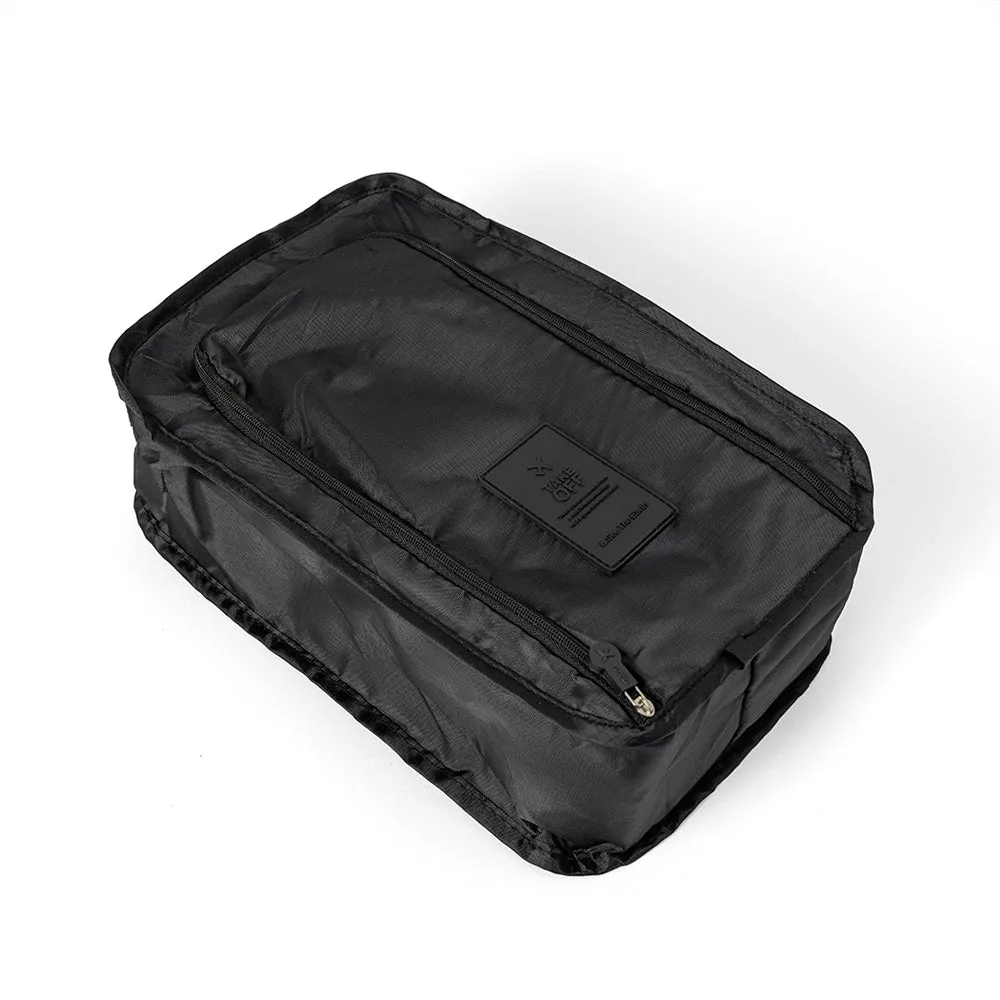
- Shoe Bag: The Shoe Bag acts as a hygiene barrier so clean shirts and pants never touch the dirt, dust, and grime of your footwear, and it has an interior pocket for small items. Pairing it with your vacuum bags keeps gritty shoes out of the same compartment, so the bag film and valve stay free of sand and grit that would otherwise work into the seal.
Five minutes of washing, rinsing, and drying after each trip is what keeps a reusable vacuum bag sealing properly. Treat the zip track and valve as the parts that matter, store bags flat and unzipped, and your set will keep compressing clothes for many trips to come.