Quick answer
Wipe wooden toys with a barely damp cloth and mild soap, then dry them completely before storing. For sanitizing wooden toys, use a diluted vinegar spray or a food-grade sanitizer and never soak, submerge, or put them in the dishwasher. Store blocks and peg boards in a dry, breathable bin or bag so they do not warp or grow mildew.
Gather the right supplies before you start
You only need a few things: two soft microfiber cloths, a mild dish soap or castile soap, a spray bottle with a 1:1 mix of white vinegar and water, and a dry towel. Skip abrasive sponges, bleach-heavy cleaners, and furniture polish, which can strip paint or leave a residue your toddler may put in their mouth.
If a toy has a manufacturer finish or paint you are unsure about, test the vinegar spray on a hidden edge first and wait a minute to see if the color lifts. This is especially useful for painted alphabet blocks where a strong cleaner can dull the letters.
Clean alphabet blocks and peg boards without warping them
For everyday cleaning, dampen a microfiber cloth with water and a drop of mild soap, wring it out until it is almost dry, and wipe each block or peg. Do not drop wooden toys into a sink of water. Wood swells when it absorbs water, which can crack the finish and make pegs fit too tightly.
For a deeper clean on sticky spots, spray the vinegar solution onto your cloth, not directly onto the toy, then wipe and immediately dry with a second cloth. Pay attention to grooves and the holes in peg boards, where juice or snack residue collects. A cotton swab works well for those tight spaces.
Sanitize only when someone is sick or a toy has been mouthed
Routine soap-and-water wiping is enough for most days. When a toy has been in a sick child's mouth or shared during a illness, use a food-grade sanitizer or the vinegar spray, wipe it on, and let the toy air dry completely before your child plays with it again.
Avoid alcohol-based sprays on painted wood because they can break down the paint over time. If you use a store-bought sanitizer, check that it is labeled safe for children's items and follow the dwell time on the bottle.
Dry and store toddler toys safely
Never put damp wooden toys into a closed bin. Lay them on a dry towel in a single layer, away from direct sun and heat, until they are completely dry to the touch, including the peg holes. Sun can fade colors, and a warm radiator can crack the wood.
For storing toddler toys safely, choose a breathable cotton bag or a bin with ventilation holes rather than an airtight plastic tote, which traps moisture. Keep the bin in a dry room, not a damp basement or a garage that swings in temperature. If you stack blocks, put heavier pieces on the bottom so the paint does not get scratched.
Build a quick weekly routine
A two-minute wipe-down once a week prevents most deep cleaning. Check for loose paint, splinters, or cracked pegs while you wipe. If a wooden toy has a splinter or chipped paint that could come off in a mouth, retire it rather than trying to repair it with glue your child could pick at.
Step-by-step wooden toy care
- Wipe with a barely damp cloth: Mix a drop of mild soap with water, wring the cloth until it is almost dry, and wipe each block, peg, and board surface. Checkpoint: the cloth should leave no visible water in the peg holes or letter grooves.
- Spot-clean sticky residue: Spray vinegar solution onto a cloth, not the toy, and wipe the sticky area. Use a cotton swab for peg holes and block corners. Mistake to avoid: soaking the toy or spraying liquid directly into the wood.
- Sanitize only when needed: After illness or mouthing, wipe with a food-grade sanitizer or vinegar spray and let the toy air dry fully. Skip alcohol sprays on painted wood to protect the finish.
- Air-dry in a single layer: Lay toys on a dry towel away from sun and heat until every surface, including peg holes, is dry to the touch. Checkpoint: no cool or damp feeling on the wood before storage.
- Store in a breathable container: Use a cotton bag or a ventilated bin in a dry room. Put heavier blocks on the bottom and keep the bin off damp floors. Mistake to avoid: sealing toys in an airtight plastic tote while any moisture remains.
Wooden toys that fit this care routine
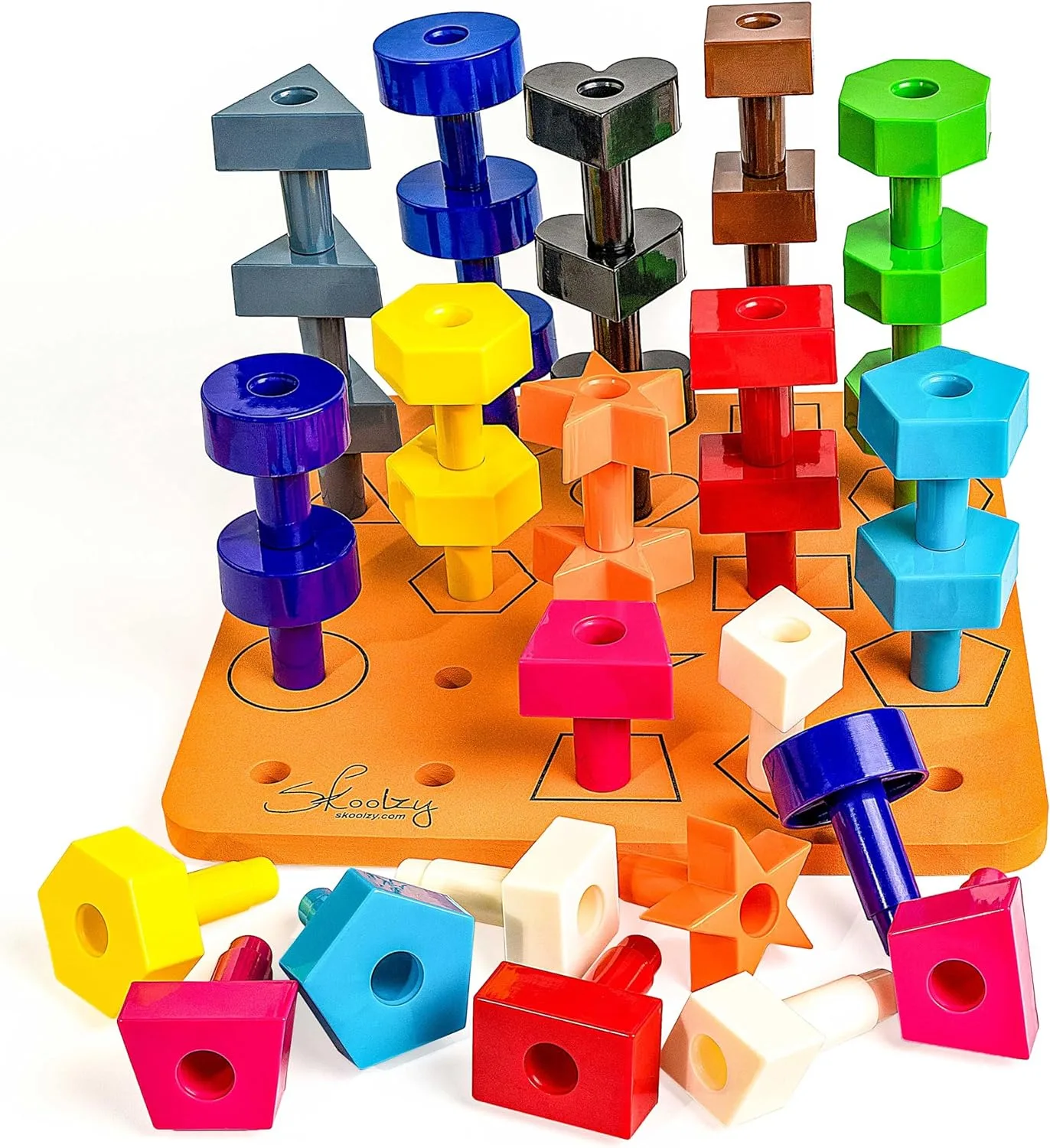
- Sensory Peg Board 33 Piece Set - Montessori Occupational Therapy Toys for Kids & Toddlers 2+: The Sensory Peg Board 33 Piece Set has oversize pegs that are easy for small fingers to grasp and stack on the peg boards. The larger peg holes are easier to dry with a cloth or cotton swab, so moisture does not stay trapped after cleaning.
- 30 Wooden Alphabet Letter Blocks: The 30 Wooden Alphabet Letter Blocks are a classic wood learning tool children stack, play, and build with for hours. Painted letter blocks need a barely damp wipe and a full air-dry before they go back in the bin, or the paint can dull and the wood can swell.
- Toddler Peg Board 38 pcs | Pegboard for Toddlers: The Toddler Peg Board 38 pcs set includes 36 colorful pegs, a foam board, and a handy bag. The included bag is a breathable storage option, but make sure the pegs and foam board are completely dry before zipping them in.