Quick answer
Wash baby suction plates by hand with warm, soapy water and a soft sponge, then air-dry. Avoid harsh scrubbing, high heat, and dishwasher cycles that can weaken the suction cups.
Why hand washing is safer for suction plates
While many silicone products are labeled dishwasher-safe, the high heat and strong water jets in a dishwasher can gradually reduce the flexibility of the suction cups. Over time, this can make the plate less likely to stick firmly to a high chair tray or table.
Hand washing gives you control over the water temperature and the tools you use. It also lets you inspect the suction cups for food residue or damage, so you can catch problems before they affect performance.
What to avoid when cleaning silicone plates
Abrasive scrubbers and harsh cleaning agents can scratch the silicone surface, creating tiny grooves where bacteria and food particles can hide. They can also dull the finish and make the plate look worn.
Bleach and other strong chemicals are not necessary for everyday cleaning and may leave residues that are unsafe for your baby. Stick to mild dish soap and warm water.
Step-by-step cleaning guide
- Rinse immediately after use: Rinse the plate under warm running water to remove loose food particles before they dry and stick. Do not let food dry on the plate; it makes cleaning harder and can leave stains.
- Wash with mild soap and warm water: Use a soft sponge or cloth with a few drops of mild dish soap. Gently scrub all surfaces, including the suction cups and any crevices. Avoid abrasive pads or brushes; they can scratch the silicone.
- Rinse thoroughly: Rinse the plate under clean running water until no soap residue remains. Soap film can affect the suction grip. Check the suction cups for any leftover soap by pressing them against a flat surface.
- Air-dry completely: Place the plate on a drying rack or clean towel and let it air-dry. Do not use a towel to wipe it dry, as lint can stick to the silicone. Ensure the plate is completely dry before stacking or storing to prevent mold.
- Sanitize weekly (optional): Once a week, you can sanitize the plate by soaking it in a solution of one part white vinegar to three parts water for a few minutes, then rinse thoroughly. Do not boil or microwave the plate for sanitizing unless the manufacturer explicitly allows it.
Product spotlight
-
Babelio New Basics Suction Plates for Baby and Toddler - 3 Pack with Powerful 4-Cup Suction: Made from 100% food-grade silicone, free from BPA, PVC, and fillers. Food-grade silicone is durable and safe for your baby, but it still needs gentle care to keep the suction cups working well.
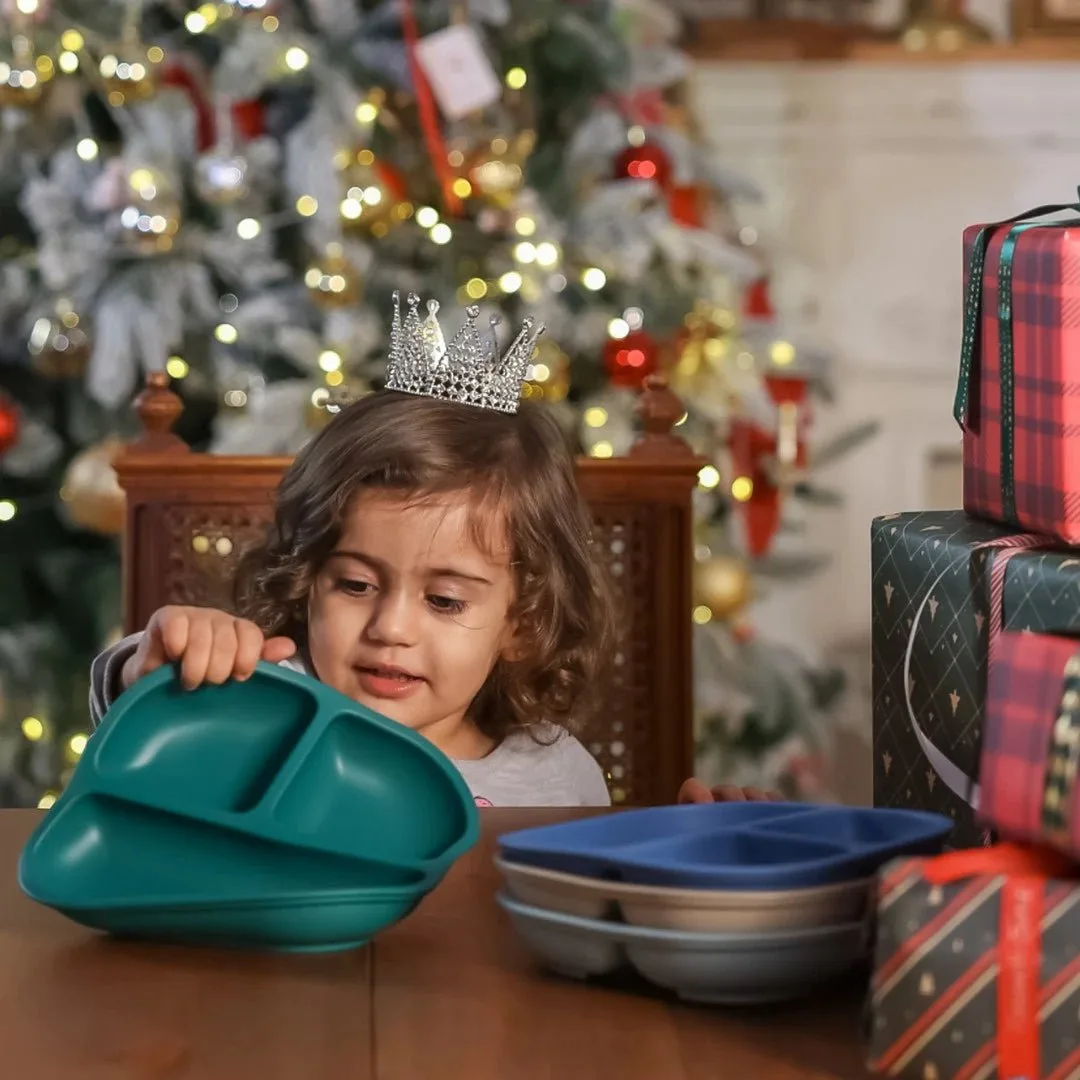
Babelio New Basics Suction Plates for Baby and Toddler - 3 Pack with Powerful 4-Cup Suction