Quick answer
Clean patent leather with a soft, barely damp cloth and a pH-neutral soap only when needed, then buff dry. Condition sparingly with a product made for patent or glossy finishes, and skip harsh solvents, alcohol, and abrasive cloths. Most shine loss comes from over-wetting and rubbing, not from dirt.
What patent leather actually is, and why it behaves differently
Patent leather is a leather with a high-gloss, plastic-like finish applied over the surface. That finish is what gives the mirror shine, and it is also the part that scratches, dulls, or lifts when the wrong product is used. Because the top layer is a coating rather than bare grain, it does not absorb conditioner the way a natural leather does. Conditioner on patent leather is there to keep the coating supple and clean, not to feed the hide underneath.
This matters for everyday handling. A patent bag resists water and stains better than most leathers, but it shows fingerprints, dust, and fine surface scuffs more easily. The goal is to remove what sits on top without polishing the coating away.
Products to avoid on glossy finishes
Many general leather care products are designed for absorbent, unfinished leathers and can leave a cloudy film or a tacky surface on patent. Avoid alcohol, acetone, nail polish remover, ammonia-based cleaners, and abrasive creams. Also skip rough cloths, paper towels, and scrubbing sponges, which create the micro-scratches that make a glossy bag look tired.
If you are unsure whether a product is safe, test it on a small hidden area first, such as the underside of a strap or the inside of a flap. Wait a few minutes and check for dulling or stickiness before using it on the visible panels.
How often to clean and condition
For a bag in regular rotation, a dry wipe once a week and a damp wipe as needed is enough. A full clean with soap should be occasional, perhaps every one to three months depending on use. Conditioning can be even less frequent, because the coating does not need moisture the way an aniline or vegetable-tanned leather does. Over-conditioning is a common cause of a greasy, smeared look on patent.
If your bag is stored for long periods, clean it before storage rather than after, and keep it in the dust bag that came with it. Patent leather can be sensitive to prolonged heat and direct sunlight, so a cool, dark shelf is better than a windowsill or a radiator-adjacent closet.
Handling scratches and marks on patent leather
Fine surface scratches on patent leather often look worse than they are because the gloss catches the light. A very small amount of a patent-safe conditioner, applied with a fingertip and buffed gently, can sometimes soften the appearance of light scuffs. Deeper scratches that have cut into the coating will not disappear with home care, and trying to polish them out usually makes the area duller.
For sticky residue, let the material come to room temperature and lift the mark with a soft cloth rather than rubbing hard. For ink or dye transfer, do not use solvent-based removers; these can strip the finish permanently. If a mark does not lift with mild soap and water, it is safer to live with it or seek a professional leather specialist than to risk the coating.
Step-by-step patent leather cleaning routine
- Start with a dry wipe: Use a soft, dry microfiber cloth to lift dust and loose grit from the whole bag, including seams and under the flap. Do this before any moisture touches the surface. Checkpoint: if the cloth picks up grit, shake it out or switch to a clean one so you are not dragging particles across the gloss.
- Wipe with a barely damp cloth: Dampen a soft cloth with lukewarm water and wring it out so it is almost dry. Wipe in one direction with light pressure, then go over the area with a dry part of the cloth. Common mistake: a wet cloth. Standing water can seep into seams and edges and weaken the coating over time.
- Use mild soap only for stubborn marks: If water alone does not lift a mark, add a drop of pH-neutral soap to the damp cloth, wipe gently, then remove all residue with a clean damp cloth and dry immediately. Checkpoint: never let soap dry on the surface. Residue is what creates a dull, streaky film.
- Condition sparingly: Apply a small amount of patent-safe conditioner with a soft cloth or fingertip, using a thin, even layer. Buff gently with a dry cloth to restore shine. Common mistake: treating patent like absorbent leather and applying a heavy coat. Less is more here.
- Dry away from heat: Let the bag air-dry at room temperature, away from radiators, hair dryers, and direct sun. Heat can soften and distort the glossy coating. Checkpoint: if the surface feels tacky after drying, you used too much product. Wipe with a clean dry cloth and let it rest.
- Store in the dust bag: Once fully dry, place the bag in its protective dust bag and store it on a shelf rather than hanging it by the strap. Avoid stacking heavy items on top. Next step: rotate your bag regularly and repeat the dry wipe weekly to keep dust from settling into the finish.
Patent and glossy options in the current range
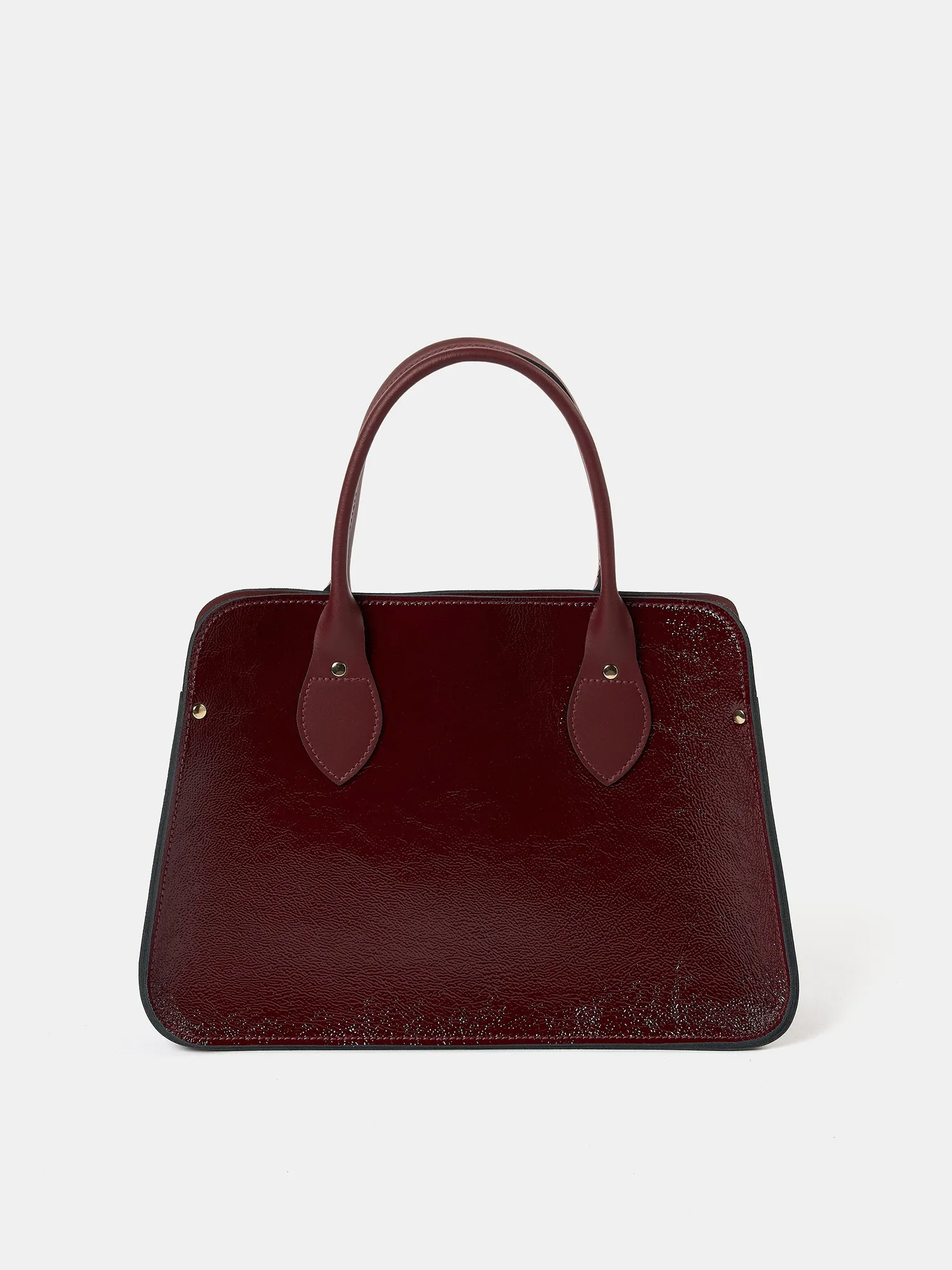
- The Mini Work Bag - Oxblood Patent: The Mini Work Bag in Oxblood Patent is a compact work bag with top handles, an adjustable shoulder strap, and space for A5 notebooks and documents, and it includes a protective dust bag. Patent needs more careful handling than matte leather, so a structured work bag benefits from a routine that protects the finish while keeping its shape. The dust bag makes storage between uses straightforward.