Quick answer
Clean fused quartz coverslips by soaking them in a mild detergent solution, rinsing with copious ultrapure water, and drying with nitrogen or clean air. Never scrub with abrasive pads or handle them with bare fingers. For routine maintenance, follow the ordered steps below to remove residue without damaging the surface.
Why fused quartz coverslips need gentle cleaning
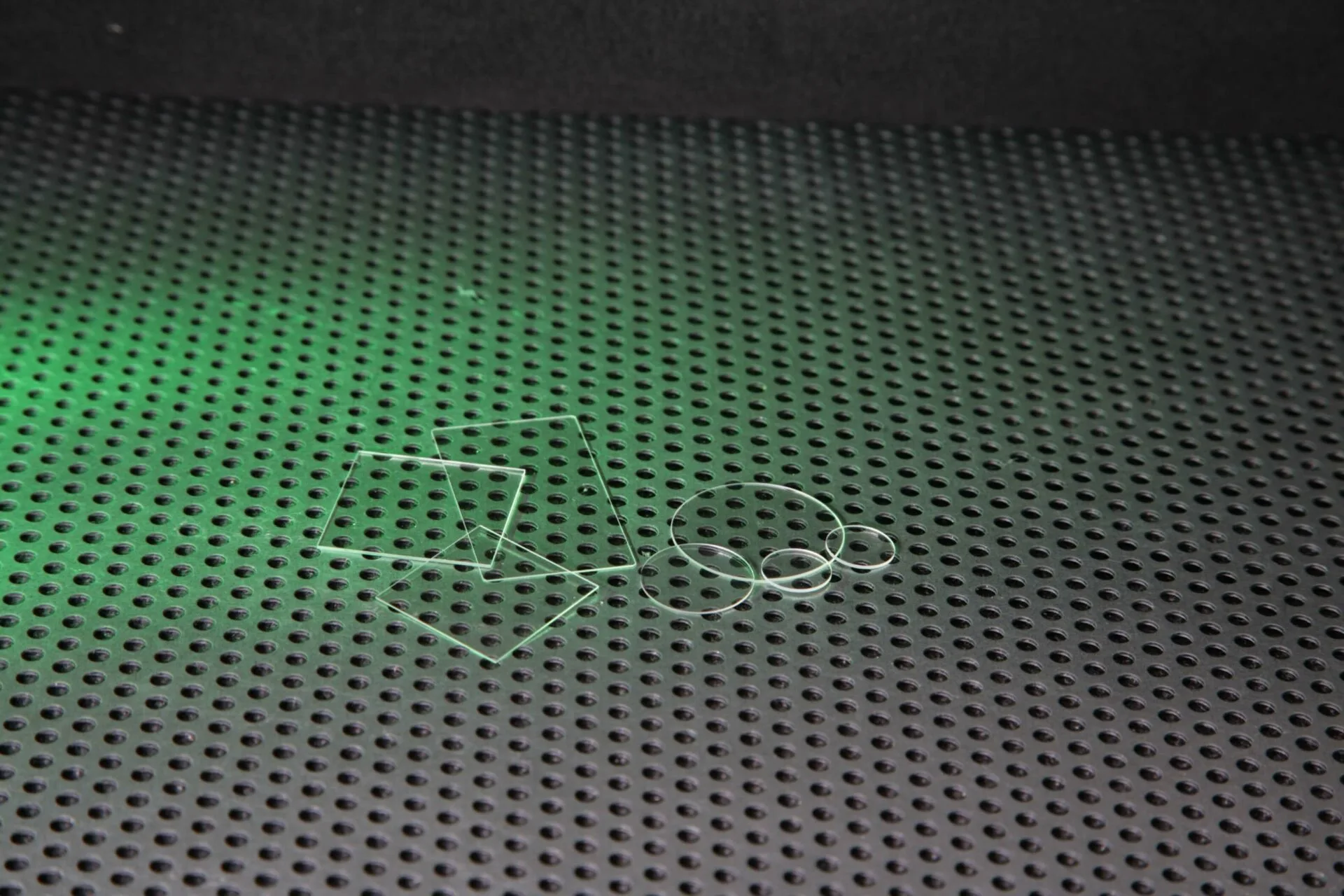
Fused quartz coverslips are made of high-purity fused silica, which offers excellent optical transmission from deep UV to near IR. That same purity makes the surface susceptible to scratches and chemical etching if cleaned aggressively. Unlike standard glass, quartz does not tolerate harsh abrasives or prolonged exposure to strong bases. The goal is to lift contaminants without creating micro-scratches that scatter light or trap future residue.
Choosing the right cleaning agents
Use a neutral pH detergent formulated for laboratory glassware, diluted according to the manufacturer’s instructions. Avoid household dish soaps that contain fragrances, dyes, or moisturizers, as these can leave films. For stubborn residues, a short soak in a 1% solution of a mild laboratory detergent is usually sufficient. If you need to remove organic material, a brief rinse with acetone or ethanol may help, but test on a spare coverslip first because some quartz coatings or markings could be affected. Never use hydrofluoric acid or strong bases like sodium hydroxide, which attack fused silica.
Step-by-step cleaning process
Work in a clean environment, ideally a laminar flow hood, to prevent airborne particles from settling on the wet surface. Handle coverslips with plastic tweezers or clean nitrile gloves. Place them in a PTFE or polypropylene rack; avoid metal racks that can scratch edges. Soak in detergent solution for 10–15 minutes, then rinse under running ultrapure water for at least one minute. For final rinse, use a squeeze bottle of ultrapure water to dislodge any remaining detergent. Dry with a stream of filtered nitrogen or clean compressed air, or let them air-dry in a dust-free environment. If water spots remain, the rinse water may not be pure enough; check your water system.
Handling and storage best practices
Always pick up coverslips by the edges using tweezers. Oils from fingers can etch quartz over time and are difficult to remove completely. Store clean coverslips in a closed container, such as a petri dish or a dedicated coverslip box, lined with lint-free tissue. Keep them away from dust and vapors. If you need to stack them, place a piece of clean lens paper between each coverslip to prevent abrasion. Label containers with the cleaning date; even clean quartz can accumulate contaminants over months of storage.
Cleaning steps at a glance
- Pre-rinse and inspect: Hold the coverslip with tweezers and rinse with ultrapure water to remove loose dust. Inspect under a light for visible particles or films. Do not wipe with dry tissue, which can scratch. If particles remain after rinsing, proceed to detergent soak; do not scrub.
- Soak in mild detergent: Immerse in a 1% neutral detergent solution for 10–15 minutes. Use a clean rack to keep coverslips separated. Avoid alkaline or acidic cleaners. Check that the solution is clear; cloudy or expired detergent can leave residue.
- Rinse thoroughly: Rinse under running ultrapure water for at least one minute, then use a squeeze bottle to direct a final stream across both surfaces. Hold the coverslip at an angle to help water sheet off. Water should sheet evenly; if it beads, detergent residue may remain.
- Dry with filtered gas or air: Blow dry with filtered nitrogen or clean compressed air. Alternatively, let air-dry in a dust-free environment. Do not use paper towels or cloth. Inspect for water spots; if present, repeat rinse with fresh ultrapure water.
- Store properly: Place dried coverslips in a closed, dust-free container. Separate stacked coverslips with lens paper. Label with date. Use within a few weeks for best results; re-clean if storage exceeds one month.
Fused quartz coverslips from UQG Optics
- Fused Quartz Coverslip #No5: https://uqgopticser.com/products/fused-quartz-cover-slip-no5-7-fbb34faa1181c186a2347e3c-1696552https://uqgopticser.com/products/fused-quartz-cover-slip-no5-2-aedc2c6fdb2b0374e2720230-1696553https://uqgopticser.com/products/fused-quartz-cover-slip-no5-5-772702f8cbbe05941d86e9d1-1696555https://uqgopticser.com/products/fused-quartz-cover-slip-no5-6adc92481ac5e3c298408a41-1696562Fused Quartz Coverslip #No5 has a thickness of 0.50 mm and a diameter of 12 mm (Part No. CFQ1250). The thicker 0.50 mm body is more rigid and easier to handle with tweezers during cleaning, reducing the risk of flexing and accidental drops.
- Fused Quartz Coverslip #No1.5: Fused Quartz Coverslip #No1.5 has a thickness of 0.17 mm and a diameter of 24 mm (Part No. CFQ2417). At 0.17 mm thick, this coverslip is fragile and requires extra care during soaking and rinsing; use a rack to avoid bending or breaking.
- Fused Quartz Coverslip #No2: Fused Quartz Coverslip #No2 has a thickness of 0.20 mm and a diameter of 15 mm (Part No. CFQ1520). The 0.20 mm thickness offers a balance between durability and optical performance, but still needs gentle handling to prevent edge chips.