Quick answer
Shake out loose hair and debris weekly, spot-clean fabric tunnels with a pet-safe enzyme cleaner, and deep-clean felt or fabric tunnels only when needed by hand-washing in cool water and air-drying fully. For scratchers, vacuum or brush loose material and rotate or replace worn surfaces before they become a hygiene problem. The goal is to remove odor and dander without shrinking, warping, or saturating the materials your cat uses daily.
Start with a quick daily or weekly reset
Most cat tunnel maintenance is just removing loose hair, dander, and tracked litter before it works into the fabric. Pick up the tunnel, shake it out outdoors or over a bin, then run a rubber brush or lint roller over the inside and outside. This takes under a minute and prevents the buildup that turns a quick spot-clean into a full wash. Check the tunnel's seams and poppers at the same time, because a popped seam or a missing popper is easier to fix before the tunnel is soaked.
Spot-clean fabric tunnels without soaking them
For everyday messes, mix a small amount of pet-safe enzyme cleaner with cool water, dampen a microfiber cloth, and wipe the soiled area. Enzyme cleaners break down urine and saliva proteins that regular soap can leave behind, which matters if your cat has marked or drooled on the tunnel. Avoid soaking the fabric. Excess water can weaken the structure, encourage mildew in the padding, and cause some fabrics to lose their shape. Let the spot air-dry completely before returning it to your cat.
Deep-clean felt and fabric tunnels by hand
When a tunnel needs more than spot-cleaning, hand-wash it in cool water with a mild, fragrance-free detergent. Agitate gently, rinse until the water runs clear, and press out excess water with a towel instead of wringing or twisting. Felt is especially prone to shrinking and felting further with heat and agitation, so skip the washing machine and the dryer. Hang or lay the tunnel flat to air-dry in a ventilated area, reshaping it while damp so it holds its form. It must be completely dry before your cat uses it again.
Keep scratchers clean and functional
Cat scratcher care is mostly about removing loose cardboard or sisal fibers and controlling odor. Vacuum the scratcher with a brush attachment or wipe it down with a dry cloth, then spot-clean any soiled areas with a damp cloth and mild soap. Do not saturate cardboard scratchers, because moisture breaks down the corrugated layers and creates a soft, unappealing surface. Rotate the scratcher periodically so your cat wears it evenly, and replace it once it becomes shredded, unstable, or noticeably odorous. A wobbly or soiled scratcher often gets ignored, which pushes scratching onto your furniture.
Handle the cat's reaction and drying time
Cats are sensitive to unfamiliar smells, so a freshly cleaned tunnel can be ignored for a day or two. Once the tunnel is fully dry, sprinkle a little of your cat's used litter or rub it with a cloth that has their scent to make it familiar again. Keep the cleaned item in the same spot if possible, and avoid strong perfumes or bleach-based cleaners that can irritate paws and airways. If your cat avoids the tunnel after cleaning, give it time rather than forcing interaction.
Step-by-step cat tunnel and scratcher care routine
- Step 1: Clear loose debris: Shake the tunnel outdoors, then brush or vacuum the inside and outside. For scratchers, vacuum with a brush attachment or wipe with a dry cloth. Checkpoint: if you see loose hair matting into the fabric, you waited too long between cleanings.
- Step 2: Spot-clean stains and odors: Use a pet-safe enzyme cleaner on a damp microfiber cloth and wipe the affected area. Do not soak the fabric. For scratchers, use a barely damp cloth only. Common mistake: using bleach or strong perfume cleaners, which can irritate your cat's paws and airways.
- Step 3: Hand-wash felt or fabric tunnels when needed: Fill a basin with cool water and mild fragrance-free detergent. Submerge the tunnel, agitate gently, then rinse until clear. Press out water with a towel. Checkpoint: never wring or twist the tunnel, and never put felt in a washing machine or dryer.
- Step 4: Air-dry completely: Lay the tunnel flat or hang it in a ventilated area, reshaping it while damp. Allow the scratcher to air-dry if it got damp. Common mistake: putting the tunnel back while still damp, which encourages mildew and can make your cat avoid it.
- Step 5: Reintroduce with familiar scent: Once fully dry, rub the tunnel with a cloth that carries your cat's scent, or sprinkle a little used litter inside. Place it back in its usual spot. Checkpoint: if your cat ignores the tunnel for more than two days, check for lingering cleaner smell and re-rinse if needed.
Product facts that affect cleaning
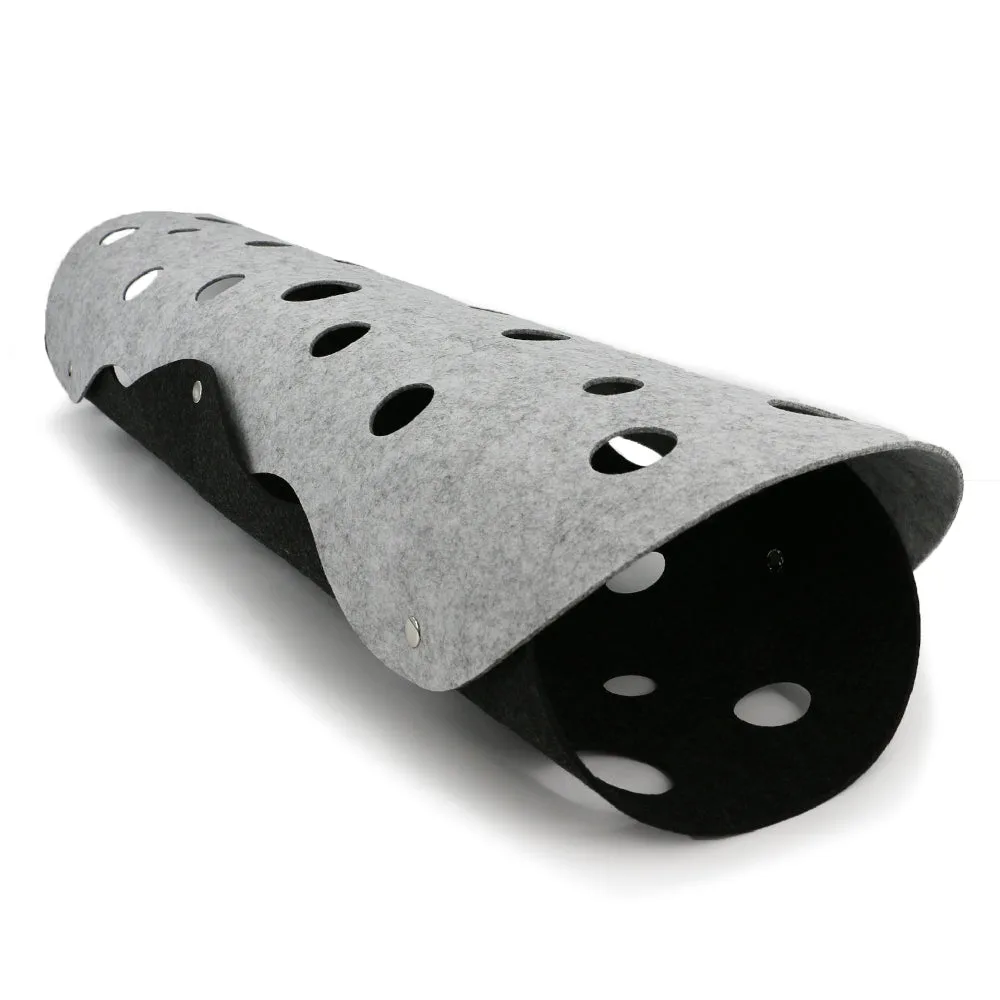
- Ancol Felt Cat Tunnels Charcoal & Grey: Ancol Felt Cat Tunnels Charcoal & Grey are 100cm long and 20cm in diameter, made of soft felt, and assemble by unrolling and affixing the poppers. They are collapsible for compact storage. Felt is not machine-wash friendly, so plan on hand-washing in cool water and air-drying. The poppers and collapsible design also mean you can store it clean and dry between uses, which reduces odor buildup.
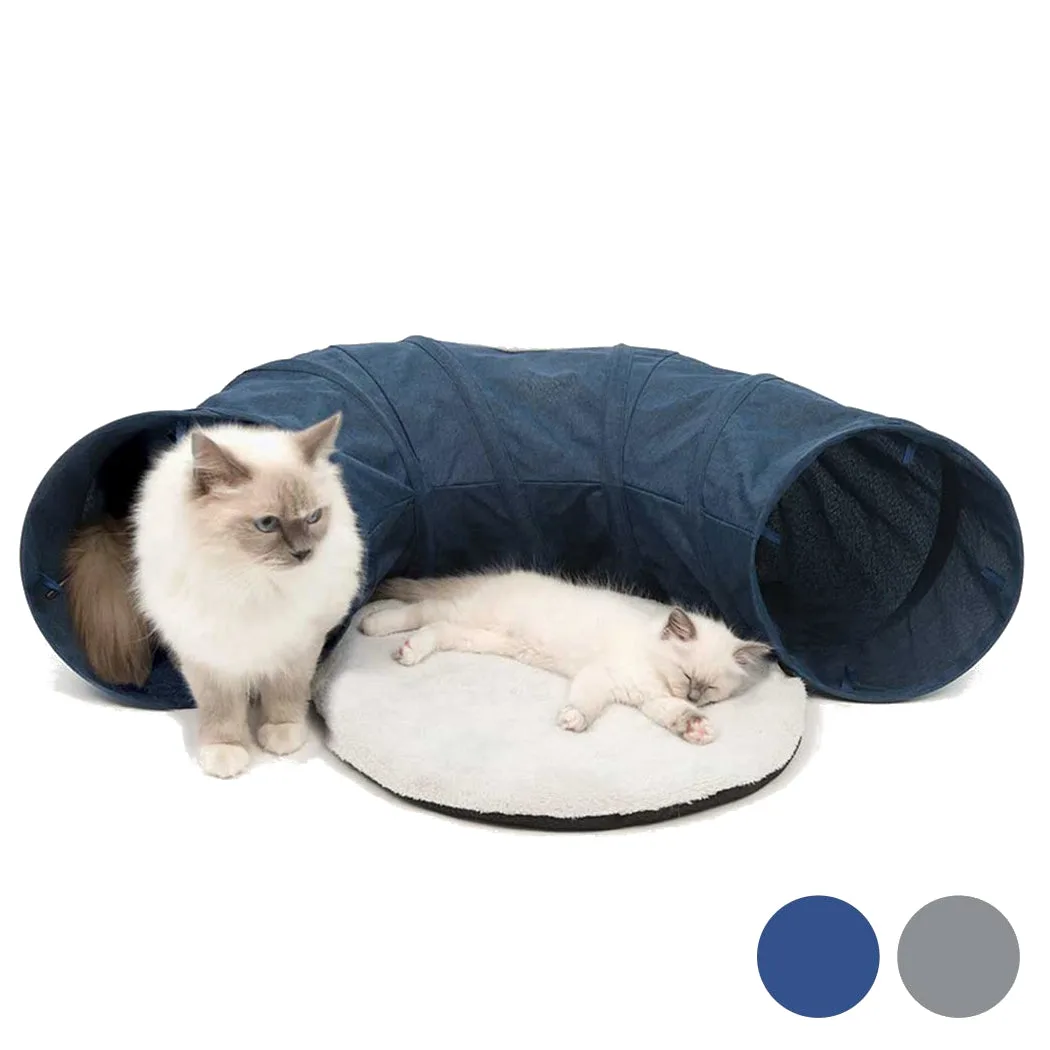
- Catit Vesper Cat Tunnel 2 Colours: Catit Vesper Cat Tunnel comes in two colours, is made of high-quality snag-resistant fabric, and includes a round sleeping cushion. It has a peek-a-boo design. The snag-resistant fabric tolerates more frequent spot-cleaning than felt, and the separate cushion can often be cleaned on its own, so you do not have to wash the whole tunnel every time the cushion gets soiled.