Quick answer
Clean leather luggage with a soft, barely damp cloth and a pH-neutral leather cleaner, let it dry away from heat, then apply a thin coat of leather conditioner and buff. Do this after every few trips, and store the bag stuffed, dust-covered, and out of direct sun. The goal is simple: remove grit before it grinds into the grain, replace oils before the leather dries, and keep weight off the shape.
Leather luggage takes a beating that most leather goods never see. It rides in overhead bins, sits on wet tarmac, gets dragged across gravel, and then spends months in a closet. Each of those moments either adds years to the bag or takes them away, and the difference is usually a twenty-minute routine you repeat a few times a year.
This guide walks through that routine in order, from the first wipe-down to off-season storage. It applies to any full-grain or Latigo-trimmed travel bag, including the King Ranch Saddle Shop pieces below, and it flags the mistakes that cause the most damage: soaking the leather, conditioning dirty grain, and storing a bag flat or folded.
Gather the right supplies before you touch the leather
You need very little: two soft microfiber or lint-free cloths, a horsehair or soft shoe brush, a pH-neutral leather cleaner, a quality leather conditioner, and a small soft brush for seams and hardware. Skip saddle soap on finished travel leather unless the manufacturer says otherwise, and never reach for household all-purpose spray, disinfecting wipes, or paper towels. Paper towels are abrasive enough to dull a finish over time.
If your bag is canvas-backed leather, keep the two materials separate in your head. Canvas responds well to a soft brush and mild soap, while leather wants a damp cloth and conditioner. Using one product on both is the fastest way to leave a water ring or a greasy patch.
- Test any cleaner on a hidden area first, such as the underside of a handle or the inside of a flap.
- Work in a well-lit room so you can see dirt in stitching and along edges.
Empty, brush, and dry the bag completely
Take everything out, including the small things that hide in pockets: receipts, boarding passes, loose coins, and the pen that will otherwise leak. Open every compartment and turn the bag upside down over a trash can. Then use the dry brush to sweep dust and grit out of seams, around zippers, and along the bottom edge where sand and salt collect.
If the bag is damp from rain or snow, let it air-dry at room temperature before cleaning. Leather that is still wet absorbs cleaner unevenly and can darken in patches. Keep it away from radiators, hair dryers, and direct sun, all of which pull moisture out too fast and stiffen the grain.
- Checkpoint: run your hand along the bottom and seams. If you feel grit, keep brushing before you introduce any moisture.
Wipe the surface with a damp cloth, not a wet one
Dampen a microfiber cloth with water and wring it out until it is barely moist. Wipe the leather in small sections, following the grain, and rinse the cloth as it picks up dirt. For sticky spots, add a drop or two of pH-neutral leather cleaner to the cloth rather than pouring it onto the bag. You want the leather to feel cool and clean, never soaked.
Pay attention to high-contact areas: handles, corners, the bottom panel, and anywhere a strap rubs. These are the places where body oils, sunscreen, and hand lotion build up and trap dirt. If you are cleaning a canvas-and-leather piece, use a separate slightly damp cloth for the canvas and avoid scrubbing the leather trim with the same cloth.
- Common mistake: saturating the leather to get a stain out faster. Excess water lifts finishes and can leave a permanent tide mark.
Let it dry, then condition while the leather is still slightly cool
Set the bag in a shaded, ventilated spot and let it dry naturally. Depending on humidity, that can take an hour or most of a day. Once the surface is dry to the touch, apply a small amount of conditioner to a clean cloth and work it in with light circular motions, focusing on dry areas, edges, and flex points. Wipe off any excess so the leather does not stay tacky.
Conditioning is what keeps leather supple and resistant to cracking, especially in dry climates or heated homes. For a bag you travel with often, condition two to four times a year. For a bag that lives in a closet, condition once before storage and once when you bring it back out.
- Checkpoint: the leather should look evenly toned, not shiny or greasy. If it feels slick, you used too much and should buff with a dry cloth.
Care for hardware, zippers, and straps
Brass and metal hardware collect grit and hand oils. Wipe them with a dry cloth, and use a soft brush to clear dust from the teeth of zippers. If a zipper drags, a zipper wax or a graphite pencil run along the teeth will smooth it without attracting dirt the way oil does. Do not spray lubricant on leather-adjacent hardware; overspray stains the grain.
Inspect straps and stitching at the same time. Loose stitching, a stretched handle, or a cracked strap keeper is much cheaper to repair before a trip than after a bag fails in an airport. If a strap is leather, condition it along with the bag so it stays flexible instead of drying into a stiff, cracking band.
- Common mistake: ignoring the underside of handles. That is where oils and dirt do the most long-term damage.
Store luggage so it holds its shape
Stuff the bag with clean towels, tissue paper, or a pillow to support its structure, then close all zippers and buckles so the shape sets correctly. Place it in a breathable cotton dust bag, not a plastic bin or vacuum-sealed bag. Leather needs airflow; sealed plastic traps moisture and invites mildew, especially in humid climates.
Store bags upright on a shelf rather than stacked under heavy items. If you have several pieces, keep them slightly apart so hardware does not press into the leather of the bag next to it. Avoid attics, garages, and damp basements. A cool, dry closet is the right home.
- Checkpoint: before you close the closet door, confirm nothing heavy is resting on the bag and no strap is bent at a sharp angle.
The leather luggage care routine, in order
- Step 1: Empty and dry: Remove everything from every pocket and let a damp bag air-dry at room temperature before cleaning. Checkpoint: no standing water, no warmth from a heater or sun.
- Step 2: Brush off grit: Use a soft dry brush on seams, zipper teeth, and the bottom panel to lift sand, salt, and dust. Checkpoint: your hand comes away clean when you run it along the bottom.
- Step 3: Wipe with a barely damp cloth: Clean small sections with a wrung-out microfiber cloth and a pH-neutral leather cleaner for sticky spots. Common mistake: soaking the leather or using paper towels.
- Step 4: Condition thin and even: Once dry to the touch, apply a small amount of conditioner with a clean cloth and buff off the excess. Checkpoint: even tone, no greasy film.
- Step 5: Service hardware and straps: Wipe metal, clear zipper teeth, and inspect stitching and strap keepers for wear. Fix small failures before your next trip, not during it.
- Step 6: Store stuffed and breathable: Fill the bag to hold its shape, close it up, and place it in a cotton dust bag on a shelf in a cool, dry closet. Never store leather in sealed plastic or under heavy stacks.
King Ranch Saddle Shop pieces and what their materials mean for care
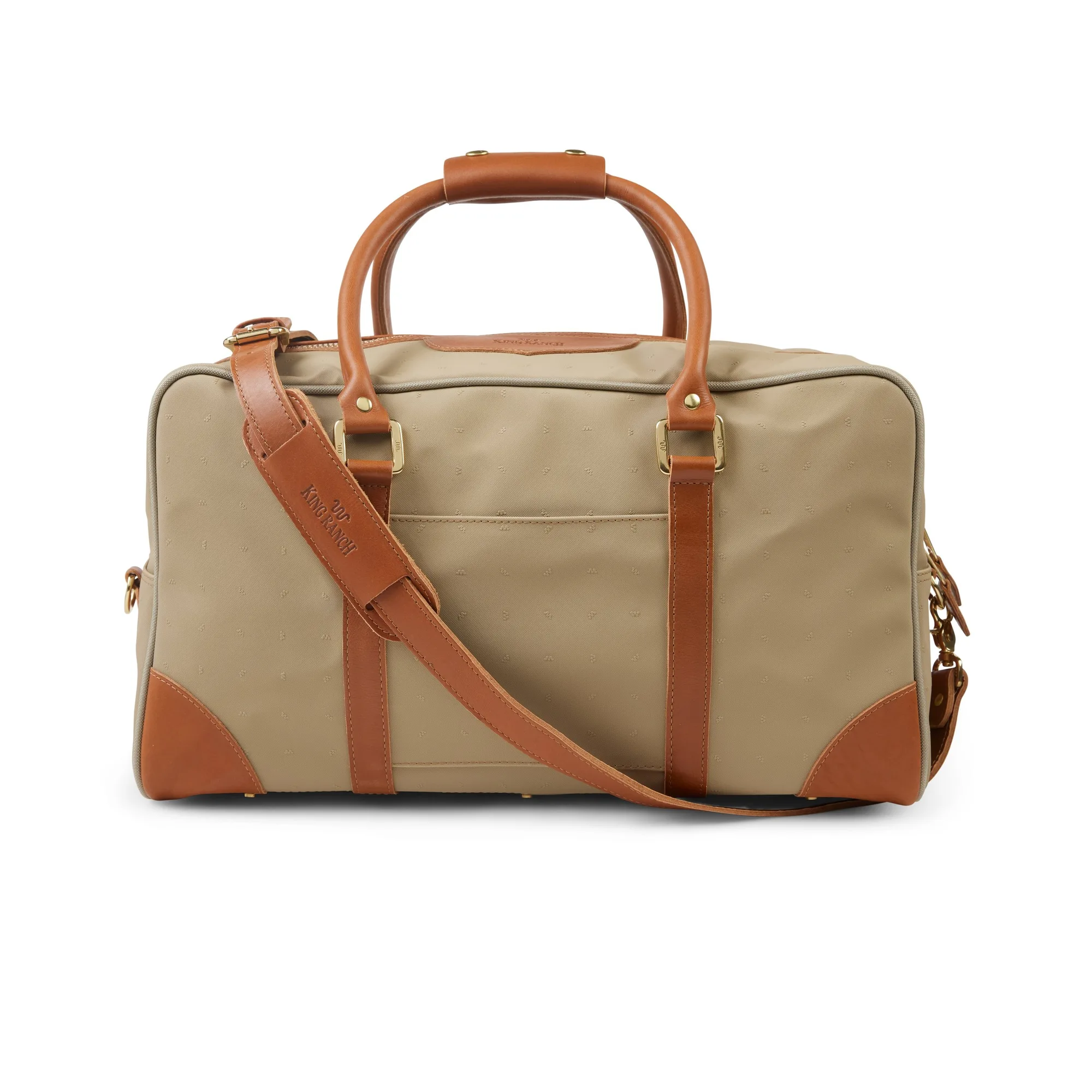
- Canvas Armstrong Carry-On: Crafted in water-resistant Armstrong canvas backed with Cordura® fabric, embossed with Running W® details, and trimmed with Latigo leather, with two exterior pockets and organized interior. The canvas body handles damp wipe-downs well, but the Latigo trim still needs conditioner and should not be soaked. Clean the two materials with separate cloths.
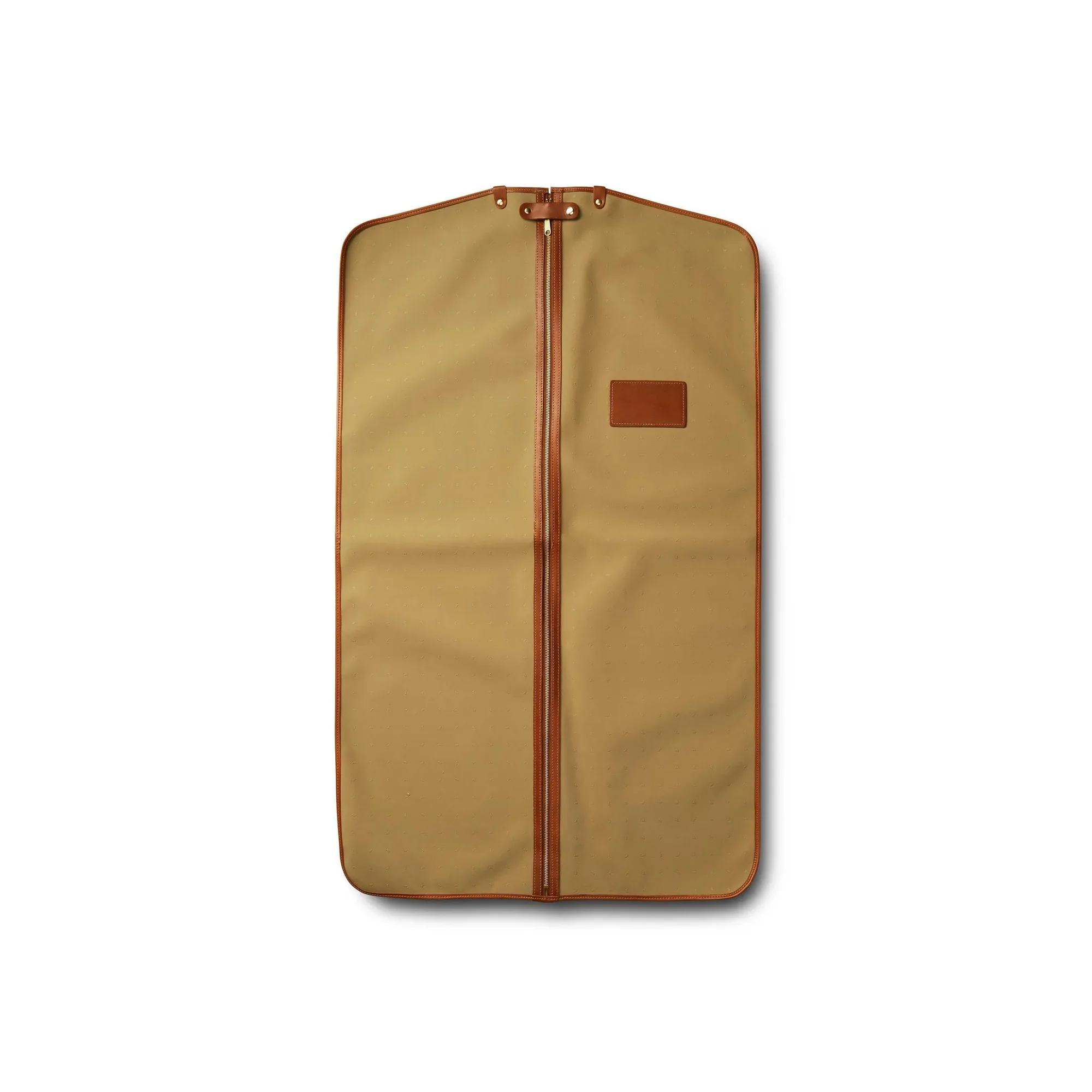
- Canvas Clothes Cover: Made from water-resistant Armstrong canvas backed with Cordura® fabric, embossed with Running W® details, reinforced with Latigo leather trim, and closed with a brass zipper front. Because it is designed to protect garments in transit, it should be wiped down and aired after trips so trapped moisture does not sit against the leather trim or the clothing inside.
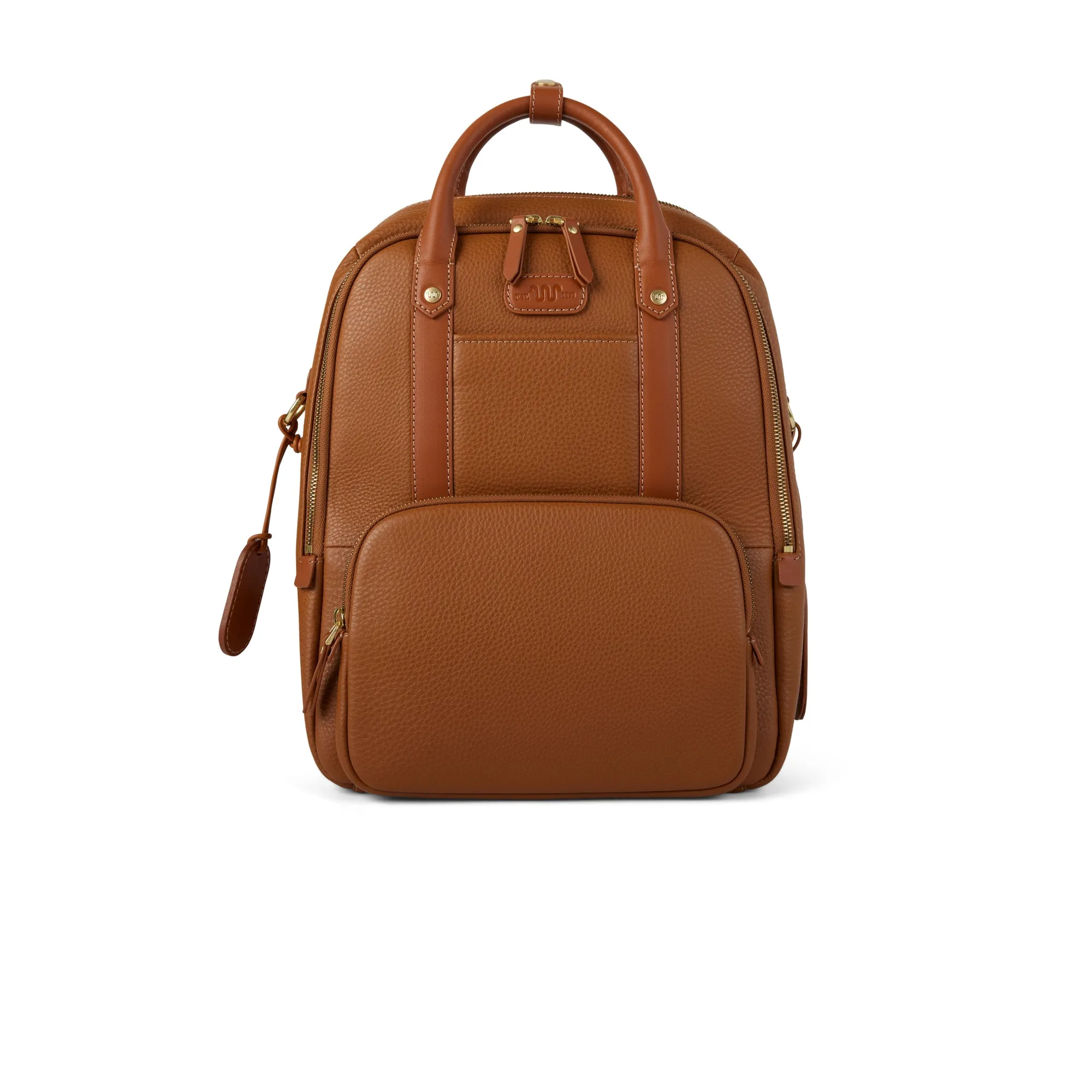
- Justus Commuter Backpack: Made from premium Docil leather with a padded laptop sleeve that fits up to a 15" computer, multiple pockets and slots, a leather trolley sleeve, and an included leather fob. A leather commuter bag sees daily contact with hands, desks, and airplane seats. Wipe it weekly and condition it more often than a seasonal travel bag.
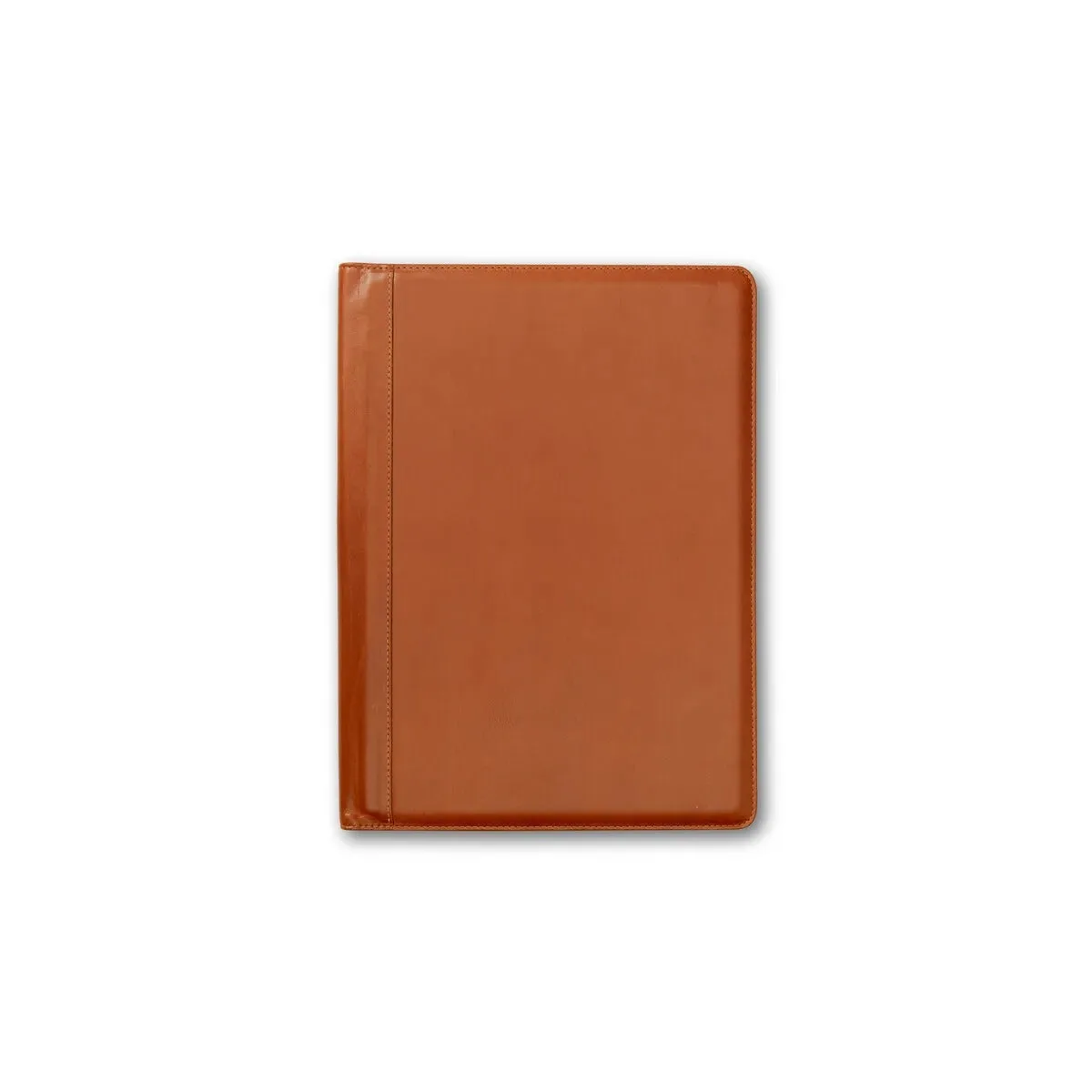
- Leather File Pocket Notepad: A standard 8" x 11" bi-fold leather notepad holder with three gusseted inside compartments and three business card compartments, available in Chaparral Latigo and Rio Latigo. Small leather accessories dry out faster than large bags because they have more exposed edges. Condition the spine and edges along with your luggage.
Leather luggage rewards a short, repeatable routine more than any single product. Wipe it down, condition it thin, keep grit out of the seams, and store it with support and airflow. Do that, and a good bag stops being something you replace and becomes something you hand down.