Quick answer
Wash sponges after every use with a gentle soap and lukewarm water, squeezing rather than twisting. Wash brushes at least weekly, or after each use for cream and liquid formulas, by lathering the bristles in the palm of your hand and rinsing until the water runs clear. Keep water at the ferrule line, never soak handles, and dry both tools fully before storing.
Why water temperature and soap choice matter more than scrubbing
Hot water and harsh cleansers break down the adhesives inside a brush ferrule and strip the conditioning agents that keep synthetic bristles soft. Lukewarm water with a mild soap or a dedicated brush shampoo removes makeup without forcing you to scrub harder. If a sponge or brush still feels slick after rinsing, the issue is usually leftover product or conditioner, not a need for more pressure.
How to dry sponges and brushes so they keep their shape
Squeeze sponges gently in a clean towel and let them air-dry on a ventilated surface, not in a closed drawer or a sealed plastic bag. For brushes, lay them flat with the bristles over the edge of a counter or stand them bristle-down in a drying rack so water cannot travel into the ferrule. Drying time depends on density and humidity, so check the center of a sponge and the base of the bristles before putting anything away.
How often to clean each tool based on how you use it
Sponges used with liquid foundation should be washed after every use because they stay damp and hold product deep inside. Brushes used with powder can go a week between washes, but brushes used with cream or liquid formulas need washing more often to prevent buildup that makes application streaky. If you switch between powder and cream products with the same brush, wash it between formulas to avoid mixing textures.
Step-by-step cleaning routine
- 1. Pre-rinse with lukewarm water: Run lukewarm water over the bristles or sponge, pointing the brush downward so water flows away from the ferrule and handle. Checkpoint: if the water is hot enough to fog a mirror, it is too hot for brush adhesives and sponge material.
- 2. Apply a small amount of gentle soap or brush shampoo: Add a drop of mild soap or brush shampoo to the palm of your hand or a cleaning mat, then swirl the bristles or sponge in it. For sponges, add soap directly and work it in with your fingers. Common mistake: using too much soap, which leaves residue that can cause breakouts or dull application.
- 3. Work the lather through the tool with gentle pressure: Use circular motions for brushes and a soft squeeze-and-release motion for sponges. Never twist or pull bristles, and never pinch a sponge hard enough to tear it. Checkpoint: if you see foam turning the color of your foundation, keep going until it stays white.
- 4. Rinse until the water runs clear: Rinse under lukewarm water, again keeping the brush angled down. Squeeze sponges gently and repeat the soap-and-rinse cycle if makeup is still visible. Common mistake: stopping too early. Residual soap or makeup left in the center of a sponge can cause odor and uneven application.
- 5. Remove excess water without wringing: Gently squeeze sponges in a clean towel and press brushes into a towel to absorb drips. Do not wring, twist, or pull on bristles or sponge edges. Checkpoint: a sponge should feel damp, not dripping, and bristles should still hold their shape.
- 6. Dry in the correct position: Lay brushes flat with bristles over the edge of a counter, or stand them bristle-down in a drying rack. Place sponges on a clean, ventilated surface. Avoid direct heat and sunlight. Common mistake: drying brushes upright with bristles up. Water seeps into the ferrule and loosens the glue over time.
- 7. Store only when completely dry: Check that the center of the sponge and the base of the bristles are fully dry before returning them to a drawer, bag, or holder. Next step: wash sponges after every use and brushes at least weekly, or more often for cream and liquid formulas.
Tools that make cleaning and drying easier
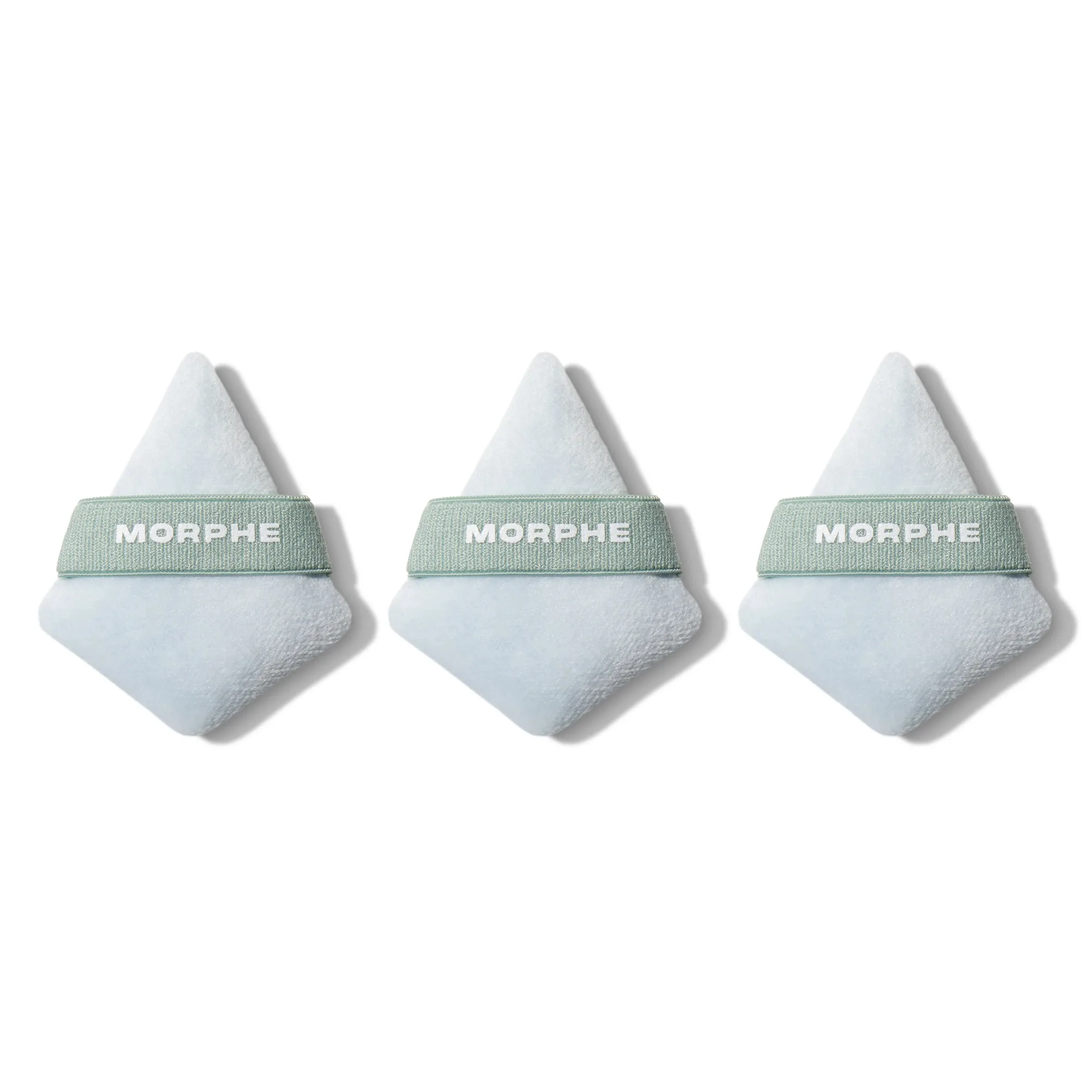
- To The Point Mini Powder Puff Trio: The Morphe To the Point Mini Powder Puff Trio includes three petite diamond-shaped powder puffs for ultraprecision undereye setting, with an elastic band for a controlled hold. Small puffs like these trap powder in a tight surface area, so wash them gently with the same squeeze-and-rinse method and let them dry fully before the next use.
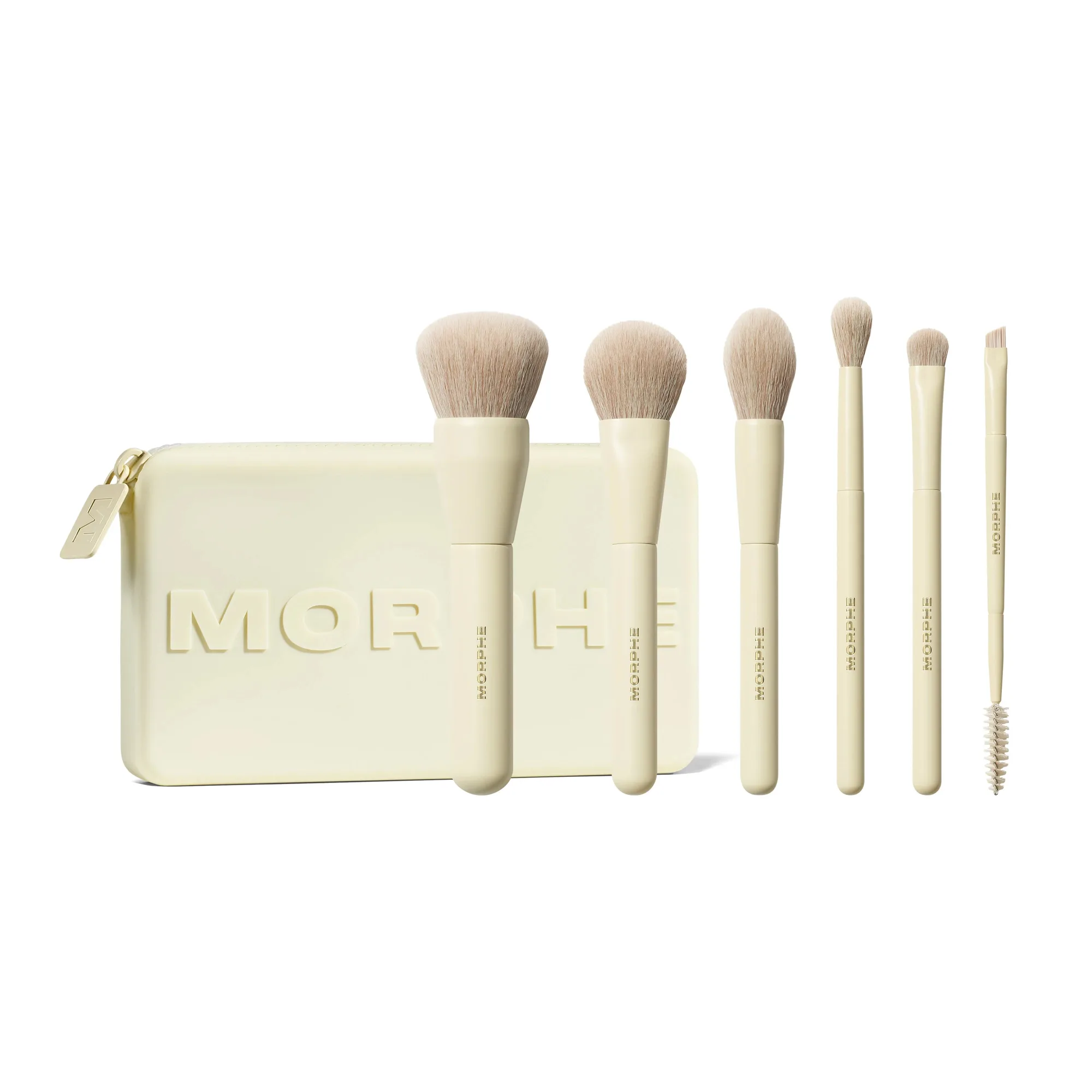
- M333 Large Rounded Blender Eyeshadow Brush: The M333 Large Rounded Blender Eyeshadow Brush is very fluffy and designed for shadow-transition blending with sweeping and buffing motions. A very fluffy brush holds powder loosely, so it usually needs less soap and a gentler squeeze to avoid flattening the bristles during washing.
- M102 Rounded Cream & Liquid Foundation Brush: The M102 Rounded Cream & Liquid Foundation Brush is very fluffy and made for applying, building, and blending cream and liquid foundation with stippling and buffing. Because it works with creams and liquids, this brush should be washed more often than a powder-only brush, and dried bristle-down so the dense center dries through.