Quick answer
To clean sapphire microscope slides safely, use a lint-free wipe with a mild solvent, work in one direction, and air-dry before storage. Avoid abrasive tools and harsh chemicals that can damage the optical surface.
Why sapphire slides need special care
Sapphire is extremely hard and scratch-resistant, but it is not indestructible. The optical surface can still be damaged by abrasive particles or improper cleaning techniques, which can affect image quality and slide longevity.
Because sapphire slides are often used in demanding applications, maintaining a clean surface is essential for accurate results. A careful cleaning routine helps preserve the slide's optical clarity and extends its usable life.
What to avoid when cleaning
Avoid using paper towels or regular cloths, as they can leave lint or tiny scratches. Also, steer clear of strong acids, alkalis, or abrasive cleaners that can etch the surface or leave residues.
Do not use ultrasonic cleaners unless you are sure the slide is secured and the solvent is compatible. Ultrasonic agitation can cause chipping if slides collide with each other or the tank.
Step-by-step cleaning process
- Prepare your workspace and materials: Lay down a clean, lint-free cloth on a flat surface. Have ready a pair of powder-free nitrile gloves, a can of filtered air or nitrogen, and a bottle of optical-grade isopropyl alcohol or a mild detergent solution. Check that your gloves are powder-free to avoid leaving residue on the slide.
- Remove loose debris with air: Hold the slide by its edges and use a filtered air blower to gently remove dust and particles from both surfaces. Do not use compressed air from a compressor, as it may contain oil or water droplets. If you don't have an air blower, use a soft, lint-free brush to sweep off debris.
- Wipe with a solvent-moistened wipe: Fold a lint-free wipe (e.g., optical tissue) into a small pad and moisten it with isopropyl alcohol or a mild detergent solution. Wipe the slide in one direction, from one end to the other, applying light pressure. Do not rub back and forth, as this can redeposit contaminants. Avoid using excessive solvent; a damp wipe is enough to dissolve oils and residues.
- Dry the slide thoroughly: Use a fresh, dry lint-free wipe to gently blot the slide dry, or allow it to air-dry on a clean surface. Ensure no streaks or spots remain before use or storage. Inspect the slide under a bright light to confirm it is completely clean and dry.
- Store slides properly: Place clean slides in a dedicated slide box or a sealed container with a desiccant pack. Keep them in a cool, dry environment away from direct sunlight and chemical fumes. Always handle slides by the edges to avoid leaving fingerprints that attract dust and oils.
Product facts
-
Sapphire Microscope Slide: The Sapphire Microscope Slide (Part No. SMS-7521) measures 75 x 25 mm with a thickness of 1 mm. Knowing the exact dimensions helps you choose the right cleaning tools and storage cases to avoid accidental damage.
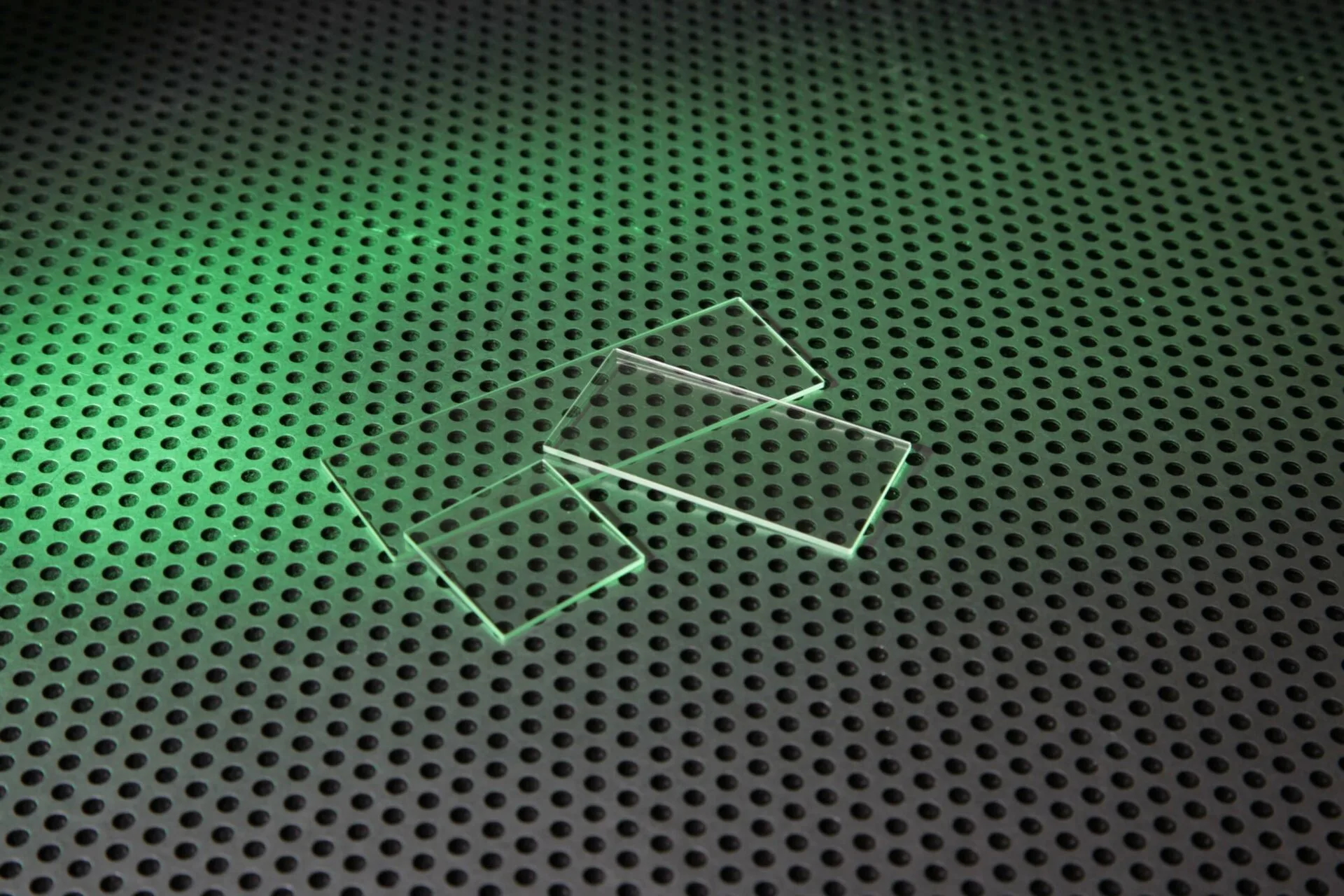
Sapphire Microscope Slide