Quick answer
Clean stroller wheels by dry-brushing loose grit first, then wiping the tires and fork area with a damp cloth and mild soap, and drying everything completely before storage. Do this monthly, or after any outing through sand, salt, or mud, and check for wobble or flat spots while you work so small wear never turns into a stuck wheel.
Why grit is the real enemy of stroller wheels
Most wheel problems start with tiny particles, not big impacts. Sand, road salt, and crushed leaves work their way into the gap between the wheel and the fork, then act like sandpaper every time the wheel turns. Over weeks, that grinding wears the axle surface and makes the wheel drag, squeak, or wobble. Cleaning removes the abrasive before it does damage, which is why a five-minute wipe-down beats a repair later.
You do not need a full wash every time. A quick dry-brush after a park day handles most buildup, and a deeper damp wipe once a month covers the rest. The goal is to interrupt the grit cycle before it reaches the moving parts.
What to keep in your stroller cleaning kit
You probably already own everything you need: a soft-bristle brush (an old toothbrush works well for tight spots), a microfiber cloth, a second dry cloth, mild dish soap, and a small bowl of warm water. Avoid harsh solvents, bleach, and abrasive pads, which can dry out rubber and scratch finishes.
If your stroller uses removable wheels, a quick-release mechanism makes this job much easier because you can clean each wheel over a sink or outdoors instead of crouching around the frame. Check your stroller manual for how your specific wheels detach before pulling on anything.
How often to clean stroller wheels
A monthly routine keeps most strollers in good shape. Add an immediate clean after any outing through sand, salt, mud, or wet grass, since those conditions pack grit into the fork area faster than normal pavement use. If you store your stroller outside or in a garage, check the wheels more often because dust and temperature swings accelerate wear.
If you notice a new squeak, a wheel that spins differently from the others, or visible flat spots, clean first and re-check. Cleaning solves most noise issues, and if the problem remains, you have narrowed it down to a worn part rather than dirt.
Stroller wheel cleaning steps
- Step 1: Remove loose debris with a dry brush: Brush the tire tread, the sides of the wheel, and the fork gap before adding any water. Work the brush into the space where the wheel meets the frame, since that is where grit packs tightest. Checkpoint: if you see sand or salt still falling out, keep brushing. Water turns leftover grit into a paste that pushes deeper into the axle.
- Step 2: Wipe with mild soap and water: Dip a microfiber cloth in warm water with a drop of mild dish soap, wring it out so it is damp rather than dripping, and wipe the tire, hub, and fork. Rinse the cloth often instead of spreading dirty water around. Common mistake: soaking the wheel or spraying it directly. Excess water can carry grit into bearings that you cannot easily dry.
- Step 3: Scrub tight spots with a soft brush: Use a toothbrush or small detail brush with a little soapy water to reach the fork gap, brake area, and any textured tread. Short back-and-forth strokes lift compacted dirt without scratching plastic or metal. Checkpoint: if the brush comes away clean, move on. Re-scrubbing already-clean parts only risks pushing debris back in.
- Step 4: Dry completely before storage: Wipe everything with a dry cloth, then let the stroller sit in the open air for a few minutes so hidden moisture in the fork area can evaporate. Spin each wheel by hand to shake out trapped water. Common mistake: folding a damp stroller. Trapped moisture encourages rust on metal parts and musty odors in fabric.
- Step 5: Spin-test and listen: Give each wheel a firm spin and listen for grinding or uneven rhythm. A clean wheel should turn freely and slow down gradually rather than catching at one point. Checkpoint: if a wheel still drags after cleaning, the issue is wear, not dirt. That is the point to inspect the wheel and consider replacement.
- Step 6: Log the date and repeat monthly: Note when you cleaned the wheels and set a monthly reminder. If you walked through salt or sand, mark that outing for an extra clean within a few days. A simple routine beats a deep clean you never get around to. Consistency is what keeps stroller wheels rolling smoothly.
Replacement parts worth knowing about
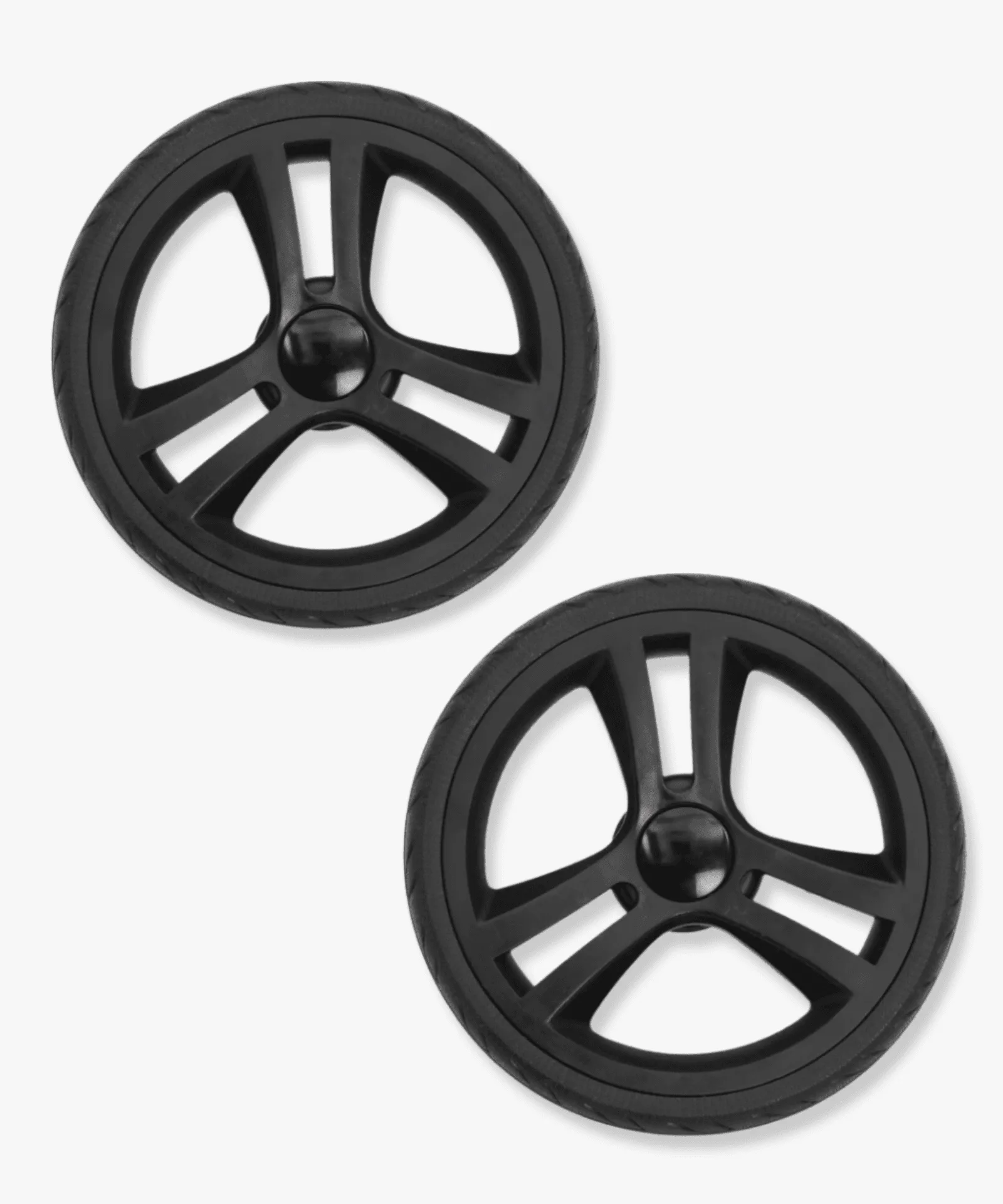
- Rear Wheel Set: These are replacement Rear Wheels for the ones that come included with all Mockingbird Strollers, sold as a set of two. If cleaning and re-checking still leaves a rear wheel dragging or wobbling, replacing the pair restores smooth rolling without guessing which side is worn.