Quick answer
Descale your Aarke Kettle with a 1:1 white vinegar and water solution heated to 60°C, or use citric acid if you dislike the vinegar smell. Never boil the solution, never scrub the interior with abrasives, and always rinse and boil fresh water twice before brewing tea or coffee.
Why temperature control kettles need a gentler descaling method
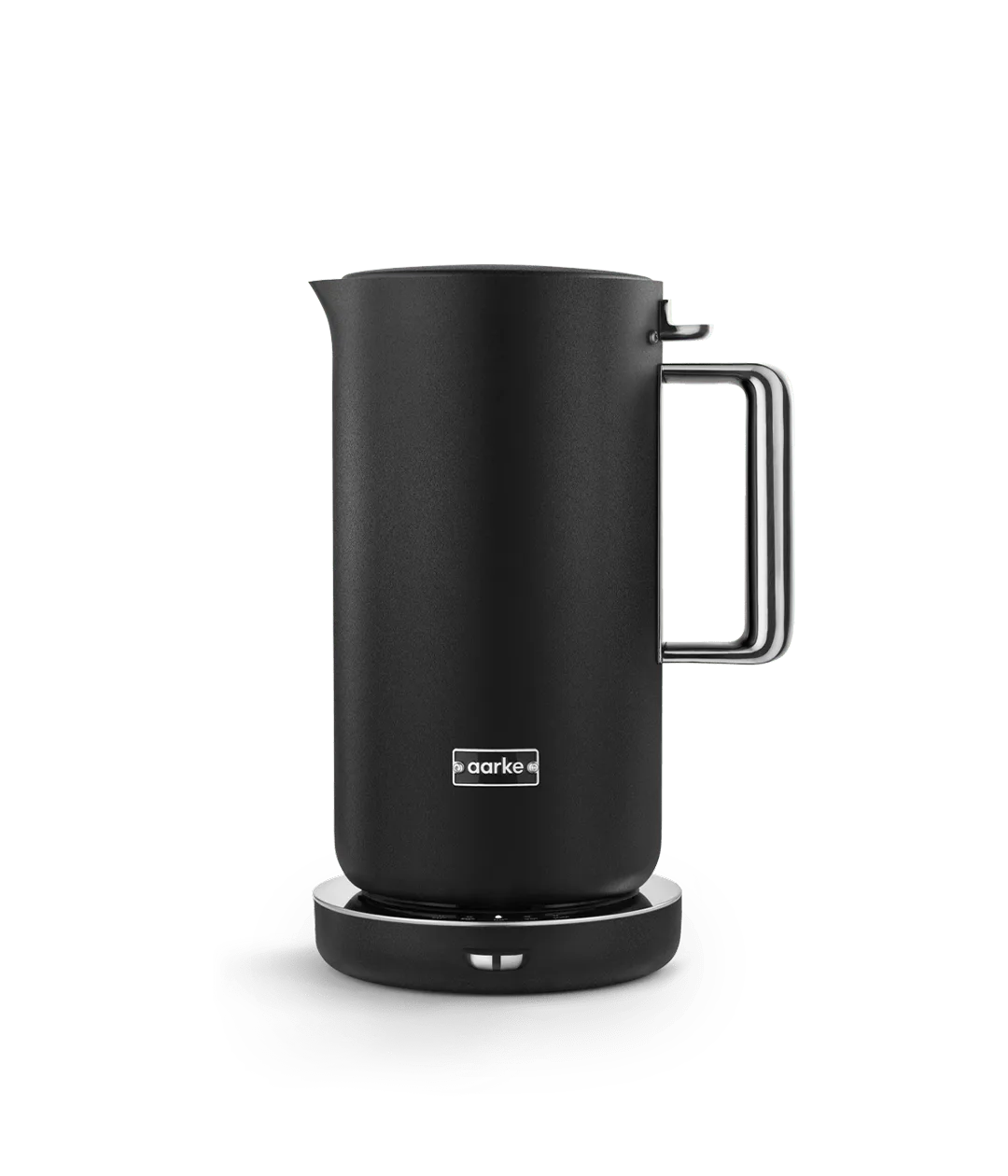
The Aarke Kettle is an electric temperature control kettle with multiple settings from 40° to 100°C and a heat-safe handle. That electronic temperature control and the stainless steel interior are the two parts you protect during descaling. Acid dissolves limescale, but boiling acid for long periods stresses the heating element and the sensor that reads water temperature. A short, warm soak does the same job with far less risk.
How often to descale, based on your water
There is no universal schedule because hard water kettle cleaning depends on your local water. Check the bottom of the kettle every two weeks: a chalky white or grey film means it is time. In hard water areas, descale monthly. In soft water areas, every two to three months is usually enough. If you use the kettle daily for tea or pour-over coffee, stay closer to the monthly end.
Vinegar or citric acid: which to choose
White vinegar is cheap and effective, and kettle descaling vinegar is the most common home method. Its downside is the smell, which lingers until you rinse thoroughly. Citric acid powder is odorless and rinses clean faster, but it costs more and you must measure it. Both are safe for stainless steel when diluted and not boiled. Never use bleach, ammonia, or abrasive powders, which pit stainless steel and can leave residue.
Step-by-step descaling process
- Empty and rinse the kettle: Pour out any standing water and rinse the interior with warm tap water. Do not fill above the maximum line, because the acid solution will foam slightly during heating. Checkpoint: the kettle should be unplugged and cool before you add anything.
- Mix a 1:1 white vinegar and water solution: Combine equal parts white vinegar and water, or dissolve 1 tablespoon of citric acid per 500 ml of water. Pour in enough to cover the limescale line on the base, usually 2 to 3 cm. Common mistake: using undiluted vinegar, which is unnecessarily harsh on seals and takes longer to rinse out.
- Heat to 60°C and let it soak: Set the Aarke Kettle to 60°C, then switch it off and let the solution sit for 20 to 30 minutes. The LED cool-down indicator helps you wait until it is safe to pour. Do not let it boil. Checkpoint: if the scale is thick, repeat the warm soak rather than increasing the temperature.
- Pour out and scrub gently: Empty the kettle and wipe the interior with a soft cloth or non-abrasive sponge. Do not use steel wool, scouring pads, or metal utensils, which scratch stainless steel and create spots where limescale clings faster. Common mistake: scrubbing hard to remove a stubborn ring. A second soak is safer than abrasive force.
- Rinse and boil fresh water twice: Fill with fresh water, boil, and discard. Repeat once more. This removes any vinegar or citric acid residue that could affect the taste of your next cup. Checkpoint: if you still smell vinegar after two boils, do one more rinse-and-boil cycle.
- Dry and reassemble: Wipe the exterior and base dry with a soft cloth before placing the kettle back on its base. Keep the exterior and the base connection dry to protect the electronics. Next step: note the date so you can track how quickly scale returns in your water.
The kettle this method is written for
- Kettle Matte Black: Aarke Kettle is an electric temperature control kettle with multiple temperature settings ranging from 40° to 100°C and a convenient LED cool-down indicator, crafted in stainless steel with a heat-safe handle. The 40°C setting is ideal for a warm descaling soak, and the LED indicator tells you when the solution has cooled enough to handle safely.