Quick answer
Work on dry fur in small sections, start at the outer edge of the mat with your fingers or a wide-tooth comb, and only then switch to a gentle dog grooming brush like the Detangling Dog Grooming Brush. Never pull through a tight knot or cut it out with scissors. If a mat is tight against the skin or the skin is red, broken, or smelly, stop and see a vet or professional groomer.
Why mats form and when to stop
Mats are tangles that have tightened into felt. They form fastest where fur rubs: behind the ears, under the collar, in the armpits, and around the tail. Wet fur, friction from harnesses, and seasonal coat changes all speed up the process. The key checkpoint is skin condition. If you can slide a finger between the mat and the skin, you can usually work it out at home. If the mat is tight to the skin, or the skin underneath looks red, moist, or has an odor, that is a vet or groomer job, not a home detangling session.
This is also where a matted dog hair home remedy mindset can get you into trouble. Oils, conditioners, and detangling sprays can lubricate the surface, but they do not dissolve a mat. Use them only as a helper on loose, surface tangles, and never as a substitute for mechanical separation with a comb or brush.
Set up your tools and your dog
You need three things: a metal comb with widely spaced teeth, a detangling brush with flexible teeth, and treats. A non-slip surface helps, and so does a second person if your dog is wriggly. Work in short sessions of five to ten minutes, then take a break. If your dog pulls away, yelps, or snaps, that is a signal to stop, not to push through. Pain during grooming teaches a dog to fear the brush, which makes every future session harder.
How to work a mat loose, section by section
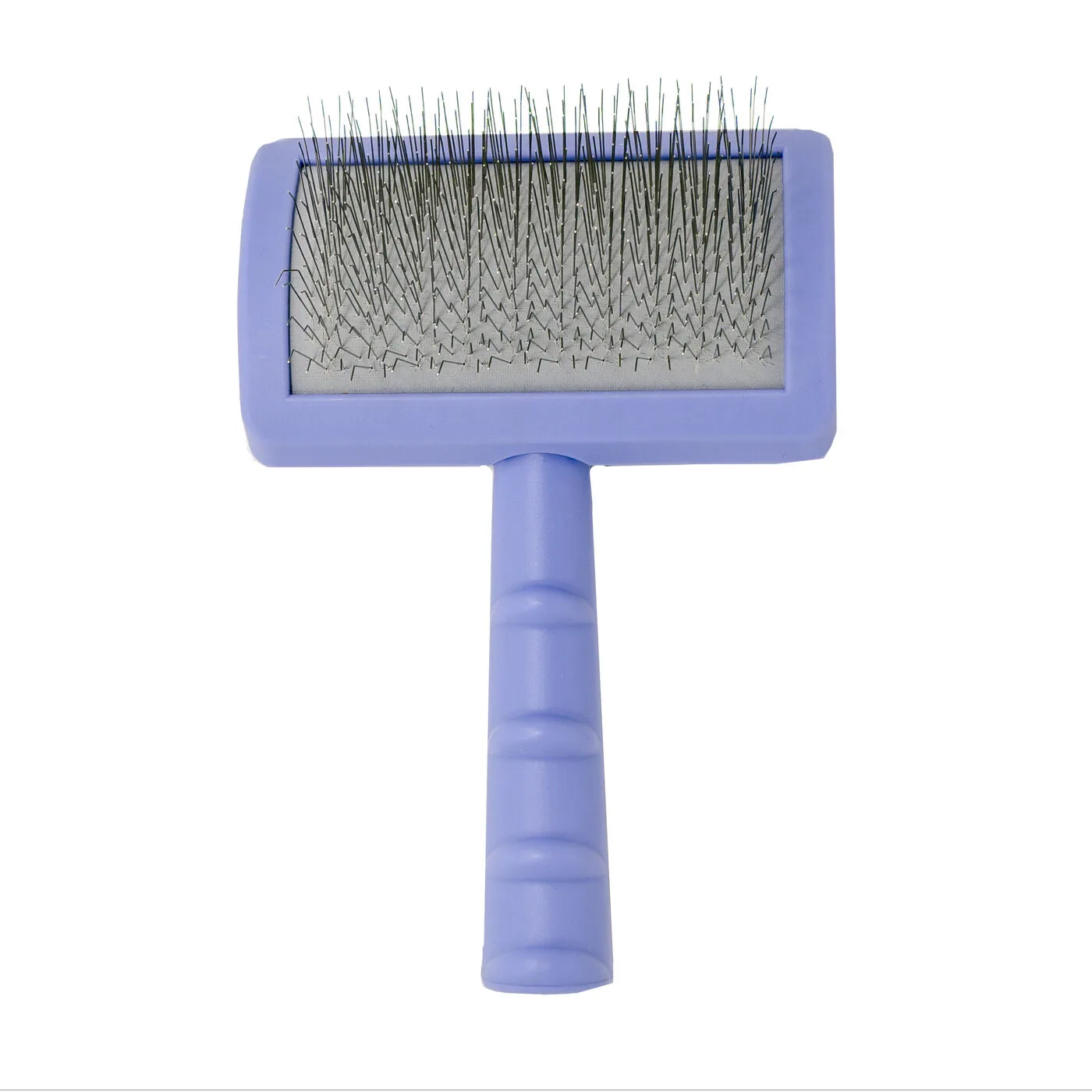
Start at the outer edge of the mat, not at the skin. Use your fingers to tease the mat apart into smaller pieces, then use the wide-tooth end of a metal comb to separate the fur into strands. Hold the mat close to the skin with one hand so you are not pulling the skin, and comb only the outer layer. Once the mat is broken into smaller tangles, switch to a detangling brush and work in the direction of hair growth. The Detangling Dog Grooming Brush uses two-tiered teeth: the long teeth reach down toward the undercoat to remove dirt, while the shorter teeth smooth the surface and help protect against new matting. It can be used on wet or dry fur, but for mats, dry fur gives you more control and lets you see what you are doing.
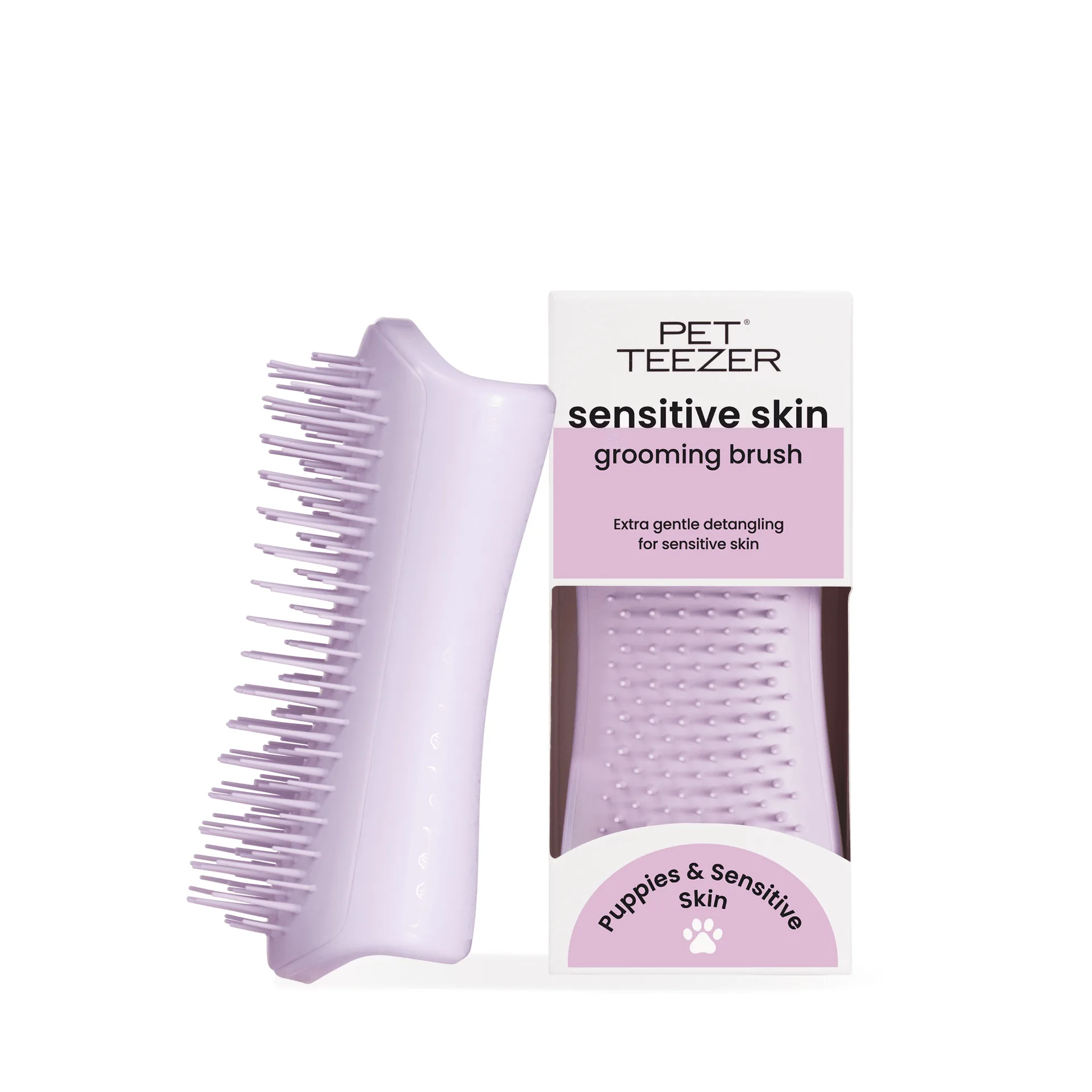
For very sensitive dogs or puppies, a softer brush like the Puppy Brush is a better starting point. Its soft-flex teeth glide through fur with gentle strokes, which makes it useful for introducing grooming without irritation. It will not break up a tight mat on its own, but it is a good tool for the finishing passes once the mat is already loose.
What not to do (and what to do instead)
Do not cut mats out with scissors. Dog skin is thin and moves easily, and it is very common to catch skin inside a mat without realizing it. Do not bathe a matted dog before detangling, because water tightens mats. Do not use a fine-tooth comb on a tight mat, and do not yank from the top of the mat. If you need to pause, stop, give a treat, and come back later. If the mat will not budge after two or three short sessions, book a professional groomer. Removing dog mats without cutting is possible for loose and medium mats, but tight, felted mats often need clippers, and that is a job for someone trained to do it safely.
Step-by-step: detangling a matted coat
- Check the skin first: Slide a finger under the mat. If the skin is red, broken, or the mat is tight against it, stop and call a vet or groomer. Checkpoint: if you cannot get a finger under it, do not try to brush it out.
- Work on dry fur: Do not bathe first. Dry fur separates more easily and lets you see the mat's edges. Use a detangling spray only on loose surface tangles, not as a fix for a tight mat. Common mistake: bathing a matted dog tightens the mat and makes it harder to remove.
- Break the mat with your fingers and a wide-tooth comb: Start at the outer edge, hold the mat near the skin with one hand, and tease it into smaller pieces. Never pull from the top of the mat. Checkpoint: the mat should be in smaller sections before you pick up a brush.
- Switch to a detangling brush: Use a brush with flexible, two-tiered teeth and work in the direction of hair growth. Keep strokes short and stop if your dog pulls away. Common mistake: pressing hard to force through a knot. Let the teeth do the work.
- Finish with a soft brush for sensitive dogs: Once the mat is loose, a soft-flex brush like the Puppy Brush smooths the coat without irritation. This is also a good way to end the session on a positive note. Checkpoint: if your dog is still tense, end the session and try again tomorrow.
- Know when to stop and get help: If a mat does not loosen after two or three short sessions, or if the skin looks irritated, book a professional groomer. Clipping a tight mat is safer than cutting it with scissors at home. Never cut mats out with scissors. Dog skin is easy to catch and cut.
Tools that match this method
- Detangling Dog Grooming Brush: Patented two-tiered teeth: long teeth gently remove dirt and reach down to the undercoat, while shorter teeth smooth the hair and protect against matting. This two-level action lets you work through a loosened mat without scraping the skin, and it helps keep the smoothed fur from re-tangling as you go.
- Puppy Brush: Soft-flex teeth glide through fur with gentle strokes, designed for puppies or dogs with very sensitive skin. Use this for the final passes on a nervous dog or a puppy, after the mat has already been broken apart with a comb.