Quick Answer
To deworm cattle with Safe-Guard Paste, weigh the animal accurately, set your paste gun to deliver the correct dose based on the label rate of 2.3 mg fenbendazole per pound, and deposit the paste on the back of the tongue. Repeat the treatment in 4-6 weeks for heavy parasite loads.
Why Accurate Dosing Matters
Safe-Guard Cattle Paste contains 10% fenbendazole, a broad-spectrum dewormer effective against lungworms, stomach worms, and intestinal worms. Underdosing can lead to drug resistance, while overdosing wastes product and may stress the animal. Always calculate the dose based on the heaviest animal in a group to ensure every animal receives an effective amount.
What You'll Need
You need a standard 4-tab paste applicator gun (sold separately) and the Merck Safe-Guard Cattle Paste tube. The apple-cinnamon flavor helps acceptance, but some cattle may still resist. Have a helper for restraint, especially with excitable animals.
Step-by-Step Deworming Process
- Weigh the animal accurately: Use a livestock scale or a weight tape. Guessing leads to under- or overdosing. If you must estimate, use the heaviest animal in the group to set the dose. Common mistake: guessing weight. A 100-pound error can reduce effectiveness or waste product.
- Calculate the correct dose: Refer to the label: Safe-Guard is dosed at 2.3 mg fenbendazole per pound of body weight (5 mg/kg). For a 1,000 lb cow, that's about 23 grams of paste. Mark the applicator gun plunger accordingly. Check the gun's calibration marks before filling. Miscalibration is a frequent error.
- Load the paste gun: Remove the cap from the Safe-Guard tube and attach it to the 4-tab applicator gun. Prime the gun until paste appears at the tip, then set the plunger to your calculated dose. Air pockets in the tube can cause underdosing. Always prime until paste flows smoothly.
- Restrain the animal safely: Use a head gate or squeeze chute. Have a helper hold the head steady. For smaller calves, a halter and post work well. Never attempt to dose a free-roaming animal. Inadequate restraint can cause the paste to miss the mouth or stress the animal.
- Deposit the paste on the back of the tongue: Insert the gun nozzle into the side of the mouth (behind the incisors) and deposit the paste onto the back of the tongue. The animal will swallow reflexively. Avoid the front of the mouth where the paste can be spit out. Placing paste on the front of the tongue or cheek allows the animal to spit it out. Aim for the back of the tongue.
- Observe and repeat if needed: Watch for 30 seconds to confirm the animal swallows. If the paste is spit out, re-dose immediately. For heavy parasite loads, repeat the treatment in 4-6 weeks. One missed dose can allow resistant parasites to survive. Follow up with a fecal egg count to confirm effectiveness.
Product Facts
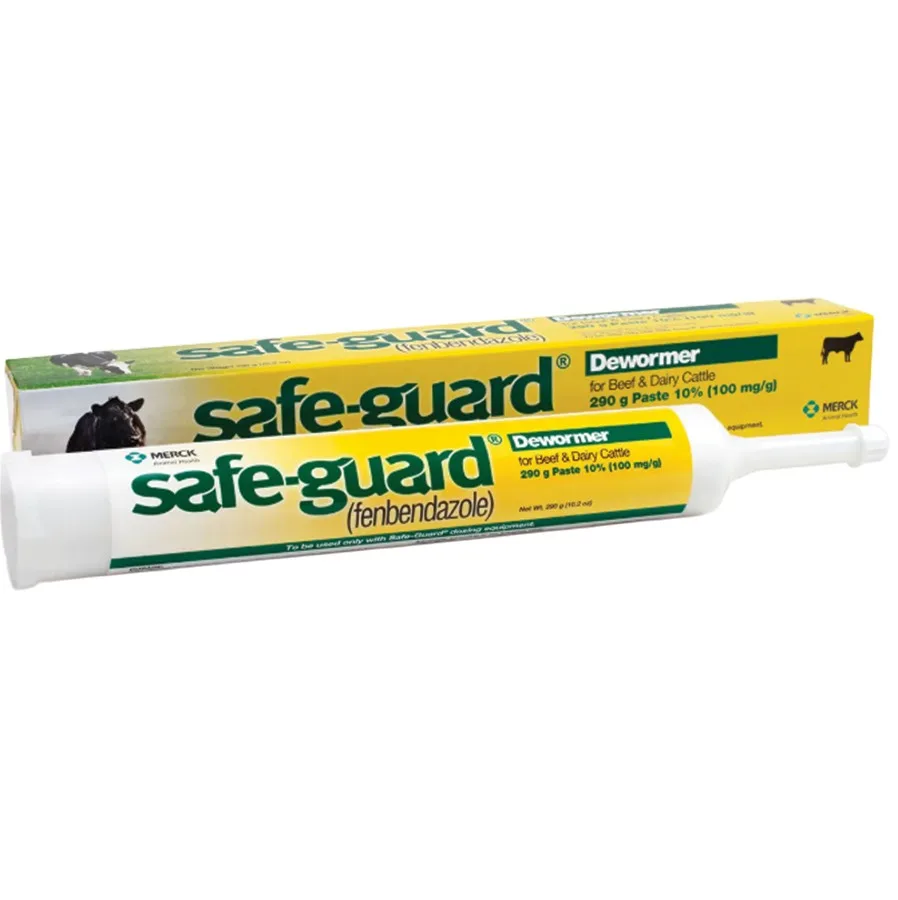
- Merck Safe-Guard Cattle Paste 290 gm: Safe-Guard Cattle Paste (290 g) by Merck offers an easy-to-administer oral paste for use in cattle care routines. Featuring a low-dose formula with fenbendazole (10%), this apple-cinnamon flavored paste is designed for accurate delivery through standard 4-tab paste applicator guns (sold separately). The paste may be used in dairy cattle with no milk withdrawal. The low-dose formula means you need less paste per pound of body weight, and the apple-cinnamon flavor improves acceptance. No milk withdrawal makes it convenient for dairy operations.