Quick Answer
Use a fabric-covered pin board or a shadow box frame to display your enamel pins without damaging the backing or the pin itself.
Why Display Method Matters
Enamel pins are small but collectible works of art. The wrong display method can scratch the enamel, bend the pin post, or damage the rubber clutch. A good display keeps pins visible and accessible while preserving their condition.
The Artpin Collection pins, like the limited-edition Swanicorn & Panda (1.25" tall) or the Fleabaines pin (1.5" tall), deserve a setup that shows off their detail without risking the finish.
Trade-offs: Boards vs. Frames vs. Cases
Pin boards are flexible and let you rearrange your collection easily. Shadow box frames protect pins from dust and handling but make it harder to swap pins. Glass-front display cases offer the best protection but take up more space and cost more.
For limited-edition pins (like the 125-piece Swanicorn & Panda), a shadow box or case is ideal. For daily rotation, a pin board works well.
How to Display Your Art Pins Step by Step
- Choose Your Display Surface: Select a fabric-covered cork board, a felt pin board, or a shadow box frame. Avoid bare cork, which can snag the pin post. A fabric layer protects the enamel and keeps pins in place. A common mistake is using a magnetic board — magnets can scratch the enamel surface. Stick to fabric or felt.
- Arrange Pins by Theme or Size: Group pins from the same series or artist together. For example, keep The Artpin Collection pieces like The Wolf and Fleabaines near each other. Place larger pins (1.5") at the back or center, smaller ones (1.25") around them. Don't overcrowd pins — leave at least half an inch between them so the rubber clutches don't press against each other.
- Secure the Backing Properly: Push the pin post through the fabric and backing, then attach the rubber clutch firmly but not too tight. Over-tightening can bend the post or crack the enamel. Check the clutch every few weeks — rubber can dry out and loosen. Replace worn clutches to keep pins from falling.
- Protect from Light and Dust: If using a pin board, place it away from direct sunlight to prevent fading. For long-term display, a glass-front shadow box or display case offers better protection. A common mistake is hanging a pin board in a bright window — UV light can dull enamel colors over time.
- Rotate Pins Occasionally: Swap out pins every month or two to prevent the post from leaving a permanent impression in the fabric. This also lets you enjoy different pieces from your collection. If you notice a dent in the fabric, move the pin to a fresh spot. Rotating also reduces wear on the rubber clutch.
Pin Examples in This Guide
-
The Artpin Collection - Swanicorn & Panda: Swanicorn & Panda is a 1.25" tall metal and hard enamel pin with a metal clasp, limited edition of 125 pieces. Smaller pins like this need a display surface with enough grip to hold them securely without slipping.
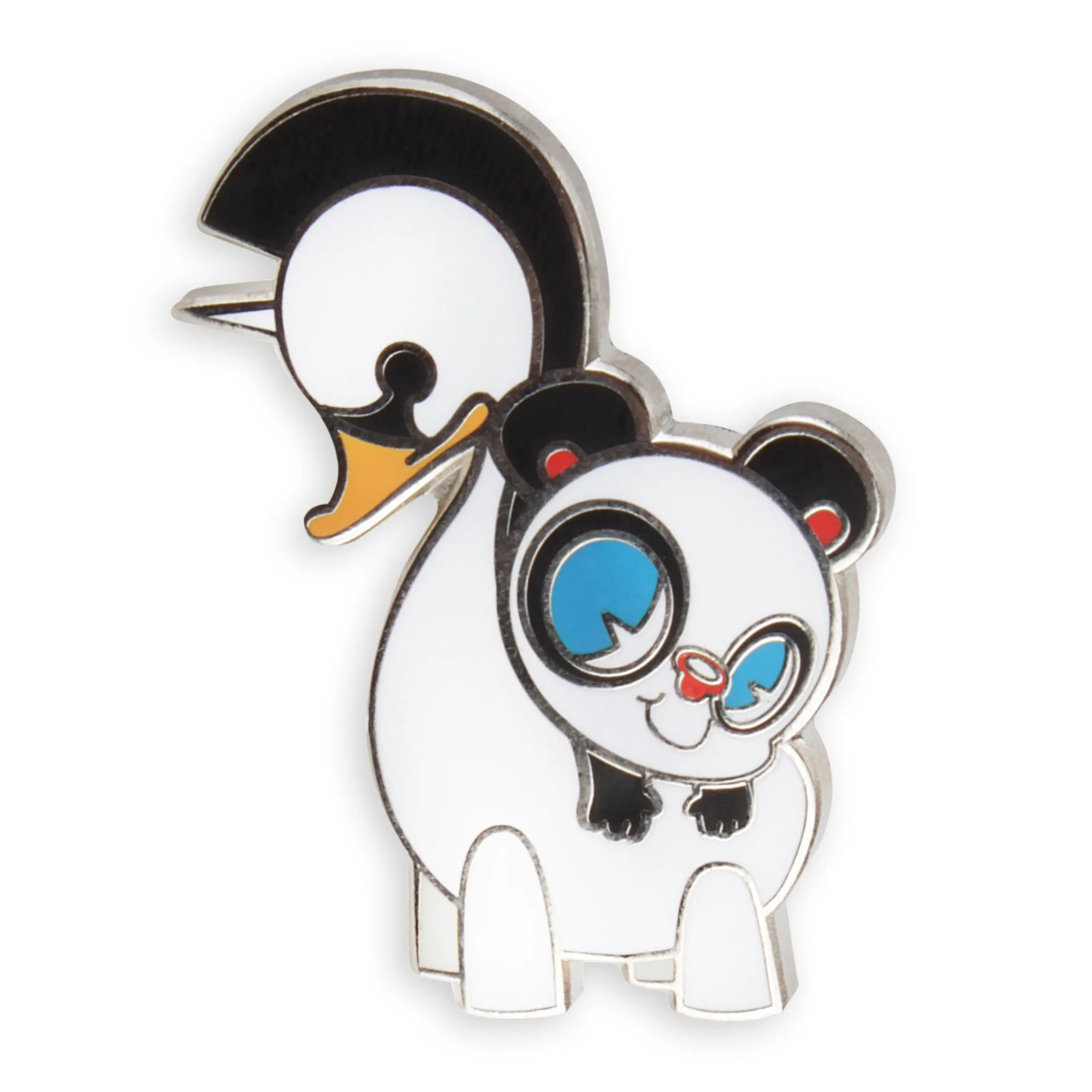
The Artpin Collection - Swanicorn & Panda
-
The Artpin Collection - Fleabaines: Fleabaines is a 1.5" tall hard enamel pin produced in an edition of 100 pins. The larger size and heavier enamel make it a good candidate for a sturdier backing like a cork board or felt-covered frame.

The Artpin Collection - Fleabaines