Quick answer
To extend a baby gate for a wide doorway, first measure the exact opening width. Then choose a compatible extension kit or a multi-configurable gate that spans the gap. Install the gate securely using the appropriate mounting method, and always test the gate before regular use.
Wide doorways, stair landings, and open-concept entries often exceed the width of a standard baby gate. Rather than leaving an unsafe gap, you can extend your existing gate or choose a gate designed for extra-wide spans. This guide walks you through the process, from measuring to installation, so you can create a secure barrier that fits your home.
Whether you need a temporary pressure-mounted solution or a permanent hardware-mounted gate, understanding your options and the correct installation steps is key. Below, we cover the essential steps, common mistakes, and product features that make extending a baby gate straightforward.
Measure the Opening Accurately
Start by measuring the width of the doorway or opening where you need the gate. Use a steel tape measure and record the measurement at several points—top, middle, and bottom—because walls are rarely perfectly straight. Also note the height from the floor to the top of the intended gate location, especially if you have baseboards or molding that might interfere with mounting.
Having precise measurements ensures you choose a gate or extension that fits without gaps. A gate that is too narrow leaves a dangerous space, while one that is too wide may not mount securely. Write down the widest and narrowest measurements; you'll need the minimum and maximum widths that your gate can span.
- Measure at least three points across the opening to account for uneven walls.
Choose the Right Gate or Extension
Once you have your measurements, decide between extending your current gate with a manufacturer-approved extension kit or selecting a gate that is already designed for wide openings. Extension kits are available for many models and attach to the side of the gate to increase its total width. However, not all gates are extendable, so check the manufacturer's specifications before purchasing.
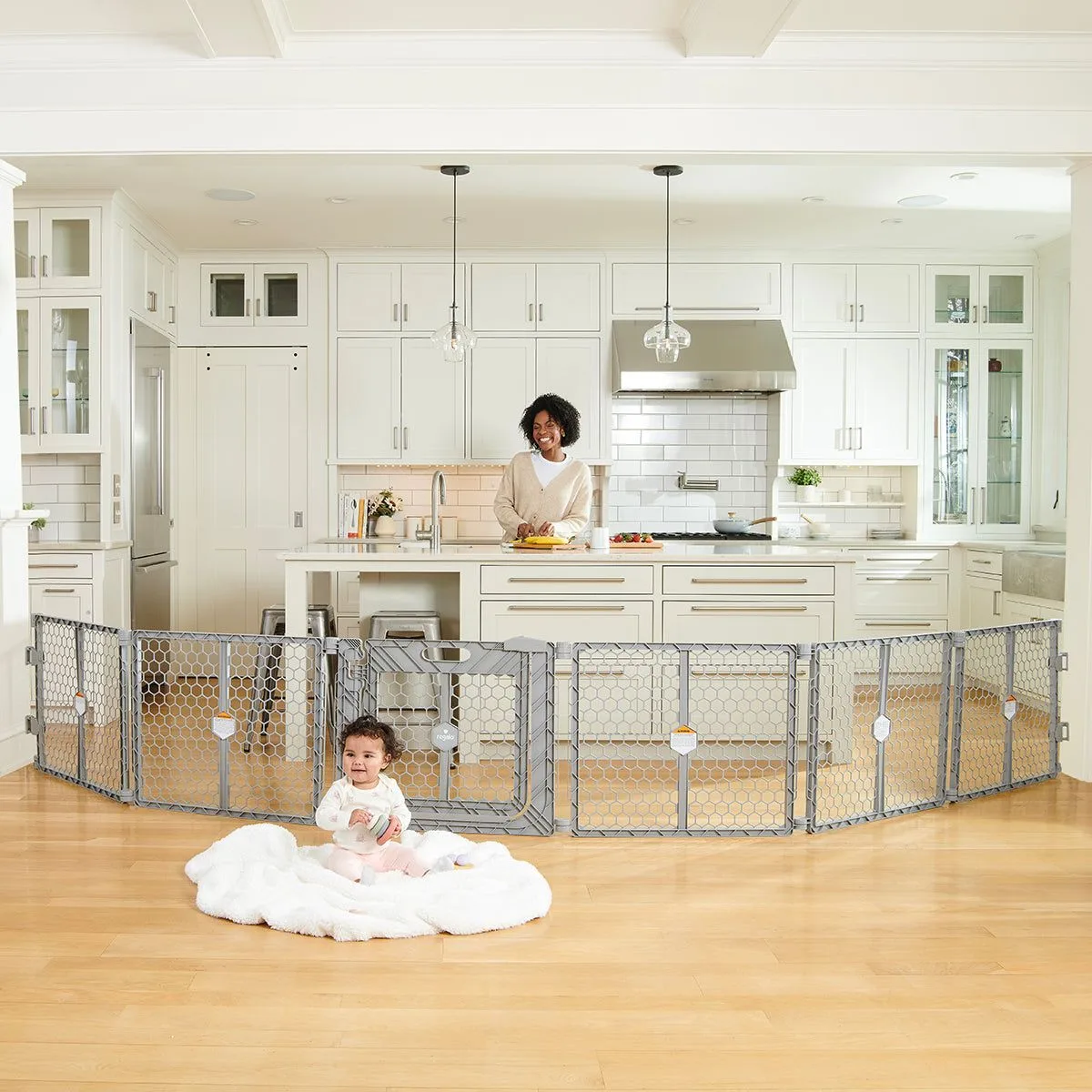
If your opening is very wide or unusually shaped, consider a gate that comes with extension panels or a multi-panel design. For example, the Regalo® 2-in-1 Play Yard and Safety Gate with Door can expand up to 192 inches and can be configured as a gate or play yard, making it ideal for large and angled openings. Such versatile options often eliminate the need for a separate extension kit.
- Always match the extension kit to your exact gate model to ensure a secure fit.
Select the Mounting Method
Baby gates mount either by pressure or by hardware. Pressure-mounted gates use tension against the walls, are easy to install and remove, and are suitable for doorways where you don't want to drill holes. However, they are not recommended for the top of stairs because they can be pushed out. Hardware-mounted gates screw into the wall, offering a more permanent and secure fit, and are required for stairways.
Consider where you need the gate. For wide doorways on a level floor, a pressure-mounted gate with extension might be sufficient. For stair landings or areas where a child could push against the gate, choose a hardware-mounted model. The Regalo® Wall Safe® Extra Tall Safety Gate, for instance, is designed for durability and strength, and its wall shields help protect your walls from damage.
- Always use hardware mounting at the top of stairs to prevent serious accidents.
Install Extension Panels or Additional Sections
If you are using an extension kit, attach the extension panel to the gate according to the manufacturer's instructions. Typically, this involves sliding the extension into the gate's side channels and securing it with screws or pins. Ensure that the extension is firmly locked in place and that there are no gaps between the gate and the wall or between the gate and the extension.
For multi-panel gates like the Regalo® 2-in-1 Play Yard and Safety Gate with Door, you can shape the panels to fit your opening. Connect the panels at the hinges, adjusting the angle as needed to span the width. The plastic hinged posts allow for a variety of configurations, making it easier to fit angled or unusually shaped openings.
- Check that all locking mechanisms click into place before testing the gate.
Secure the Gate and Test It
Once the gate is assembled and positioned, secure it according to the mounting method. For pressure gates, tighten the pressure knobs until the gate is firmly wedged between the walls. For hardware gates, mark the screw holes, drill pilot holes if needed, and drive the screws into wall studs or use appropriate wall anchors for drywall. Double-check that the gate is level and that the latch operates smoothly.
After installation, test the gate by pushing it firmly from both sides. It should not move, and the latch should open and close easily. Also, verify that there are no gaps larger than a few inches that a child could squeeze through. Finally, teach all caregivers how to operate the gate, and always supervise children near gates until they are old enough to understand the danger.
- Re-test the gate periodically, especially after a child learns to climb or push.
Step-by-step checklist for extending a baby gate
- Measure the opening: Use a tape measure to record the width at the top, middle, and bottom. Note the height and any obstructions like baseboards. Checkpoint: Confirm the widest and narrowest measurements to guide your purchase.
- Select the right gate or extension: Choose a gate that fits your width range, or buy a manufacturer-approved extension kit. Consider multi-panel gates for very wide or angled openings. Checkpoint: Verify the gate's maximum width rating against your measurements.
- Decide on mounting method: Pressure mount for level doorways, hardware mount for stairs or areas where the gate must be extra secure. Checkpoint: Always use hardware mounting at the top of stairs for safety.
- Install extension or configure panels: Attach extension panels securely or adjust multi-panel gates to fit the opening. Ensure all connections are locked. Checkpoint: Look for gaps or loose joints that could compromise safety.
- Secure the gate and test: Tighten pressure knobs or drive screws into studs. Push the gate firmly from both sides to ensure it doesn't budge. Checkpoint: Test the latch and verify there are no gaps larger than a few inches.
Product features that help with wide openings
- Regalo® 2-in-1 Play Yard and Safety Gate with Door - Gray: Made of high-quality plastic, the 6-panel gate expands up to 192” wide and is designed with plastic hinged posts to offer a variety of shaping possibilities. It is ideal for large and angled openings or as a play yard. This gate eliminates the need for a separate extension kit because you can configure the panels to fit very wide or angled doorways. Its versatility makes it a practical choice for open-concept homes.
- Easy Step® Extra Tall White Safety Gate: The pressure mount design makes installation a breeze, and the easy-to-use lever handle features a one-touch release safety lock. If your wide doorway is on a level floor, this pressure-mounted gate can be installed without tools. However, it is not suitable for stairs, so always pair it with the correct mounting method for your situation.
- Wall Safe® Extra Tall Safety Gate: The Wall Safe® Extra Tall Safety Gate was designed for durability, strength, and convenience. While the gate protects your little one, the Wall ShieldsTM help protect your walls. For wide openings that require hardware mounting, this gate offers a sturdy solution. The wall shields prevent damage to your walls, which is especially important if you need to install the gate in a high-traffic area.
Extending a baby gate for a wide doorway is a straightforward DIY project that significantly improves home safety. By measuring carefully, choosing the right gate or extension, and installing it securely, you can create a reliable barrier that gives you peace of mind. Always follow the manufacturer's instructions and prioritize hardware mounting for stairways. With the right approach, you'll have a safe and functional gate that fits your home perfectly.