Quick answer
Make tarp care a seasonal habit instead of a one-time fix. Tighten the mounting hardware each spring, rinse the fabric with mild soap and water, keep standing snow and pooled water off the roof, and replace the tarp once seams or grommets fail. These steps cost little and add years of shade.
A swing set tarp takes more abuse than almost any other part of the playset. It faces sun, rain, snow, wind, and the occasional thrown ball, yet most owners only think about it when it starts to sag or tear.
The good news is that tarp longevity is mostly about small, repeatable habits. This guide walks through a simple tarp care routine you can follow in an afternoon, plus the checkpoints that tell you when repair is no longer worth it.
Why tarps fail before the rest of the playset
Wood frames and metal hardware are built to shed water and handle load. A tarp is different: it is a thin, flexible membrane held under tension, so every loose bolt, sharp edge, or trapped puddle concentrates stress in one spot. That is why a tarp often shows wear years before the cedar or the swing hangers do.
UV exposure also matters. Sun breaks down the coating and stitching on any outdoor fabric over time, and no routine reverses that. What maintenance can do is slow the process and prevent the avoidable failures, like a grommet tearing out because the tarp was flapping in a storm.
- Check tension after the first windy week of each season; tarps loosen as hardware settles.
- Never let a tarp stay wet and folded for long periods, since trapped moisture is harder on fabric than rain alone.
Set up a simple seasonal tarp care schedule
Pick two dates you will actually remember, such as the start of spring and the end of fall. On each date, walk the playset and inspect the tarp the same way every time: top surface, underside, mounting points, and the frame edges the fabric touches. A consistent route catches small problems before they become tears.
Keep the routine short. Fifteen minutes of inspection and tightening twice a year prevents most of the damage that leads to premature replacement, and it pairs naturally with the broader swing set safety checks you already do.
- Photograph the mounting points each season so you can compare wear year over year.
- Note any new wrinkles or shiny spots; both can signal the fabric is stretching or thinning.
Clean the tarp without shortening its life
Most tarp care is just rinsing. Use a garden hose and a soft brush with mild soap, then rinse thoroughly so no residue stays in the weave. Harsh solvents, bleach, and pressure washers can strip coatings and force water into seams, which is the opposite of what you want.
Clean the top and the underside. Dirt and pollen on the upper surface hold moisture against the fabric, while debris underneath can rub against the frame. Let the tarp air-dry fully before you call the job done.
- Skip the pressure washer; a soft brush and hose is enough for normal dirt.
- Clean in shade or on a cloudy day so soap does not dry on the fabric before you rinse.
Manage snow, wind, and standing water
Snow load is the most common cause of sudden tarp failure. Use a soft-bristle roof rake or a long-handled brush to pull snow off from the ground rather than climbing on the structure. Never chip at ice with a metal tool, because a small puncture becomes a full tear once the wind catches it.
In storm season, check the tension before and after high winds. A tarp that flaps will eventually wear through at the grommets or rub a hole where it meets the frame. If your area gets repeated heavy wind, plan on inspecting more often than twice a year.
- Clear snow after every major storm rather than waiting for a midwinter thaw.
- If water pools on the roof, adjust tension or the mounting angle instead of ignoring it.
Know when to repair and when to replace
Small fixes are worth doing: a loose grommet can be re-secured, and minor edge wear can be reinforced before it spreads. But once seams are failing along their length, the coating is cracking, or the fabric has gone chalky and stiff, repairs become a temporary patch on a tarp that is already past its useful life.
Replacement is also the safer call when the tarp no longer holds tension or sheds water. A sagging canopy collects weight and can fail suddenly, so treat structural decline as a replacement trigger, not a maintenance item.
- Replace when more than one seam or grommet has failed, not just one.
- If the tarp no longer sheds water and stays heavy after rain, it is done.
Your seasonal tarp care steps
- Inspect before you clean: Walk the full perimeter and look for loose grommets, frayed edges, shiny stretched spots, and any place the fabric rubs the frame. Mark problem areas with a bit of painter's tape so you remember them. Checkpoint: if you find a tear longer than a few inches or a pulled grommet, plan a repair or replacement before the next storm.
- Tighten the mounting hardware: Go around every bolt, bracket, and tie-down that holds the tarp and snug it by hand or with the correct tool. Do not overtighten, since crushing the fabric at a grommet creates a new failure point. Common mistake: tightening only the visible front hardware and leaving the rear mounts loose, which lets the tarp flap.
- Wash with mild soap and a soft brush: Rinse the top and underside with a hose, scrub gently with mild soap, and rinse again until the water runs clear. Avoid bleach, solvents, and pressure washers. Common mistake: letting soap dry on the fabric, which leaves residue that holds moisture.
- Clear snow and standing water promptly: Use a soft-bristle roof rake or long-handled brush from the ground to pull snow off after each storm. If water pools, adjust tension or the mounting angle rather than waiting for it to drain. Checkpoint: a tarp that still holds a puddle an hour after rain needs a tension fix, not more cleaning.
- Dry fully before storage or long wet spells: Let the tarp air-dry completely after washing or heavy rain. If you remove the tarp for winter, store it clean, dry, and loosely folded rather than compressed in a bin. Common mistake: folding a damp tarp for storage, which traps moisture and speeds up coating breakdown.
- Decide repair versus replacement: Reinforce a single small wear point, but replace the tarp once multiple seams or grommets have failed, the coating is cracking, or the fabric stays heavy with water. Verdict: a tarp that no longer sheds water or holds tension is a safety issue, not a cosmetic one.
Product facts worth knowing
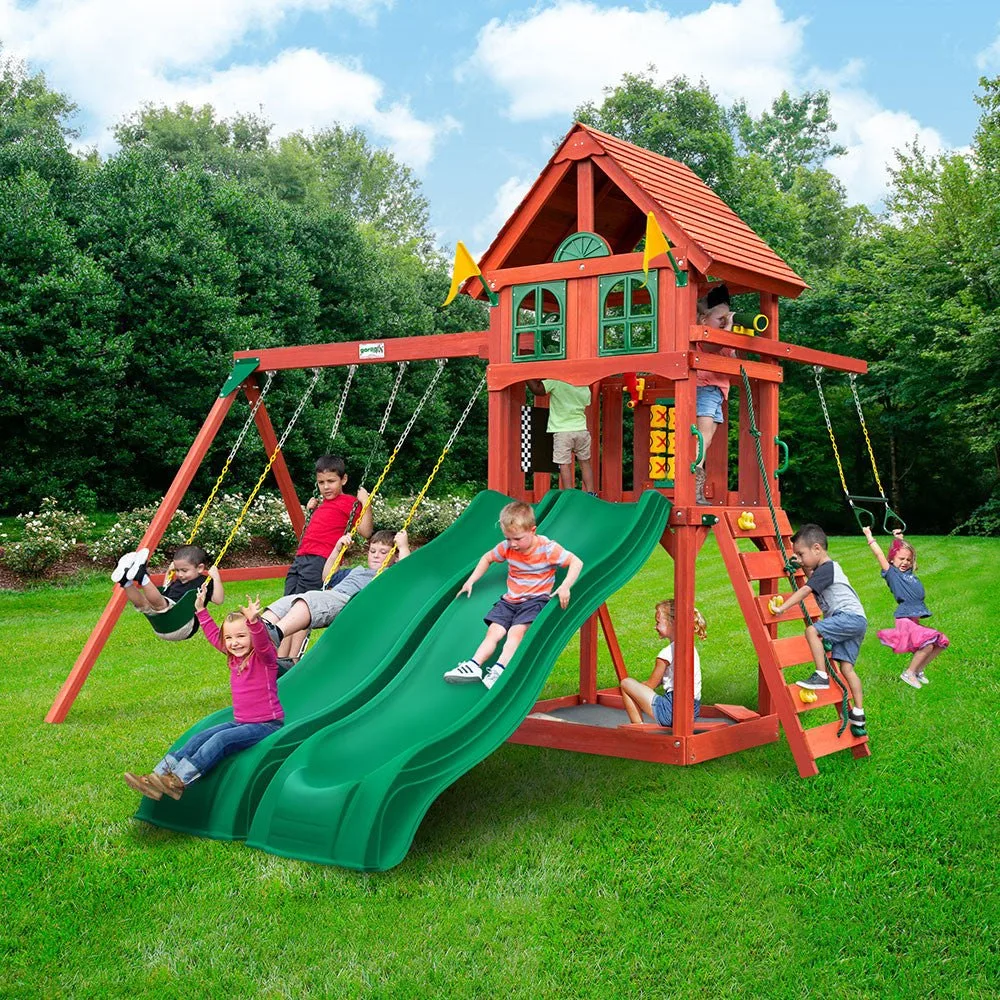
- Great Skye I Swing Set: The Great Skye I Swing Set has two decks and a range of accessories, including a rock wall, rope ladder, and multiple slides, and it offers a Roof Type option. If you choose a wood roof instead of a tarp, your tarp care routine shifts to inspecting and sealing the wood; if you choose a fabric roof, this article's steps apply directly.
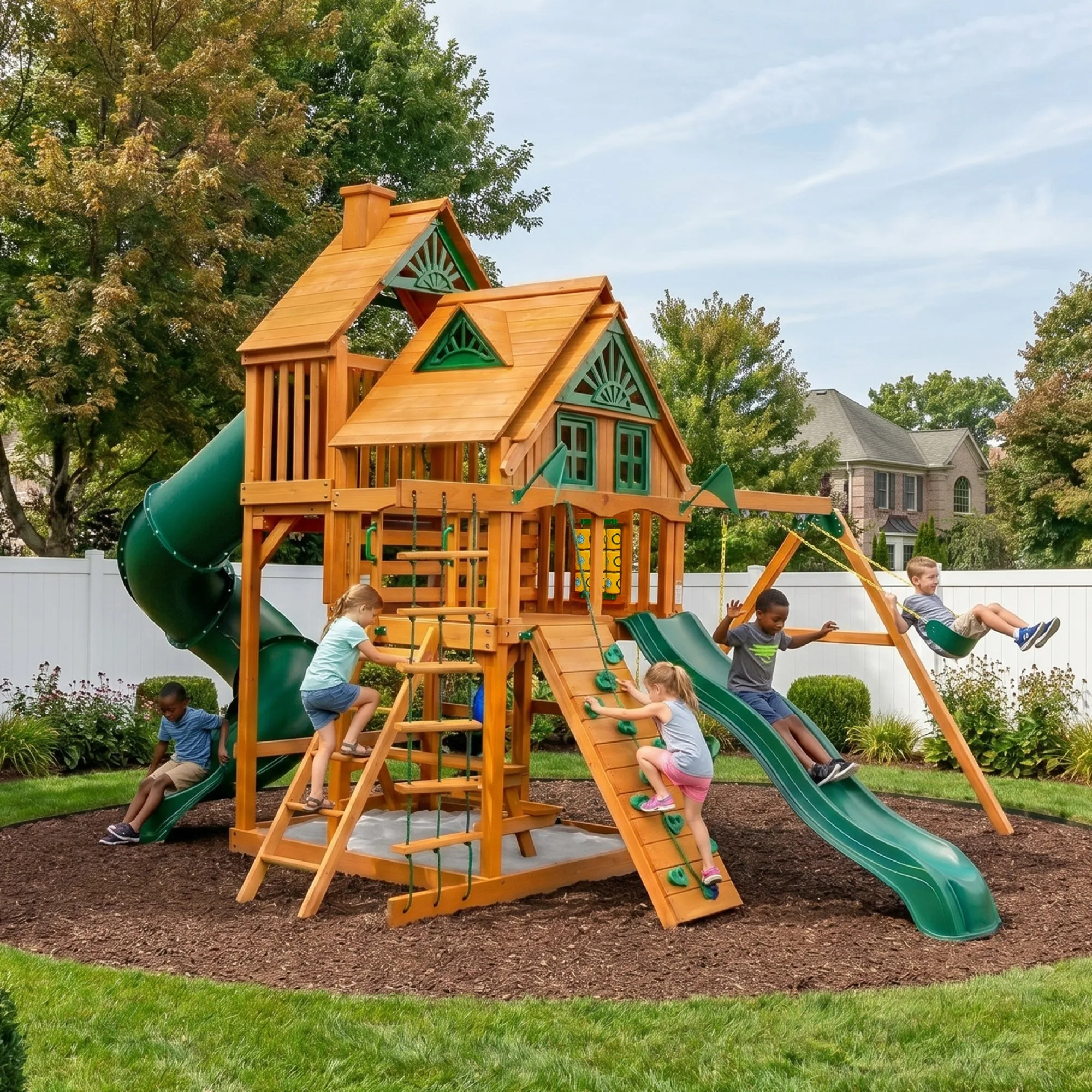
- Alpine Adventure Swing Set: The Alpine Adventure Swing Set includes a two-level clubhouse, crow's nest lookout, rock wall, Turbo Tube Slide, and Alpine Wave Slide, and it is crafted from premium cedar. A larger, multi-level structure has more roof area and more mounting points, so tarp tension checks matter more often than on a compact set.
- Adventure Wave Swing Set: The Adventure Wave Swing Set has two slides, two swing beams, 12 play activities, and a premium wood roof that provides shade over the play deck. A wood roof needs periodic inspection and sealing rather than tarp cleaning, which is a useful comparison when you are deciding how much fabric maintenance you want to take on.
Tarp care is not complicated, but it does need to be regular. Two inspections a year, gentle cleaning, and prompt snow removal will keep your canopy doing its job and delay the day you need to replace it.