Quick answer
To fit the Field Relief Fly Rug correctly, start with the right size based on your horse's length, then adjust the chest straps and leg loops so the rug sits smoothly without rubbing or shifting.
Why fit matters for fly protection
A fly rug that is too loose can twist, slip, or allow flies underneath, defeating its purpose. One that is too tight may cause rubbing or restrict movement. The Field Relief Fly Rug uses a hexagonal pattern that reduces fly landings by 51% on average, but only when the rug stays in place. Proper fit ensures the anti-rub lining works as intended and that your horse remains comfortable in the field.
Size selection basics
The Field Relief Fly Rug is available in multiple sizes, measured from the center of the chest to the tail. Measure your horse while standing square, using a soft tape. If your horse is between sizes, choose the larger size for more freedom of movement, but be prepared to adjust the leg loops and chest straps for a snug fit.
Step-by-step fitting guide
- 1. Measure and select the correct size: Measure from the center of your horse's chest to the edge of the tail. Use the size chart to pick the corresponding size. If in doubt, go up one size. A too-small rug will restrict movement and may rub; a too-large rug can shift and let flies in.
- 2. Drape the rug over the back: Stand at the shoulder and gently lay the rug over the withers, ensuring the front edge sits just behind the ears and the tail flap covers the dock. Smooth the rug backward. Check that the rug is centered—uneven placement will pull the chest closure to one side.
- 3. Fasten the chest straps: Bring the two front panels together and secure the chest straps. Adjust so the rug lies flat across the chest without pulling the shoulders. You should be able to slide two fingers flat between the strap and the horse. Over-tightening restricts shoulder movement; under-tightening lets the rug slip backward.
- 4. Attach and adjust the leg loops: Pass each leg loop between the horse's hind legs and clip to the opposite side of the rug. Adjust so the rug sits snugly over the hindquarters without lifting the tail flap. The loops should not dangle or rub the thighs. Leg loops that are too long allow the rug to ride up; too short may cause chafing or restrict hind leg movement.
- 5. Check the anti-rub lining and neck opening: Run your hand under the rug at the withers and shoulders. The anti-rub lining should lie smooth against the coat. The neck opening should not gap more than two inches from the skin. Any bunching or pressure points will cause discomfort over time—adjust until smooth.
- 6. Observe your horse in motion: Let your horse walk and trot in a safe area. Watch for the rug shifting, the tail flap lifting, or any signs of irritation. Recheck after 15 minutes of turnout. A rug that fits well at the stand may shift during movement. Adjust leg loops or straps as needed after observation.
Product fact
-
Field Relief Fly Rug: The Field Relief Fly Rug features a unique hexagonal pattern tested to reduce fly landings by 51% on average when compared to other fly rugs. This means correct fit is essential to maintain that level of protection—gaps or twists let flies reach your horse.
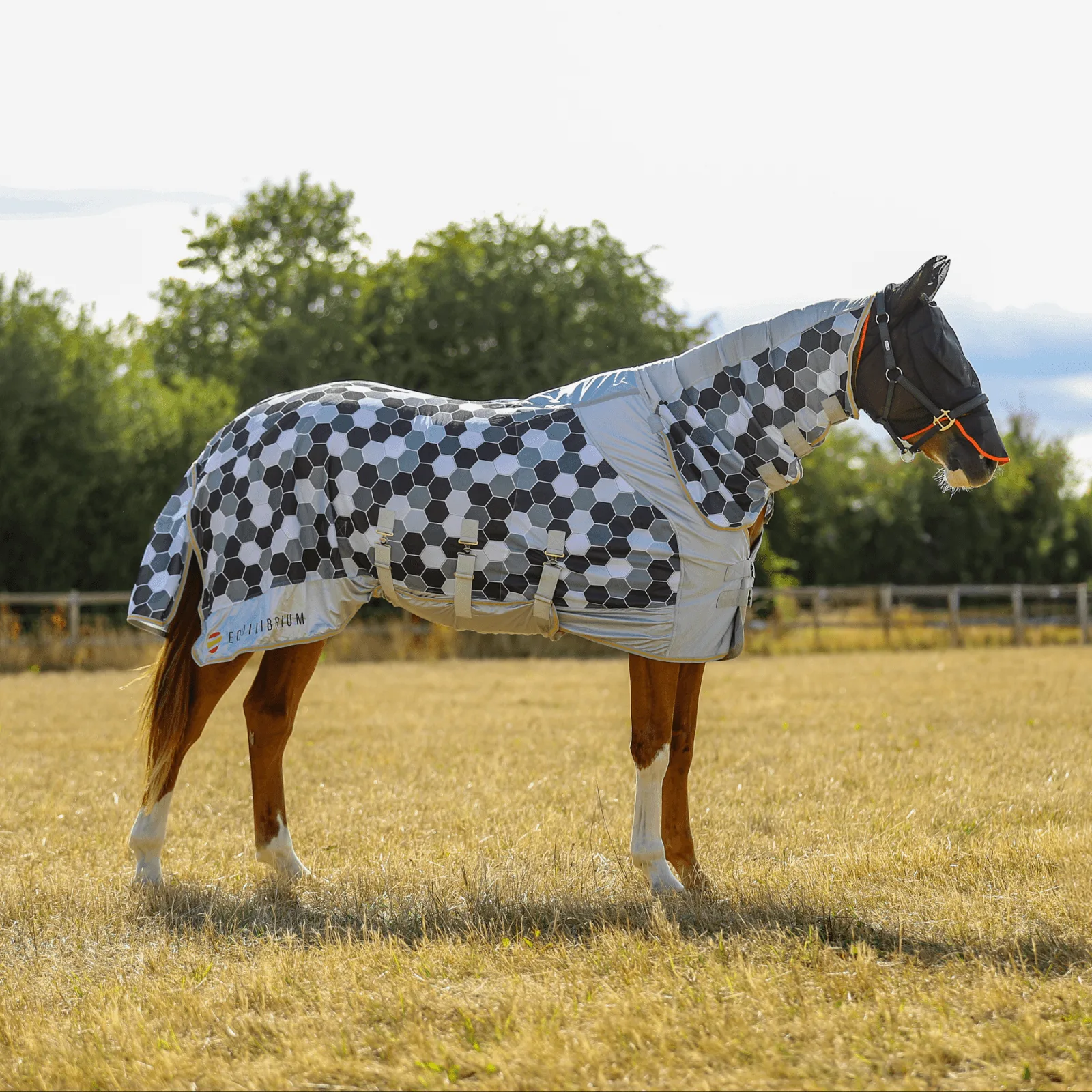
Field Relief Fly Rug