Why a Half Choke Martingale Collar Needs a Proper Fit
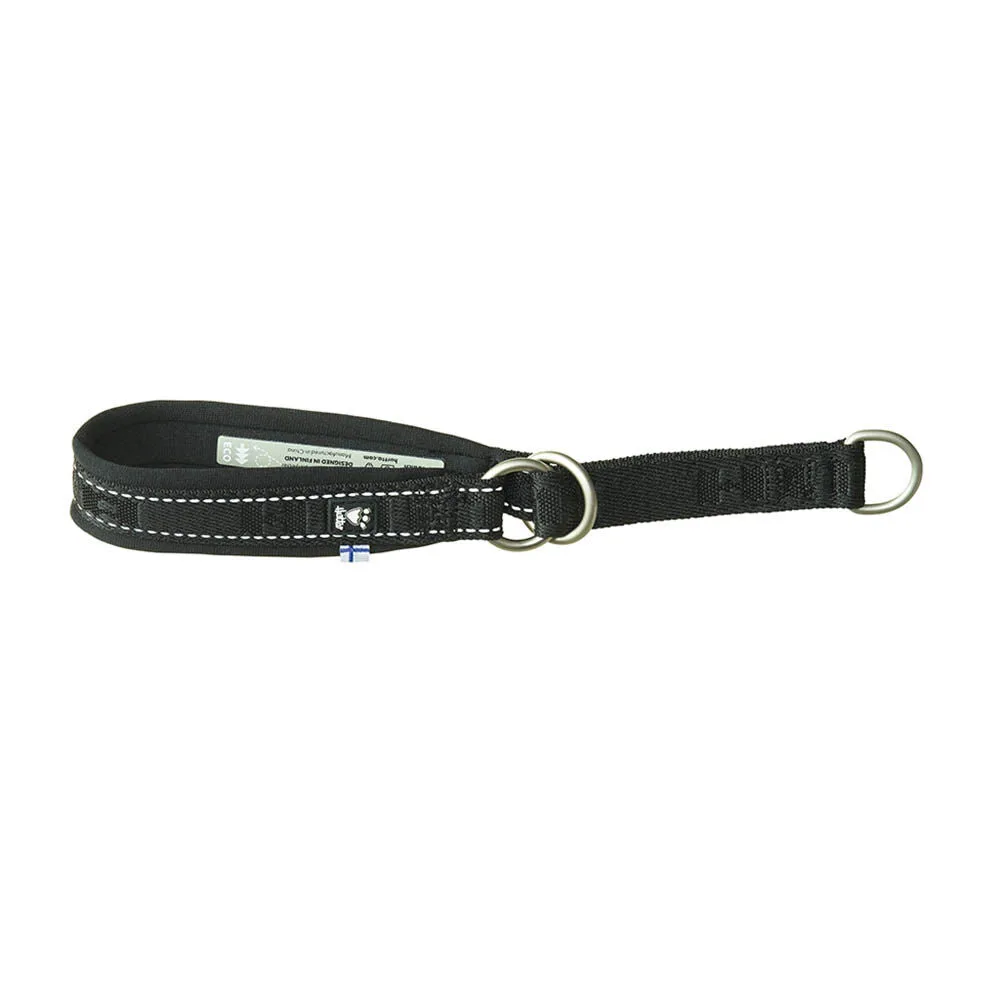
A half choke martingale collar — also called a limited-slip collar — is designed to tighten just enough to prevent a dog from backing out, then stop. Unlike a full choke chain, it has a built-in limit that keeps it from over-tightening, making it a safer choice for training and daily walks. But that safety only works if the collar is fitted correctly. Too loose, and your dog can still slip free; too tight, and the martingale loop can't function as intended.
Step-by-Step Fitting Guide
Follow these steps to adjust your half choke martingale collar for a secure, comfortable fit.
- Measure your dog's neck: Use a flexible tape measure around the widest part of your dog's neck, just behind the ears. For a martingale collar, you need two measurements: the neck size (where the collar sits) and the head size (the widest point, to ensure the collar can slip over the head if needed). The supplied collars come in neck sizes 14–19 in (23–41 cm) and 16–24 in (41–61 cm).
- Choose the right size and width: Select a collar that matches your dog's neck measurement. The available widths are 20 mm and 25 mm. For small to medium dogs, 20 mm is usually sufficient; for larger or stronger dogs, 25 mm offers more control. The Pink Koana, Green Herringbone, and Simply Red collars all offer these width options.
- Put the collar on your dog: Place the collar around your dog's neck with the martingale loop on top. The larger loop (the one that tightens) should be at the back of the neck, and the D-ring for the leash should be at the front. Make sure the collar is not twisted.
- Adjust the fit: The collar should sit high on the neck, just behind the ears. When the martingale loop is relaxed, you should be able to fit two fingers comfortably between the collar and your dog's neck. When the loop is tightened (by pulling the leash gently), the collar should snug up but not choke — it should stop before it becomes uncomfortable.
- Test the no-slip function: With the leash attached, gently tug to see how the martingale loop engages. It should tighten slightly to prevent the collar from slipping over your dog's head, then release when tension is removed. If the loop tightens too much or too little, adjust the fit by moving the collar up or down the neck.
- Check for comfort: The collar's lining — Kona cotton in these models — helps prevent rubbing or irritation. After a few minutes of wear, check the skin under the collar for any redness or chafing. If the collar is too tight, loosen it; if it slides around too much, tighten it slightly.
What the Supplied Collars Offer for Fit and Safety
-
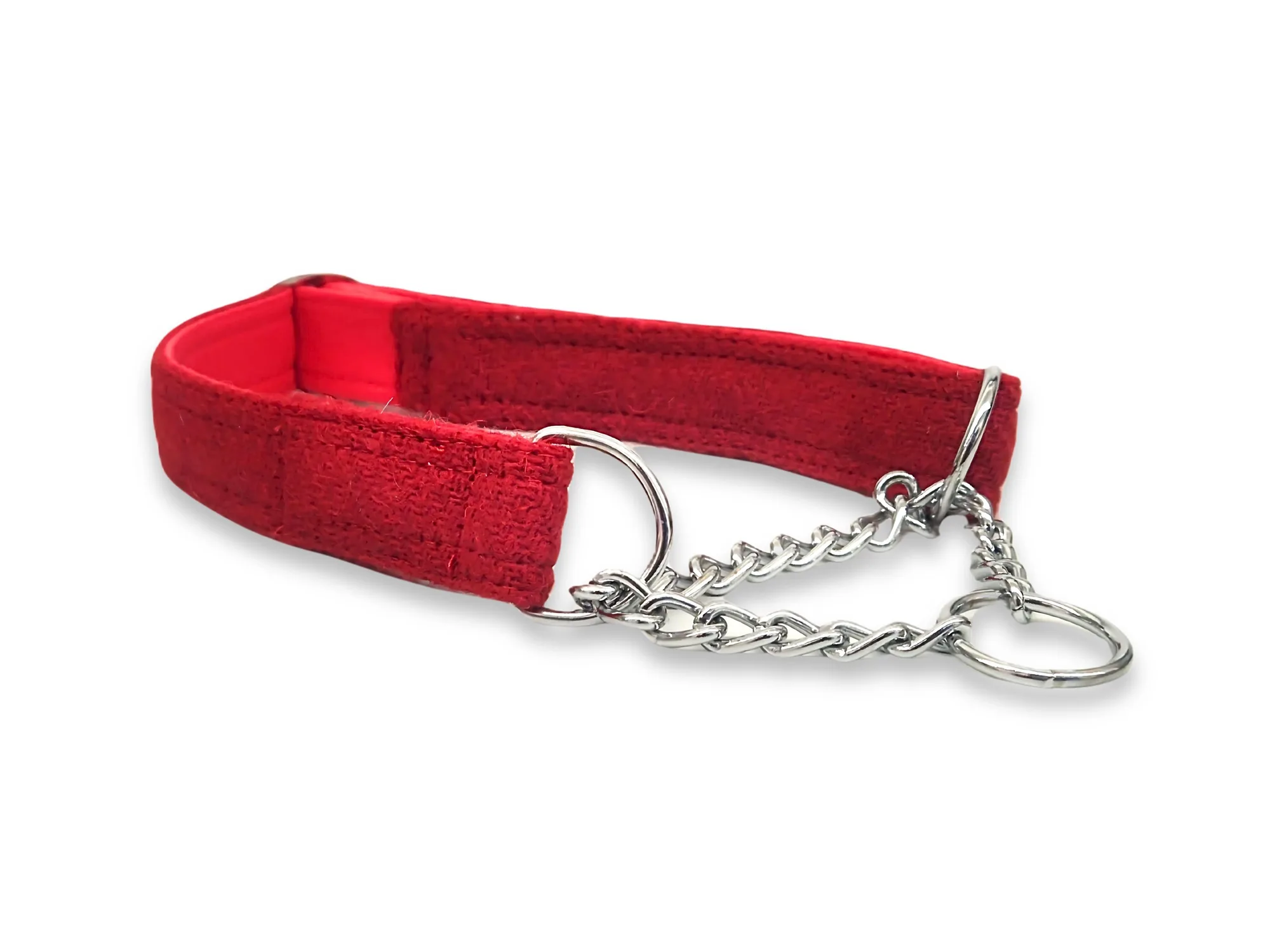
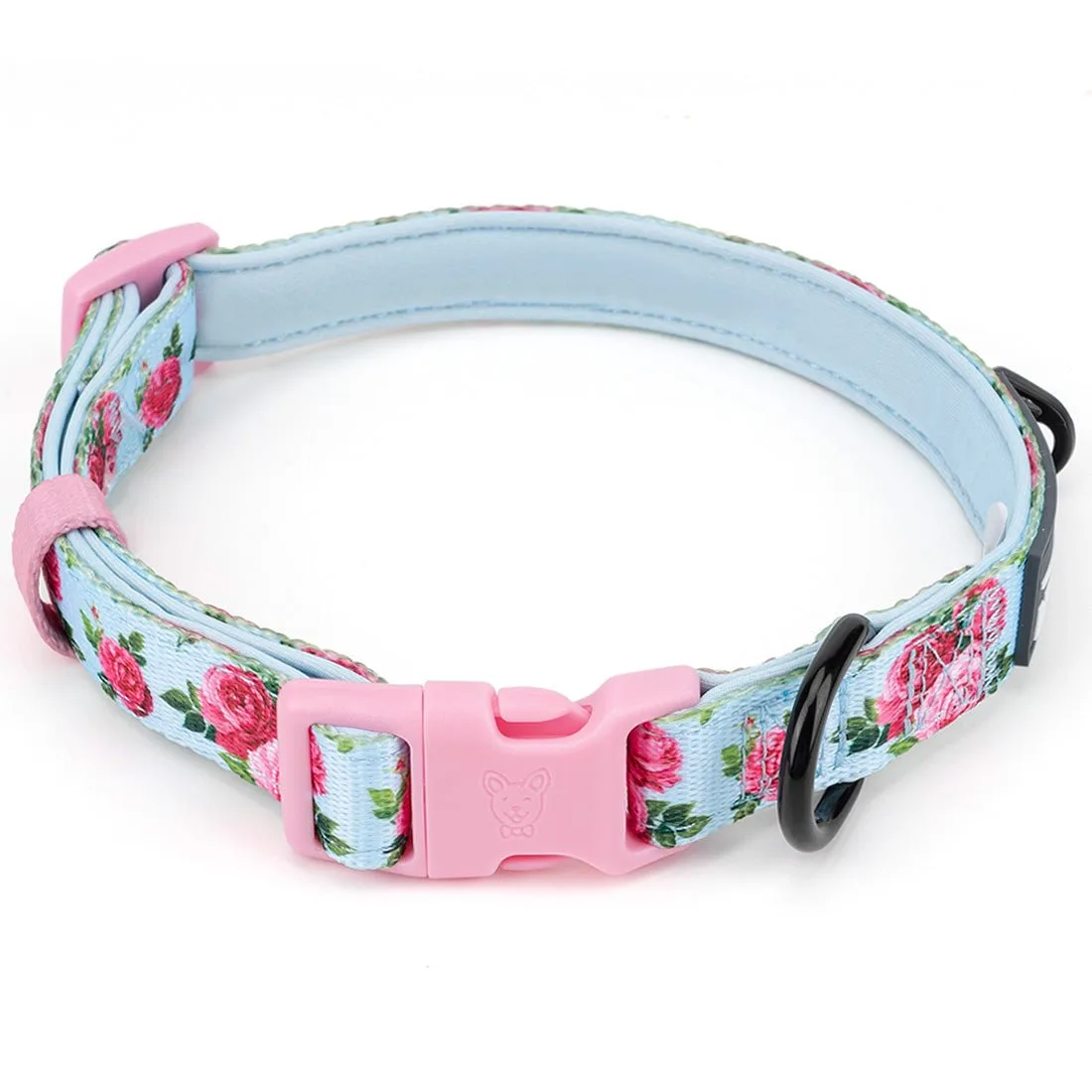
Pink Koana - Martingale / Half Choke Luxury Dog Collar: Martingale loop prevents backing out mid-walk; closes only to a safe fit — kinder than choke chains. This confirms the collar's built-in safety limit, which is exactly what you rely on when fitting it correctly.
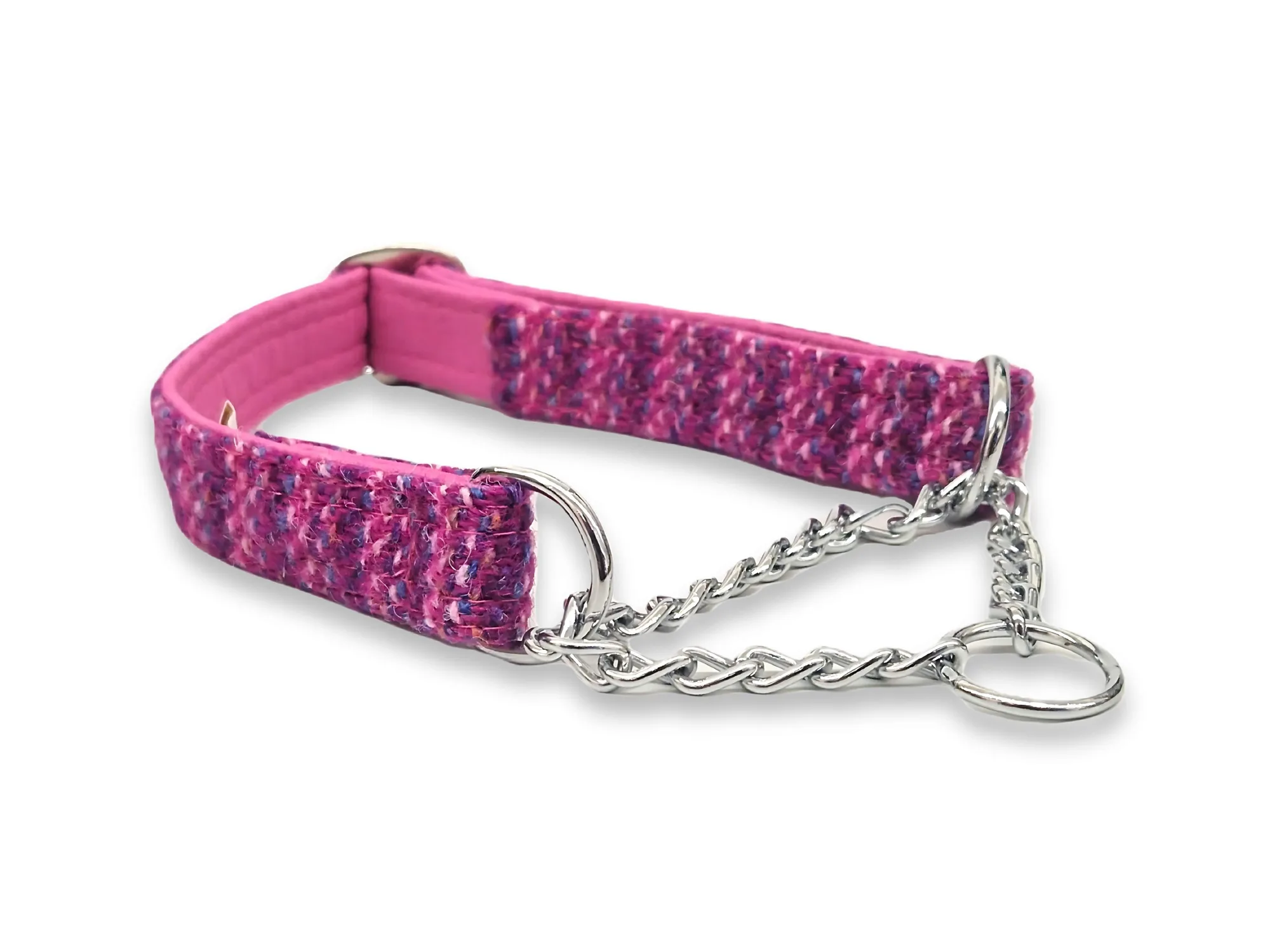
Pink Koana - Martingale / Half Choke Luxury Dog Collar
-
Green Herringbone - Martingale / Half Choke Luxury Dog Collar: Martingale loop tightens slightly when needed; stops tightening beyond snug — kinder than choke chains. The Green Herringbone model's description reinforces that the collar should not over-tighten, making correct fit even more important.
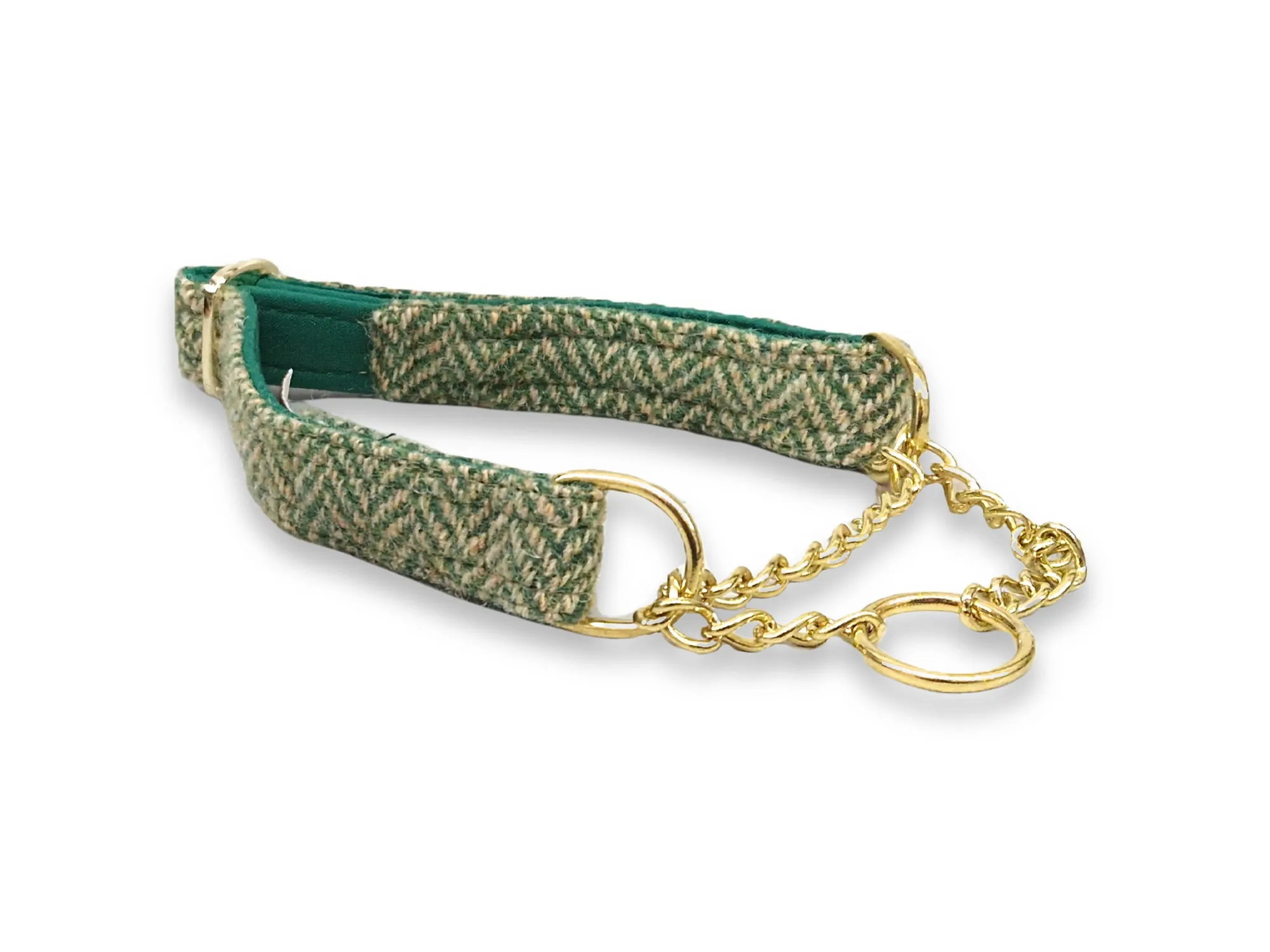
Green Herringbone - Martingale / Half Choke Luxury Dog Collar
-
Simply Red - Martingale / Half Choke Luxury Dog Collar: Closes only to a safe limit — kinder than choke chains. The Simply Red collar's safety feature means that even if your dog pulls hard, the collar won't constrict beyond a safe point, provided it's fitted correctly.
Safety Checks After Fitting
Once the collar is on, perform these quick checks before heading out. First, ensure the martingale loop is not too loose: if you can pull the collar over your dog's head with moderate force, it's too loose. Second, check that the D-ring is securely attached (these collars have a welded D-ring for extra strength). Finally, after a few walks, inspect the collar for any signs of wear, especially around the martingale loop and the hardware.
When to Re-evaluate the Fit
Puppies grow, and dogs can gain or lose weight. Re-check the fit every few months, especially for young dogs. If you switch between a 20 mm and 25 mm width, the fit may feel different — the wider collar distributes pressure over a larger area, which can feel snugger. The supplied collars are machine washable (Scotchguard-treated), so you can keep them clean without affecting the fit.