Quick Answer
To fit a no-pull leash for loose leash walking, position the leash high on the dog's neck (just behind the ears), adjust for a snug but not tight fit, and ensure the control ring sits at the back of the neck for gentle correction.
Why Fit Matters for Loose Leash Walking
A no-pull leash, like a slip lead, works by applying gentle pressure when your dog pulls, encouraging them to walk beside you. The key is correct placement: high on the neck (behind the ears) where it's most effective without choking. A low fit near the shoulders can encourage pulling instead of stopping it, and a loose fit may slip off or cause discomfort. Getting the fit right is the foundation of successful loose leash walking training.
How to Fit a No-Pull Leash in 4 Steps
- Step 1: Position the Leash High on the Neck: Place the slip loop over your dog's head so the leash sits high on the neck, just behind the ears. The control ring (where the leash attaches) should rest at the back of the neck, not the front or side. Common mistake: placing the leash too low near the shoulders, which reduces effectiveness and can encourage pulling.
- Step 2: Adjust the Fit for Snugness: Tighten the slip loop so it's snug—you should be able to fit one finger between the leash and your dog's neck. It should not be tight enough to choke or cause discomfort, nor loose enough to slide over the head. Checkpoint: if the leash can be pulled over your dog's ears with light pressure, it's too loose. Tighten slightly.
- Step 3: Test the Direction of Pull: With the leash attached, gently pull upward and backward (toward you). The leash should apply even pressure around the neck, not pinch or twist. If it twists, reposition the control ring to the back of the neck. Common mistake: pulling sideways, which can cause the leash to slip or apply uneven pressure.
- Step 4: Practice with a Loose Leash Walk: Start walking with your dog on your left side, keeping the leash slack. If your dog pulls, the leash will tighten naturally. Reward your dog when they return to your side and the leash loosens. Repeat until your dog associates slack with rewards. Checkpoint: if your dog continues to pull after several sessions, recheck the fit and position—it may be too low or too loose.
Product Facts
-
Luca™ Leash: The EzyDog Luca Slip Lead Leash combines a collar and leash in one, designed for training, control, and everyday walks. This all-in-one design simplifies fitting—you adjust the slip loop once, and it's ready for walks without needing separate collar and leash adjustments.
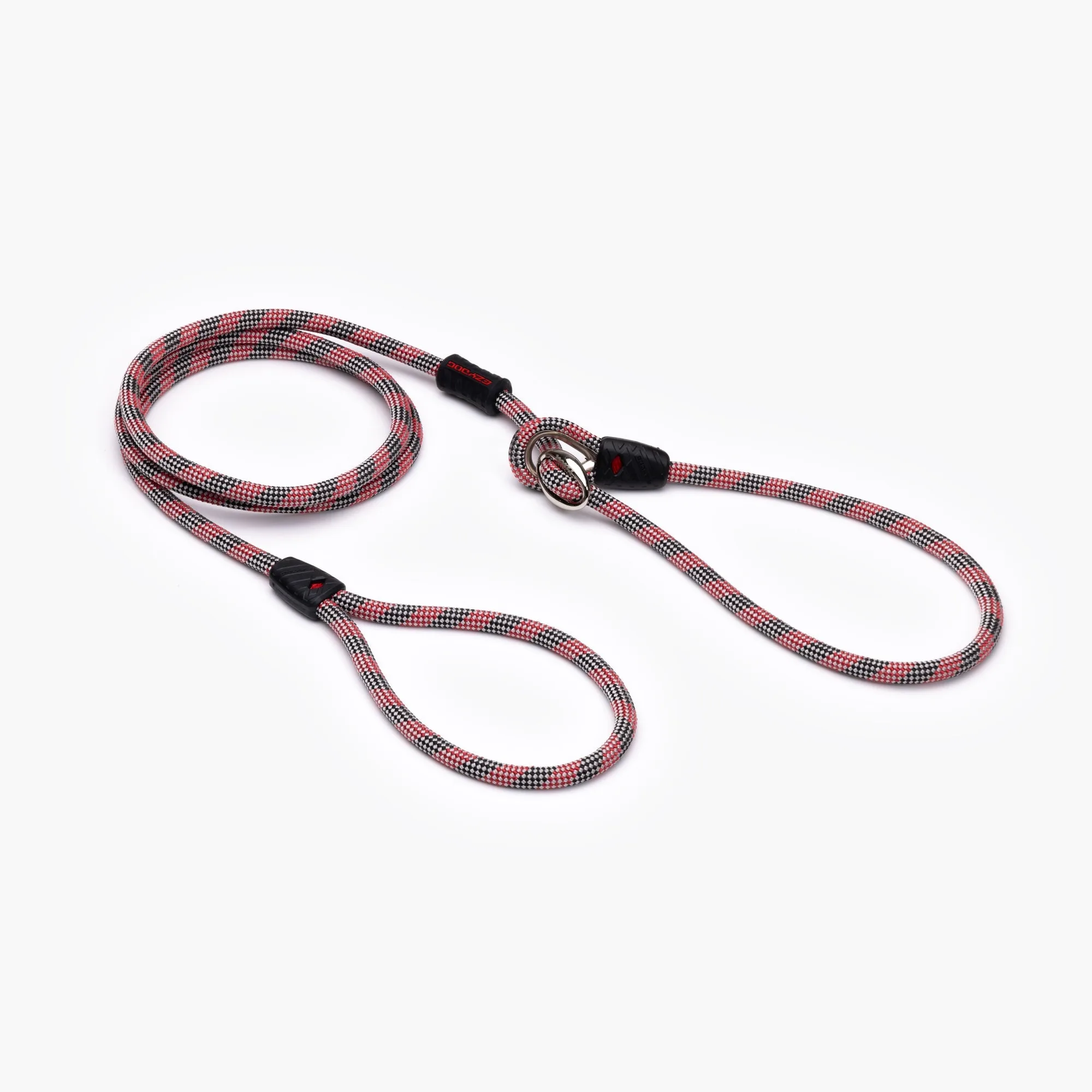
Luca™ Leash