Quick Answer
Measure your dog's paw width and length, choose booties that fit snugly without being tight, and practice putting them on indoors before hitting the trail.
Why Proper Fit Matters
A bootie that's too loose will slip off in deep snow, while one that's too tight can rub blisters or restrict circulation. The right fit keeps the bootie on and your dog comfortable for miles.
When Booties Are Essential
Booties aren't just for extreme cold. They protect against ice balls forming between toes, sharp crust on packed snow, and salt or de-icers on sidewalks. If your dog lifts paws or stops walking, booties are the fix.
How to Fit and Use Dog Booties
- 1. Measure Both Paws: Place your dog's paw on a piece of paper and mark the widest point and the longest toe. Measure width and length for both front paws and both back paws, as they can differ. Write down the larger measurement for each pair to ensure a comfortable fit.
- 2. Choose the Right Size: Compare your measurements to the bootie size chart. The bootie should fit snugly around the paw without being tight. If between sizes, size up for thicker winter socks. Check the bootie's closure system—Velcro or drawstring—to see if it allows fine adjustments.
- 3. Put Booties On Indoors First: Let your dog wear the booties around the house for 10-15 minutes. This helps them adjust and lets you check for slipping or rubbing before you need them outdoors. Watch for signs of discomfort like licking or chewing at the booties.
- 4. Secure Each Bootie Properly: Slide the bootie onto the paw, making sure toes are fully inside and the heel sits against the back of the bootie. Tighten the closure so it stays put but you can still slide one finger between the bootie and the leg. A bootie that's too loose is worse than one slightly snug—it will twist and fall off.
- 5. Test on a Short Walk: Take a 5-10 minute walk on snow or ice. Check that all booties are still on and that your dog is walking normally, not lifting paws or shaking them. If a bootie comes off, re-secure it and consider using a smaller size or adjusting the closure.
- 6. Check for Wear After Each Hike: Inspect booties for tears, loose stitching, or worn soles. Replace individual booties as needed to keep your dog protected on the next outing. Carry one spare bootie in your pack in case of loss or damage on the trail.
Product Used in This Guide
-
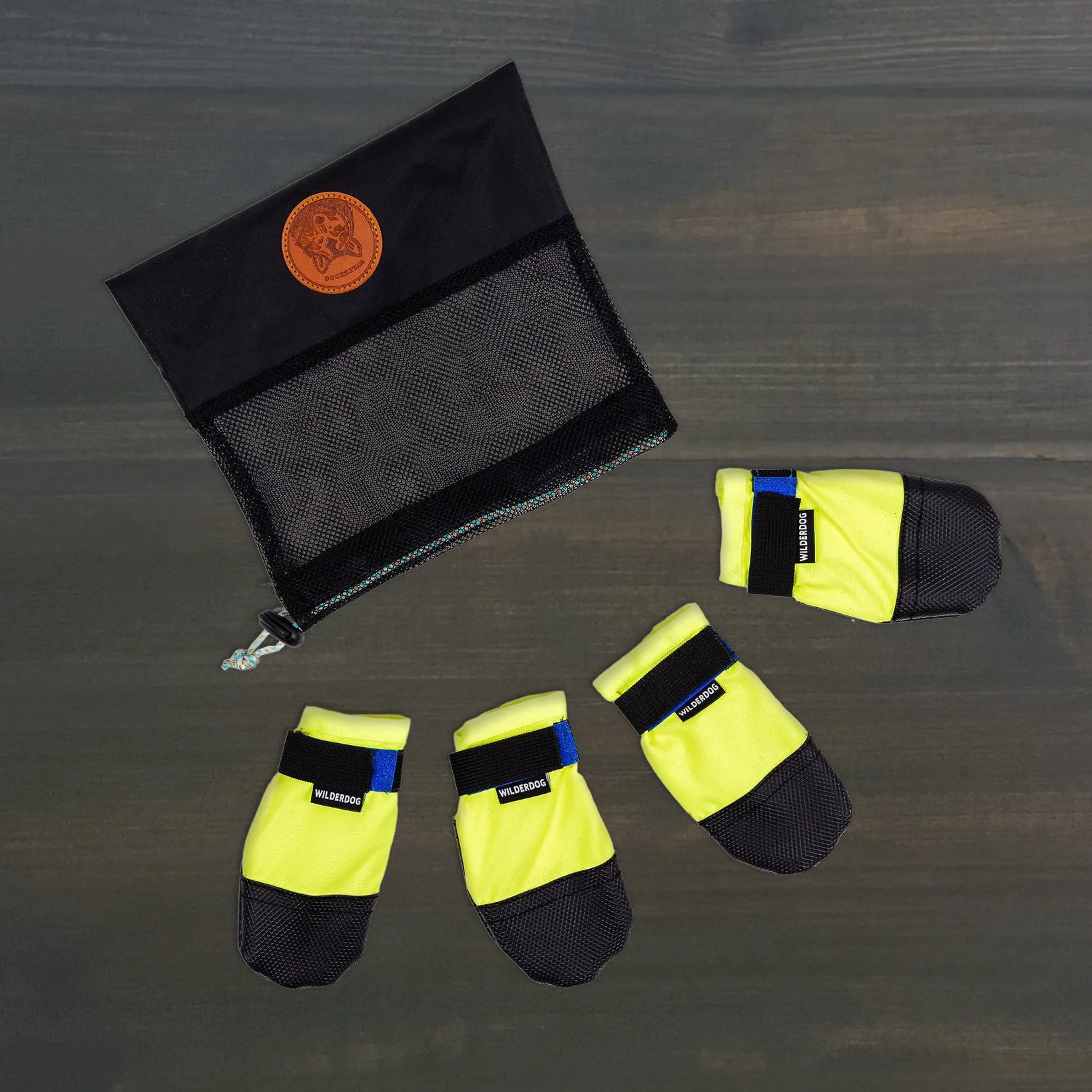
Dog Booties: Sold in sets of four or individually for replacements as needed. Lightweight and breathable. You can replace a single lost bootie instead of buying a whole new set, and the breathable fabric prevents moisture buildup that can cause discomfort.
Dog Booties