Quick answer
To fit a leather overbust corset for waist training, measure your natural waist and underbust, choose a corset 4–6 inches smaller than your natural waist, and lace it with a consistent 2–3 inch gap at the back for proper waist reduction without damaging the garment.
Why genuine sheep leather matters for waist training
Genuine sheep leather is naturally breathable and flexible, which helps it conform to your body over time. Unlike synthetic materials, it won't trap heat or cause excessive sweating during long wear. The steel spiral bones inside a quality leather overbust corset provide the structural support needed for safe waist training without digging into your ribs or hips.
The difference between overbust and underbust corsets
An overbust corset extends from the bust to the hips, supporting the entire torso. For waist training, an overbust design distributes pressure more evenly across the ribcage and hips, reducing the risk of pressure points. Underbust corsets target only the waist but can shift or roll if not fitted correctly.
Step-by-step fitting guide
- Measure your natural waist and underbust: Use a soft tape measure. Wrap it around the narrowest part of your waist (usually just above the navel) and directly under your bust. Write both numbers down. Do not pull the tape tight. Common mistake: measuring over clothing or pulling the tape too tight adds 1–2 inches, leading to a corset that is too loose.
- Choose your corset size based on waist reduction: For waist training, select a corset with a waist measurement 4–6 inches smaller than your natural waist. For example, if your natural waist is 30 inches, a 24–26 inch corset is a good starting point. Check the brand's size chart for underbust and hip measurements too. Checkpoint: If your underbust or hip measurement doesn't match the size chart, size up to avoid discomfort or spillover.
- Loosen the laces completely before putting it on: Unlace the back so there is a 6–8 inch gap. Open the front busk. Step into the corset, wrap it around your torso, and close the busk from top to bottom. The busk should lie flat without straining. Common mistake: forcing the busk closed when the corset is too small can bend the pins or damage the leather.
- Tighten the laces from the waist outward: Start at the waist ties, pulling the laces to bring the back panels together. Work your way up and down, alternating sides, until the gap is even. Aim for a 2–3 inch parallel gap at the back for proper waist reduction. Checkpoint: The gap should be parallel, not V-shaped. A V-shape means the corset doesn't match your body shape.
- Wear the corset for short periods to break it in: Start with 1–2 hours per day for the first week. Gradually increase wear time as the leather molds to your body. Never sleep in a waist training corset. Common mistake: tight lacing too quickly can cause bruising or nerve compression. Listen to your body.
Recommended corsets for waist training
-
Genuine Sheep Leather Steel Spiral Boned Black Corset Waist Training and BDSM Leather Corset Top: Genuine sheep leather with steel spiral boning and a 5-inch modesty panel at the back. The modesty panel prevents skin pinching when lacing tight, and the steel spiral bones allow safe waist reduction without cracking.
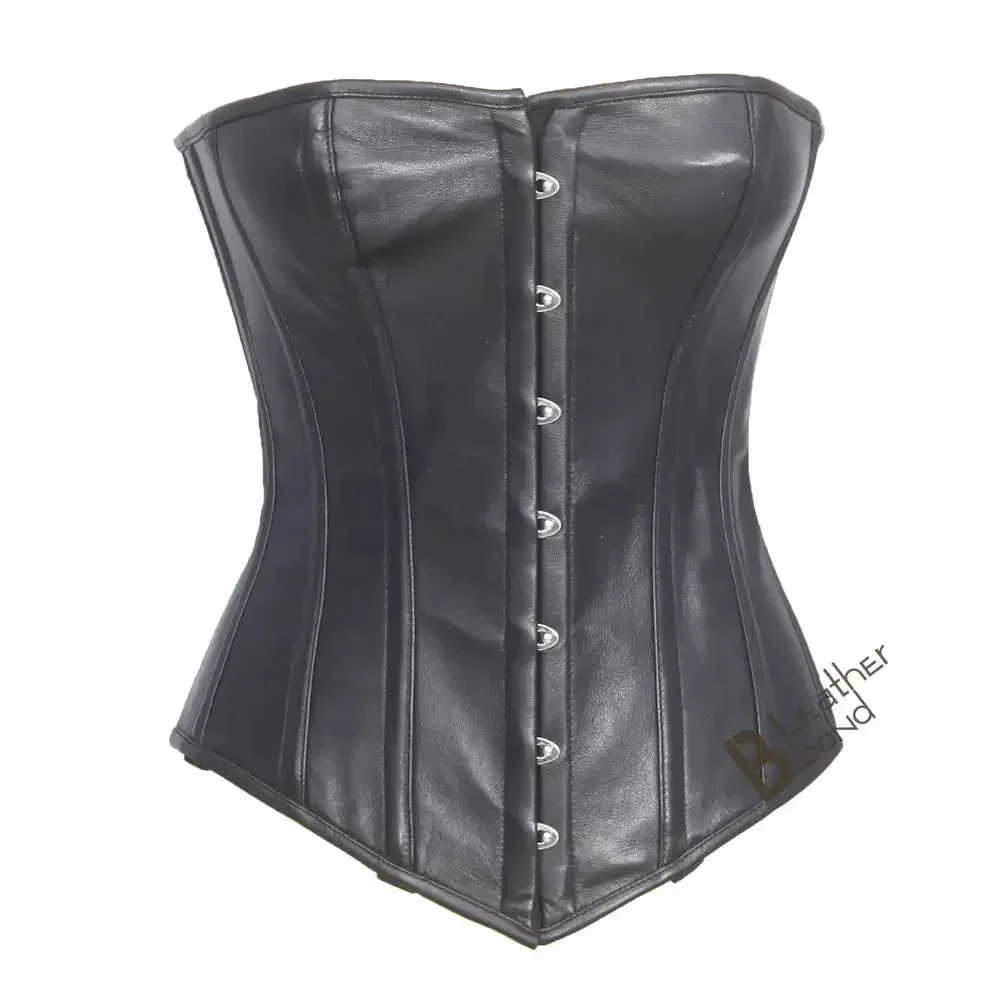
Genuine Sheep Leather Steel Spiral Boned Black Corset Waist Training and BDSM Leather Corset Top
-
Genuine Real Sheep Leather & Stainless Steel Spiral Bones Overbust Corset: 10 spiral stainless steel bones plus 6 rigid steel plates (4 on back, 2 on front) and a busk closure. The combination of spiral and rigid steel provides extra support for serious waist training while keeping the front closure secure.
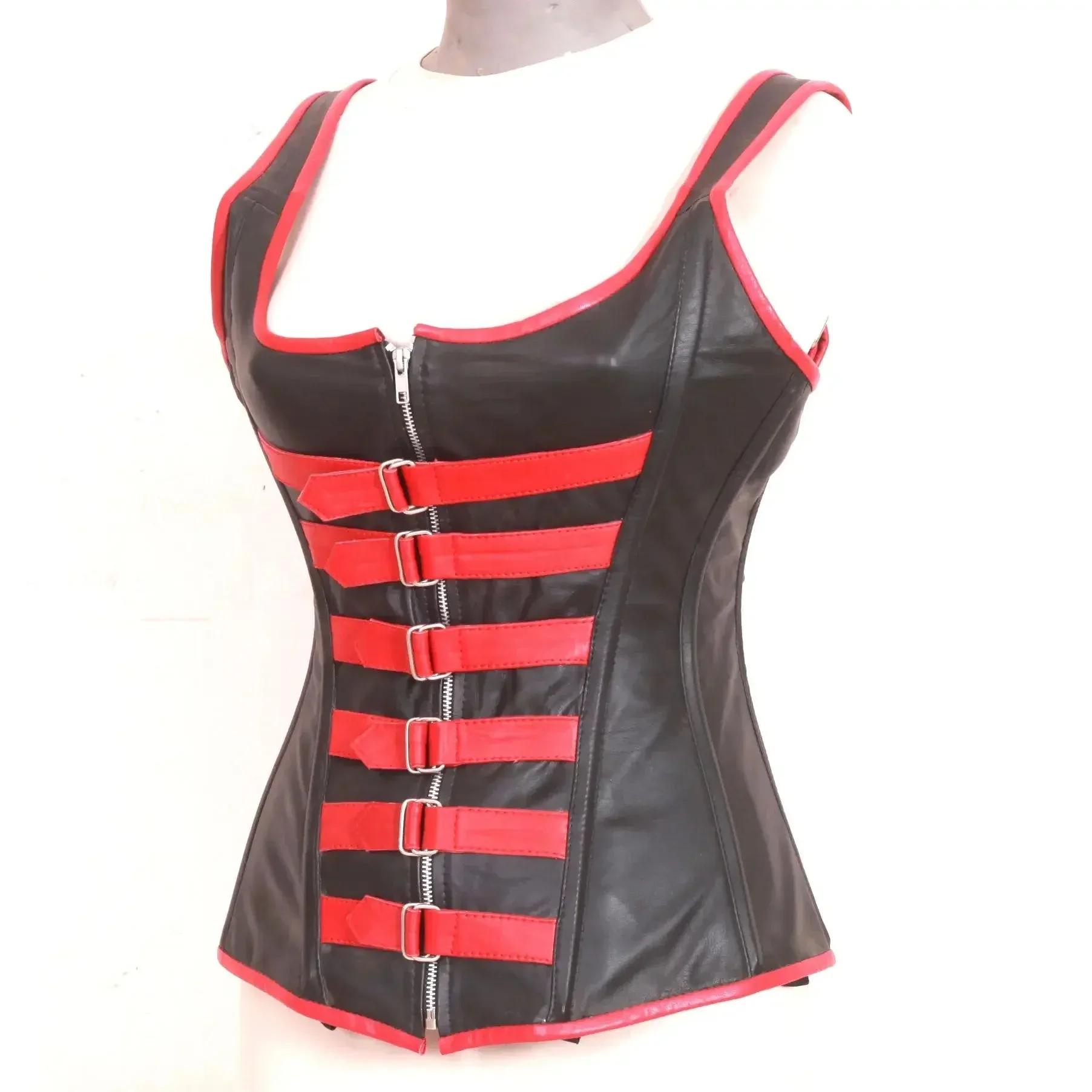
Genuine Real Sheep Leather & Stainless Steel Spiral Bones Overbust Corset