Quick answer
To fit the Protector Collar correctly, you should be able to slide two fingers comfortably between the collar and your dog's neck, and the collar should not rotate on its own.
Why a proper fit matters for active dogs
When your dog runs, jumps, or swims, a collar that is too loose can slip off or cause chafing, while one that is too tight can restrict breathing or cause discomfort. A well-fitted collar stays in place without digging in, so your dog can move freely and safely.
The Protector Collar is built for everyday wear, and its sturdy construction means it can handle rough play. But even the toughest collar won't perform well if it doesn't fit right. Taking a few minutes to adjust it properly will make every adventure more comfortable for your dog.
What to check before you start
Before fitting, make sure your dog is calm and standing. Have a measuring tape or a piece of string handy, and know your dog's neck size. The Protector Collar comes in a Standard size, so check the sizing chart to see if it matches your dog's measurements.
If your dog is between sizes, choose the larger size and adjust the collar snugly. A collar that is too small can cause pressure points, while a slightly larger one can be tightened for a secure fit.
Step-by-step fitting guide
- Measure your dog's neck: Use a flexible tape measure around the base of the neck, where the collar will sit. Add two finger widths (about 2 inches) to this measurement to find the ideal collar size. Check the Protector Collar's size chart to ensure the Standard size fits your dog. Re-measure every few months if your dog is still growing or changes weight.
- Put the collar on: Place the collar around your dog's neck, with the buckle at the back or side, whichever is more comfortable. Make sure the collar is not twisted and lies flat against the fur. A twisted collar can cause uneven pressure and chafing.
- Adjust the fit: Tighten or loosen the collar so that you can slide two fingers easily between the collar and your dog's neck. The collar should be snug enough that it does not rotate around the neck on its own, but not so tight that it leaves marks or feels restrictive. If you can fit more than two fingers, it's too loose; if you can't fit two, it's too tight.
- Test the fit during activity: Let your dog move around, run, or play while wearing the collar. Watch for signs of discomfort, such as scratching at the collar, shaking the head, or trying to pull it off. Recheck the fit after exercise to ensure it hasn't shifted. Some collars can loosen during activity, so a quick recheck is worth it.
- Check for wear and tear: Regularly inspect the collar for signs of fraying, cracks, or weakened stitching, especially if your dog is very active. Replace the collar if you notice any damage to keep your dog safe. A damaged collar can break unexpectedly, so replace it promptly.
Product facts
-
Protector Collar: The Protector Collar is a durable and practical collar designed for everyday use, with a sturdy construction and reliable design. A well-built collar withstands the wear and tear of active dogs, so you can rely on it during hikes, runs, and play sessions.
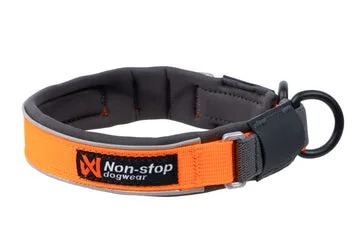
Protector Collar